Beyond High-Fives - The Real Impact of Peer Recognition
Peer-to-peer recognition software is a digital platform enabling employees to celebrate each other's contributions in real-time. It fosters a culture of appreciation that drives engagement, retention, and performance. Here's what you need…
Peer-to-peer recognition software is a digital platform enabling employees to celebrate each other's contributions in real-time. It fosters a culture of appreciation that drives engagement, retention, and performance. Here's what you need to know:
Key Benefits:
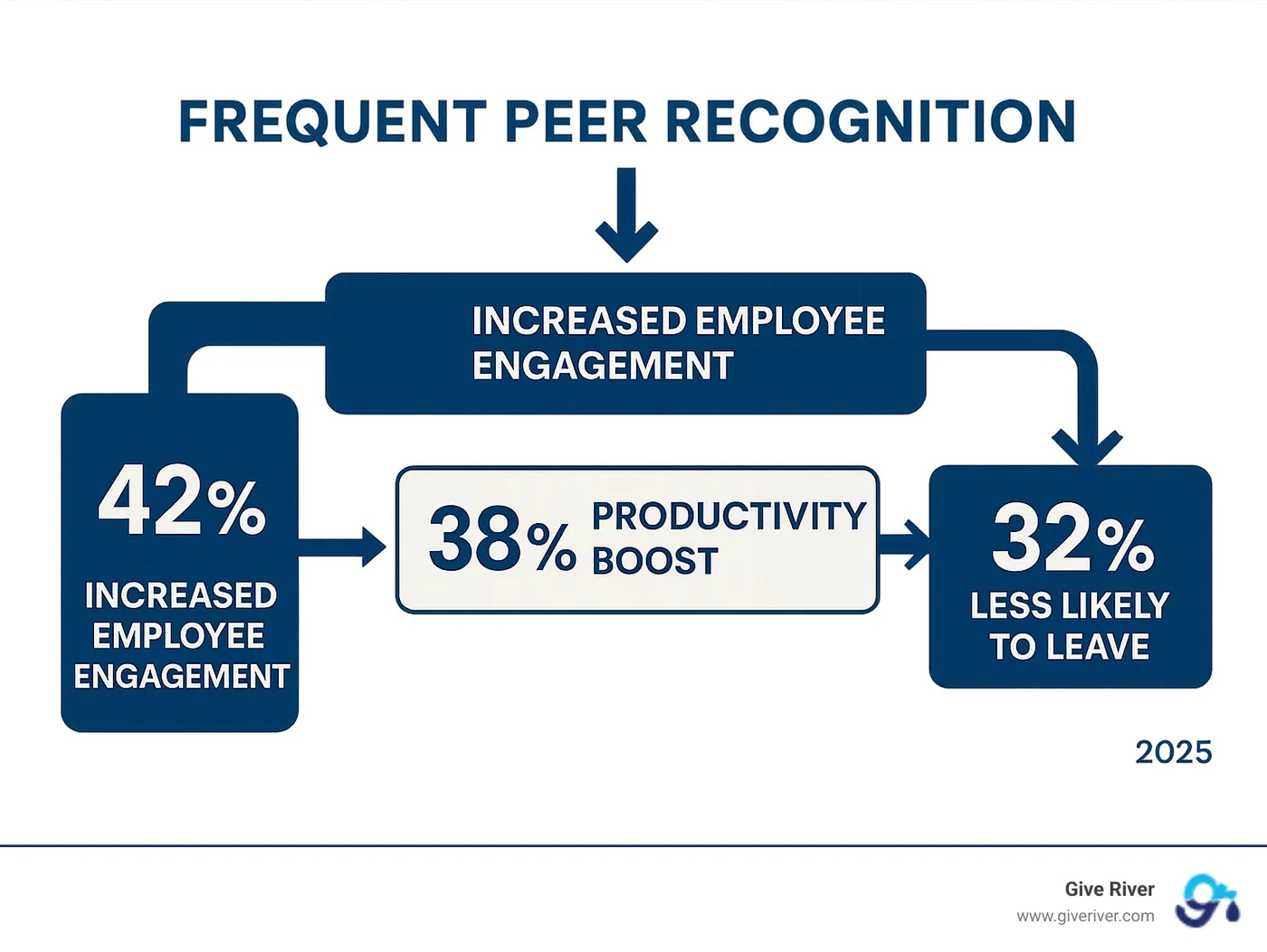
- Boosts engagement: 42% of employees who get monthly peer recognition feel engaged at work
- Improves retention: 32% of employees wouldn't consider leaving if they received one peer shoutout monthly
- Increases productivity: Even without manager recognition, employees getting peer recognition are 38% more likely to feel productive
- Strengthens culture: Creates authentic connections between team members
Essential Features to Look For:
- Social recognition feeds with public and private options
- Integration with existing tools (Slack, Microsoft Teams)
- Flexible rewards catalog (gift cards, experiences, donations)
- Analytics dashboard for tracking participation and trends
- Mobile accessibility for remote and hybrid teams
If your recognition efforts feel scattered or impersonal, you're not alone. Many organizations struggle with ad-hoc appreciation that fails to create lasting impact. The solution isn't more perks, but creating systematic ways for your team to recognize each other's contributions.
Research shows that 44% of employees cite lack of recognition as their reason for leaving, yet 80% say they'd work harder if they felt more appreciated. This disconnect isn't just about manager-to-employee feedback. When colleagues acknowledge each other's work, it creates a deeper sense of belonging and motivation that traditional top-down recognition often misses.
As Meghan Calhoun, co-founder of Give River, I've spent over two decades in high-pressure environments learning what truly motivates teams. Through implementing peer-to-peer recognition software across diverse organizations, I've seen how the right platform can transform workplace culture from transactional to genuinely connected.
Handy peer-to-peer recognition software terms:
What is Peer-to-Peer Recognition Software and Why Does It Matter?
Imagine a workplace where appreciation flows naturally between colleagues, where a quick "thank you" brightens someone's week, and recognition is a daily routine, not an annual afterthought. That's what peer-to-peer recognition software creates.
At its heart, this technology is a digital platform that puts the power of appreciation directly into your employees' hands. Instead of waiting for managers to notice great work, every team member can instantly acknowledge their colleagues' contributions through social recognition feeds that work much like your favorite social media platform.
Here's how it typically works: employees can post public shout-outs celebrating a colleague's help with a challenging project, innovative solution, or simply going above and beyond. These recognitions often include points-based systems where employees earn points for the appreciation they receive, which can later be redeemed for meaningful rewards. The magic happens when you start tying recognition to company values—suddenly, abstract concepts like "collaboration" or "innovation" become tangible, celebrated behaviors.
The psychology behind this approach is fascinating. When we give or receive recognition, our brains release oxytocin—often called the "bonding hormone"—which creates genuine feelings of connection and motivation. As explored in The Power of Gratitude in the Workplace: Recognition Matters More Than You Think, this neurological response isn't just feel-good fluff—it drives real behavioral change.
But why does this matter so much for your organization? The impact goes far beyond simple morale boosting. When colleagues regularly acknowledge each other's efforts, it creates a ripple effect that transforms your entire workplace culture.
Strengthening team cohesion happens naturally when people see and celebrate each other's contributions. That developer who stayed late to fix a critical bug gets recognized not just by their manager, but by the sales team who landed the client because of their effort. This cross-functional appreciation builds bridges between departments that might otherwise operate in silos.
The inclusivity factor is equally powerful. Traditional recognition often flows from the top down, but peer recognition empowers employees at every level to have a voice in shaping workplace culture. The quiet team member who consistently helps others troubleshoot problems finally gets the visibility they deserve. The new hire who brings fresh perspectives gets celebrated for their unique contributions.
Perhaps most importantly, peer-to-peer recognition software captures those unseen contributions that managers might miss entirely. A quick assist on a project, sharing knowledge that saves someone hours of work, or offering emotional support during a stressful deadline—these everyday acts of helpfulness become visible and valued.
The business impact is undeniable. Employees who feel appreciated by their peers are 63% more likely to stay in their jobs for the next 3-6 months and perform up to 14% better. This isn't just about making people feel good—it's about creating a sustainable competitive advantage through genuine human connection.
When you implement the right recognition strategy, you're not just installing software—you're building a culture where gratitude becomes a driving force for performance and retention. To see how this fits into a comprehensive approach to team building, explore our Employee Engagement and Recognition Solution.
The Anatomy of Great Peer Recognition Platforms: Essential Features to Look For
Finding the right peer-to-peer recognition software is like choosing a foundation for a house—it must support everything you build. The best platforms blend powerful functionality with intuitive design, creating a natural experience. Let's explore what separates exceptional platforms from the rest.

Core Recognition & Social Features
The magic happens in the social feed—think of it as your workplace's gratitude hub where every acknowledgment creates ripples of positivity. The best platforms offer both public and private recognition options, giving employees the flexibility to celebrate big wins company-wide or share more personal thank-yous one-on-one. This balance is crucial because not everyone wants their achievements broadcast to the entire organization.
What makes recognition truly stick is value-tagging. When someone says "Thanks for staying late to help with the client presentation," it's nice. But when they can tag it with your company's "Customer First" value, that recognition becomes a powerful reinforcement of what your organization stands for. It transforms casual appreciation into cultural reinforcement.
In our increasingly mobile world, mobile app accessibility isn't just nice to have—it's essential. Your team needs to give recognition in the moment, whether they're rushing between meetings or celebrating a win from the field. The best platforms also handle automated milestones like birthdays and work anniversaries, ensuring these meaningful moments never slip through the cracks.
Perhaps most importantly, look for seamless integrations with Slack and Microsoft Teams. When recognition happens within the tools your team already uses daily, it becomes part of their natural workflow rather than another task to remember. For inspiration on what moments deserve recognition, check out our Employee Recognition Examples.
Rewards & Incentives
While heartfelt recognition is powerful on its own, the ability to attach meaningful rewards adds another dimension of appreciation. The key is a flexible rewards catalog that speaks to your diverse workforce. Some team members might love gift cards to their favorite coffee shop, while others prefer experiential rewards like concert tickets or spa days.
The most effective platforms offer gift cards from popular retailers, unique experiential rewards that create lasting memories, company swag that builds pride, and even charitable donations for employees who want to pay it forward. Some platforms go further with custom rewards custom to your specific culture—maybe tickets to the local baseball team or vouchers for the company's favorite lunch spot.
Point-to-cash conversion options ensure that no matter how varied your team's preferences, everyone can find value in their recognition. This flexibility is what transforms a generic rewards program into something that truly resonates with each individual. Learn more about creating impactful reward experiences on our Employee Reward Platforms page.
Analytics & Gamification
Great recognition programs aren't just feel-good initiatives—they're strategic tools that drive measurable results. A robust analytics dashboard gives you the insights needed to understand your program's impact. You'll want to track participation tracking to see who's actively engaging, identify recognition trends to spot what's working, and access manager-specific insights to help leaders understand their team dynamics.
The magic happens when you add thoughtful gamification elements. Badges can celebrate specific achievements or recognition milestones, creating a sense of accomplishment beyond the original recognition. Leaderboards can foster healthy competition, though they work best when they celebrate giving recognition rather than just receiving it. Team challenges can unite departments around shared recognition goals, turning appreciation into a collaborative effort.
The key to successful gamification is keeping it light and fun rather than competitive or stressful. When done right, these elements make recognition feel like a natural part of your team's rhythm rather than another corporate initiative. For more insights on making recognition engaging, explore our Employee Gamification Platform resources.
The best peer-to-peer recognition software brings all these elements together in a way that feels effortless to your team while providing the depth and flexibility your organization needs to build a truly thriving culture of appreciation.
How to Choose the Right Peer-to-Peer Recognition Software for Your Team
Selecting the ideal peer-to-peer recognition software for your organization doesn't have to feel overwhelming. Think of it like finding the perfect teammate—you want someone who understands your goals, fits naturally into your workflow, and grows alongside your company. The key is taking a thoughtful approach that puts your team's unique needs first.

Assessing Your Needs and Budget
Before diving into vendor demos and feature comparisons, take a step back and get crystal clear on what you're trying to achieve. Are you looking to boost engagement scores, reduce that concerning turnover rate, or create a more inclusive culture where everyone feels valued? Maybe you want to improve productivity by making contributions more visible across teams. Defining your program goals upfront will serve as your north star throughout the selection process.
Next, think about who will actually be using this platform. Will it be company-wide, or are you starting with specific departments? Are your employees primarily desk-based, or do you have deskless workers who need mobile-first solutions? Understanding your user groups helps narrow down platforms that truly serve your workforce. If you have remote or hybrid teams, seamless integration with tools like Slack or Microsoft Teams becomes crucial.
Take an honest look at your current recognition challenges. Is recognition happening sporadically when managers remember? Are great contributions going unnoticed? Is your current approach feeling forced or inauthentic? These pain points will guide you toward the features that matter most.
Budgeting requires looking beyond the sticker price. Most peer-to-peer recognition software uses per-user-per-month pricing, typically ranging from $2 to $20+ per user depending on features and vendor. But don't forget to ask about implementation costs, integration fees, or charges for premium features. While free plans exist, they often come with significant limitations. The real question isn't what it costs, but what it costs you not to have an effective recognition program. For organizations looking for flexibility, explore our Configurable Employee Recognition Solutions.
Evaluating Vendors and Your Options
Once you have a clear picture of your needs, you can start comparing platforms with confidence. The market offers solid options like Bonusly, Kudos, and Nectar, each with distinct strengths. For instance, while platforms like Bonusly and Kudos are excellent for fostering social recognition and rewards, Give River differentiates by connecting these moments to a broader framework of employee growth and wellness. Rather than getting lost in feature lists, focus on how well each platform aligns with your specific goals.
Requesting demos is where the rubber meets the road. Come prepared with questions that matter to your situation. Ask about their approach to peer-to-peer recognition specifically—some platforms are more manager-centric than others. Inquire about integration capabilities with your existing systems, especially your HRIS and communication tools. Understanding their rewards redemption process and typical selection helps you gauge employee satisfaction potential.
Don't skip the technical details either. Ask about their analytics capabilities, implementation timeline, ongoing support, and data security measures. The best platforms feel less like software and more like natural extensions of how your team already works.
Checking user reviews on platforms like G2 or Capterra gives you the unfiltered truth from actual users. Pay attention to reviews from companies similar to yours in size and industry. Assessing customer support is equally important—you want a partner who'll help you succeed, not just sell you software and disappear. For a comprehensive overview of your options, check out our guides on Employee Recognition Software Companies and Employee Recognition Program Vendors.
Successfully Implementing Your New Peer-to-Peer Recognition Software
The real work begins after you sign the contract. Successful implementation starts with creating a realistic implementation timeline that doesn't overwhelm your team. Most platforms can be up and running within weeks, but cultural adoption takes longer.
Gaining leadership buy-in is absolutely critical. When leaders actively participate in giving recognition, it signals to everyone that this matters. Leadership modeling creates a ripple effect that dramatically improves adoption rates across the organization.
Your communication strategy should focus on the "why" before the "how." Help employees understand that this isn't just another corporate initiative—it's about creating a workplace where everyone feels valued and connected. Share the research: companies with strong recognition programs see 31% lower turnover rates and 12% greater productivity.
Employee training doesn't need to be complicated. Most modern platforms are intuitive, but offering quick tutorials or lunch-and-learn sessions helps everyone feel confident using the new system. If you're migrating data from an existing system, plan this carefully to avoid losing important recognition history.
Measuring success means tracking both participation metrics and business outcomes. Monitor your employee Net Promoter Score (eNPS) and retention rates—these tell the real story. Some companies see dramatic improvements quickly. For example, organizations using effective recognition programs have reduced turnover from 25% to under 7%.
The most successful programs are those that feel authentic to your culture. They're personalized, meaningful, and consistent with how your team naturally communicates and celebrates. For more insights on creating programs that truly resonate, visit our Recognition Programs for Employees resource.
The right peer-to-peer recognition software becomes invisible in the best way—it simply makes appreciation flow more naturally through your organization, creating the kind of workplace where people genuinely want to contribute their best work.
Best Practices for a Peer Recognition Program That Thrives
Implementing peer-to-peer recognition software is a fantastic first step, but the real magic happens when the program is nurtured to thrive. It's about building a sustainable culture of appreciation, not just rolling out a new tool.

Making Recognition Meaningful and Consistent
For recognition to have a real impact, it must be specific, timely, and genuine. For example, instead of a simple "thanks for your help," try "thank you for staying late to walk me through that complex spreadsheet—it saved me hours and helped me meet my deadline." This specificity creates a much stronger feeling of appreciation.
The key is encouraging specificity and timeliness. Recognition should happen as close to the action as possible, while the details are fresh and the impact is still being felt. This immediate feedback loop reinforces positive behaviors and makes the appreciation feel authentic rather than obligatory.
Tying praise to core values transforms recognition from random compliments into culture-building moments. If innovation is one of your company values, don't just recognize someone for "being creative." Instead, acknowledge how their fresh approach to solving a client problem embodies your innovation value and led to a breakthrough solution. This connection helps reinforce what your organization truly stands for.
Leadership modeling is absolutely critical for program success. When managers and senior leaders actively participate in giving recognition, it sends a powerful message that appreciation isn't just an HR initiative—it's a business priority. I've seen programs flourish when the CEO regularly posts recognitions, and I've watched others struggle when leadership treats it as optional.
Finding the right balance between public and private recognition requires understanding your team's preferences. Some people love the spotlight of a company-wide shout-out, while others prefer a thoughtful private message. The best programs offer both options and encourage managers to learn what each team member values most.
One of the most powerful aspects of peer recognition is how it can celebrate cross-functional collaboration. When someone from marketing recognizes an operations team member for going above and beyond to support a campaign launch, it breaks down silos and builds bridges between departments. These moments of interdepartmental appreciation create a more unified, connected organization. For creative ways to encourage this kind of recognition, explore our Peer-to-Peer Recognition Activities.
Measuring Impact and Gathering Feedback
A thriving recognition program isn't something you set and forget—it's a living system that needs regular attention and adjustment. Tracking participation rates gives you a pulse on program health. Are people actively giving recognition? Are certain teams or individuals consistently left out? These patterns tell important stories about your workplace culture.
Analyzing recognition data reveals fascinating insights about your organization. You might find that teamwork gets recognized far more often than innovation, suggesting your culture naturally values collaboration. Or you might find that certain departments rarely interact with others, highlighting opportunities to encourage cross-functional relationships.
Identifying recognition gaps is crucial for program equity. If you notice that remote workers receive less recognition than office-based employees, or that certain personality types are consistently overlooked, you can take targeted action to address these imbalances. Recognition should be inclusive and accessible to everyone, regardless of their work style or location.
Using employee surveys provides the qualitative context that data alone can't capture. Ask people how the recognition program makes them feel, what types of appreciation mean most to them, and what barriers they encounter when trying to recognize others. These insights often reveal simple fixes that can dramatically improve program effectiveness.
The most important part of gathering feedback is acting on it. When employees see their suggestions implemented—whether it's adding new reward options, simplifying the recognition process, or creating team challenges—they feel heard and valued. This responsiveness transforms your recognition program from a top-down initiative into a collaborative effort.
Continuous program improvement means staying curious about what's working and what isn't. Link recognition data to broader business metrics where possible. While correlation doesn't equal causation, teams with high recognition activity often show improved engagement scores, lower turnover rates, and stronger collaboration. These connections help demonstrate the business value of your investment in appreciation and guide future program improvements.
The Future of Recognition: Emerging Trends and What's Next
The workplace recognition landscape is evolving at breakneck speed, and peer-to-peer recognition software is at the forefront of this change. We're witnessing a shift from simple "thank you" platforms to sophisticated systems that understand, predict, and improve the entire employee experience.
One of the most exciting developments is AI-powered suggestions that can help managers and peers craft more meaningful recognition messages. Imagine a system that notices Sarah consistently helps teammates troubleshoot technical issues and suggests recognizing her mentorship skills. This isn't about replacing human judgment—it's about amplifying our natural tendency to appreciate others by providing gentle, data-driven nudges at the right moments.
Even more compelling is the emergence of predictive analytics for burnout. By analyzing recognition patterns alongside other engagement signals, these platforms can identify early warning signs of disengagement or stress. When someone who typically receives regular peer recognition suddenly goes quiet, or when a previously active recognizer stops participating, the system can alert managers to check in. Scientific research on AI in HR shows this proactive approach can significantly reduce turnover and improve employee wellbeing.
The future also brings hyper-personalization that goes far beyond customized reward catalogs. Tomorrow's recognition platforms will understand individual preferences, communication styles, and motivation drivers to deliver truly custom experiences. Some employees thrive on public recognition, while others prefer private appreciation—and AI will help ensure each person receives recognition in the way that resonates most with them.
We're also seeing deeper integration with wellness programs that recognize the connection between appreciation and mental health. When recognition becomes part of a holistic approach to employee wellbeing, it creates a more supportive work environment where people feel valued as whole human beings, not just productivity machines.
Perhaps most importantly, the next generation of recognition platforms will connect recognition to professional growth. Instead of just celebrating past achievements, these systems will help employees understand how their recognized strengths can translate into career advancement opportunities. This creates a powerful feedback loop where recognition becomes a catalyst for development.
Community impact is another emerging trend that's changing how we think about workplace recognition. Platforms are increasingly offering ways for employees to donate their recognition points to charitable causes, creating a ripple effect of generosity that extends far beyond the office walls. This approach aligns perfectly with modern workers' desire to make a meaningful difference in the world.
The future of recognition isn't just about better technology—it's about creating holistic employee fulfillment that addresses the whole person. The most successful organizations will be those that use recognition as a foundation for building cultures where people feel genuinely valued, continuously growing, and connected to something larger than themselves.
Conclusion: Build a Culture of Gratitude, One Recognition at a Time
Throughout this exploration of peer-to-peer recognition software, we've found something profound: the power to transform workplace culture lies not in expensive perks, but in helping people feel genuinely valued by their colleagues. This journey from scattered high-fives to systematic appreciation creates ripple effects across your organization.
The numbers tell a compelling story. When employees receive recognition from their peers, they're 42% more engaged, 38% more productive, and 32% less likely to leave. But behind these statistics are real people who wake up each morning feeling excited about their work, connected to their teammates, and proud of their contributions. That's the true magic of peer recognition—it transforms work from a transaction into a meaningful experience.
We've seen how the right platform becomes more than just software; it becomes the foundation for authentic connection. Features like social feeds, flexible rewards, and insightful analytics aren't just technical specifications—they're the building blocks of a culture where appreciation flows naturally in all directions. When you choose thoughtfully, implement strategically, and nurture consistently, you create an environment where recognition becomes as natural as breathing.
The future promises even more exciting possibilities. AI-powered suggestions will help us recognize the right behaviors at the right moments. Predictive analytics will help us spot burnout before it happens. Integration with wellness and growth programs will create holistic employee experiences that nurture the whole person, not just the worker.
But here's what won't change: the fundamental human need to feel appreciated and valued. Peer-to-peer recognition software simply gives us better tools to meet that need at scale. It empowers every employee to contribute to a positive work environment, moving us beyond transactional relationships to genuine workplace community.
At Give River, we've built our entire approach around this understanding. Our 5G Method recognizes that true employee fulfillment comes from the intersection of recognition, guidance, personal wellness, professional growth, gamification, and community impact. When these elements work together, they create something beautiful—teams that don't just perform well, but genuinely care for each other.
Your journey toward a culture of gratitude starts with a single recognition. It grows through consistent practice, thoughtful implementation, and genuine commitment to seeing the best in your people. The technology is just the enabler; the real change happens when appreciation becomes part of who you are as an organization.
Ready to build a team that truly feels valued and connected? Explore our Recognition Platform Solutions and find how we can help you create a culture where gratitude isn't just an initiative—it's a way of life.
More from this category.
Best Employee Recognition Software for Nonprofits (2026)
What nonprofits need from recognition software, what six platforms charge mission-driven teams, and how to get a grant-funded Season of Give River for free.

Employee Recognition Software Pricing in 2026: What 6 Platforms Charge
What Give River, Bonusly, Motivosity, Nectar, Awardco, and Workhuman charge in 2026, from their own sites: pricing models, minimums, fees, and contract terms.

How to Improve Employee Recognition Across Multiple Locations
Six practical ways to make recognition reach every site and shift, what to look for in a platform, and how a 25-location nonprofit did it.
See the platform in action.
Free for up to 25 members, or try Core or Growth free for 30 days. A card is required; Free is never charged, and a trial bills when it ends unless you cancel.