Understanding Professional Development for Employees
Professional development for employees is crucial in today’s dynamic work environment, where employee engagement, career advancement, and workplace culture are more interconnected than ever. It empowers teams by providing skills and growth…

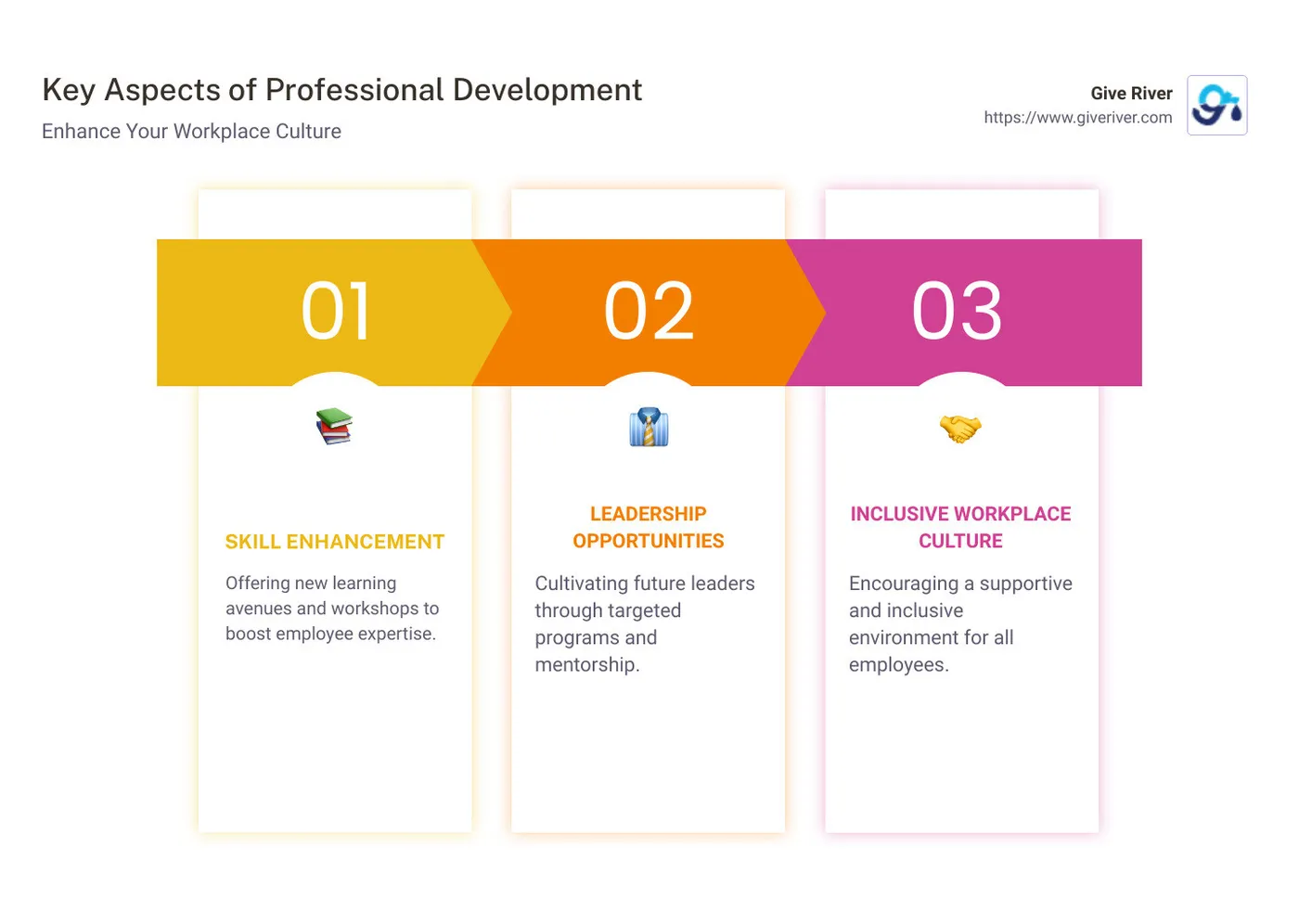
Professional development for employees is crucial in today’s dynamic work environment, where employee engagement, career advancement, and workplace culture are more interconnected than ever. It empowers teams by providing skills and growth opportunities, boosting morale and productivity. Recognizing this can transform your organization into a leading force by aligning employee aspirations with business goals. Key elements include:
- Skill Improvement: Offering new learning avenues and workshops.
- Leadership Opportunities: Cultivating future leaders through targeted programs.
- Workplace Culture: Encouraging a supportive and inclusive environment.
Investing in professional development not only nurtures career growth but also fuels innovation and commitment, creating a thriving workplace culture. Companies that integrate development strategies see higher retention rates and employee satisfaction, driving success from within.
I'm Meghan Calhoun, co-founder of Give River, dedicated to advancing professional development for employees. Throughout my career, I've learned to balance growth and culture, fostering successful workplace environments.
Handy professional development for employees terms:
Understanding Professional Development for Employees
Professional development for employees is a cornerstone of career development. It equips individuals with essential skills and knowledge, paving the way for personal and professional growth. This journey of continuous learning is not just about acquiring new skills but also about improving existing ones.
Career Development
Career development involves a strategic approach to enhancing your skill set and advancing your career path. It’s about setting goals and working towards them with determination. This process is crucial for both personal satisfaction and organizational success. Employees who actively engage in their career development are more likely to feel fulfilled and motivated at work.
Skill Improvement
Skill improvement is a vital component of professional development. It involves refining both hard and soft skills. Hard skills are the technical abilities required for specific jobs, while soft skills, like communication and emotional intelligence, are equally important for career advancement. By focusing on both, employees can become well-rounded professionals capable of tackling diverse challenges.
Hard Skills: These are the technical or job-specific skills you can gain through training or education. Examples include coding, project management, or data analysis.
Soft Skills: These are personal attributes that improve your interactions and performance at work. Examples include teamwork, problem-solving, and adaptability.
Investing in skill improvement not only boosts individual confidence but also improves overall team performance. Employees who are encouraged to develop their skills are more likely to take initiative and contribute effectively to their organizations.
Employee Retention
Employee retention is directly linked to professional development. When employees see opportunities for growth and development within their organization, they are more likely to stay. High retention rates save companies time and resources, reducing the need for constant recruitment and training of new staff.
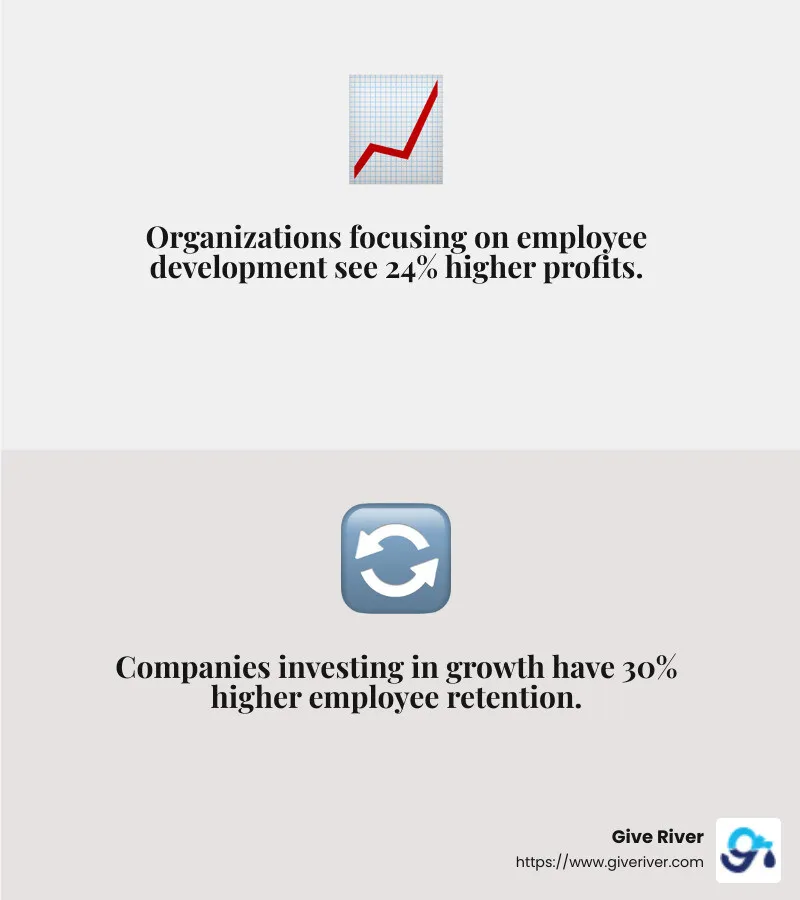
According to a recent survey, companies that prioritize professional development see a significant increase in employee loyalty and engagement. By providing a clear path for career progression and skill improvement, organizations can foster a culture of commitment and innovation.
In summary, understanding and implementing professional development for employees is essential for career development, skill improvement, and employee retention. It creates a motivated, skilled, and loyal workforce that contributes to the organization's success. As you consider strategies to empower your team, focus on aligning their aspirations with your business goals to create a thriving workplace.
Top Professional Development Opportunities
In today's rapidly evolving workplace, professional development for employees is crucial. It not only improves individual skills but also boosts overall team performance. Let's explore some top opportunities that can empower your team and transform your organization.
Management Training
Management training is essential for developing strong leaders within your organization. According to a PayScale survey, 32% of employees are most interested in this type of training. Effective managers can significantly improve employee engagement and retention.
Consider offering online courses or internal workshops led by experienced managers. These sessions can cover topics like effective delegation, feedback implementation, and self-management. Providing such opportunities helps cultivate confident leaders who can inspire and motivate their teams.
Professional Certifications
Professional certifications offer a structured way to gain specialized skills without the long-term commitment of a degree. They are especially popular in fields like human resources, accounting, and healthcare. Certifications can lead to career advancement and increased job satisfaction.
For example, courses preparing employees for the Professional in Human Resources (PHR) exam can be invaluable. These certifications not only validate expertise but also boost confidence and credibility in the workplace.
Technical Skills Training
As technology continues to evolve, staying updated with technical skills is vital. Employees across various industries, from information technology to media and publishing, are eager to improve their technical proficiency.
Offering workshops or online courses in programming languages, data science, or search engine optimization can keep your team competitive. By investing in technical skills training, you empower employees to innovate and solve complex problems, driving your business forward.
Teamwork and Interpersonal Skills
While technical skills are important, don't overlook the value of soft skills. Competencies like communication, collaboration, and emotional intelligence are crucial for a thriving workplace.
Training programs focused on teamwork skills can improve interactions and foster a positive work environment. These skills not only improve individual performance but also strengthen team dynamics, leading to better project outcomes.
Employer-Subsidized Degrees
For some employees, pursuing higher education is a key professional development goal. Offering tuition assistance can be a powerful incentive. While this option may require a larger investment, the return on investment (ROI) can be substantial. One health insurance company reported a 129% ROI from their education reimbursement program, thanks to reduced turnover and increased engagement.
By supporting employees in their educational pursuits, you demonstrate a commitment to their long-term growth and success, fostering loyalty and dedication to your organization.
These professional development opportunities can significantly impact your team and organization. By investing in management training, certifications, technical skills, teamwork skills, and subsidized degrees, you create a culture of continuous learning and improvement. Up next, we'll explore how to effectively implement these strategies in your professional development plans.
Implementing Effective Professional Development Plans
Creating an effective professional development plan is like crafting a roadmap for success. It involves several key steps: assessment, setting goals, allocating resources, strategizing, and evaluating progress. Let's dig into each of these components to ensure your team's growth aligns with both personal aspirations and organizational objectives.
Assessment
Start with a thorough assessment of your team's current skills and potential areas for growth. This can be done through performance evaluations, self-assessments, and feedback sessions. Understanding where your employees stand and where they aim to go is essential for tailoring development plans that resonate.
Example: A recent survey of over 3,600 global executives found that the ability to adapt and re-skill is crucial for navigating future disruptions. This insight underscores the importance of assessing your team's adaptability and readiness for change.
Setting Goals
Once you have a clear understanding of your team's strengths and weaknesses, set specific, measurable, achievable, relevant, and time-bound (SMART) goals. These goals should align with both the employee's career aspirations and the company's strategic objectives.
Example: If an employee aims to move into a leadership role, their development plan might include completing a management training course and shadowing a current manager.
Allocating Resources
Resources are the backbone of any development plan. This includes budget, time, and access to learning materials. Consider offering a mix of internal and external resources, such as online courses, workshops, or mentorship programs.
Example: Companies with robust leadership training programs report 22% higher productivity. Investing in these resources can yield significant returns, both in terms of employee performance and organizational success.
Strategy
Develop a strategy that outlines how the development plan will be implemented. This should include a timeline, milestones, and a clear path for progression. Incorporate a variety of learning methods to cater to different learning styles, such as gamified learning platforms or cohort-based workshops.
Example: Incorporating gamified learning can boost engagement and retention. Employees earn rewards through participation, creating a positive feedback loop that motivates continuous improvement.
Evaluation
Finally, regularly evaluate the effectiveness of your professional development plans. This involves tracking progress against set goals and adjusting plans as needed. Use both qualitative and quantitative metrics to gauge success, such as employee feedback, performance metrics, and skill assessments.
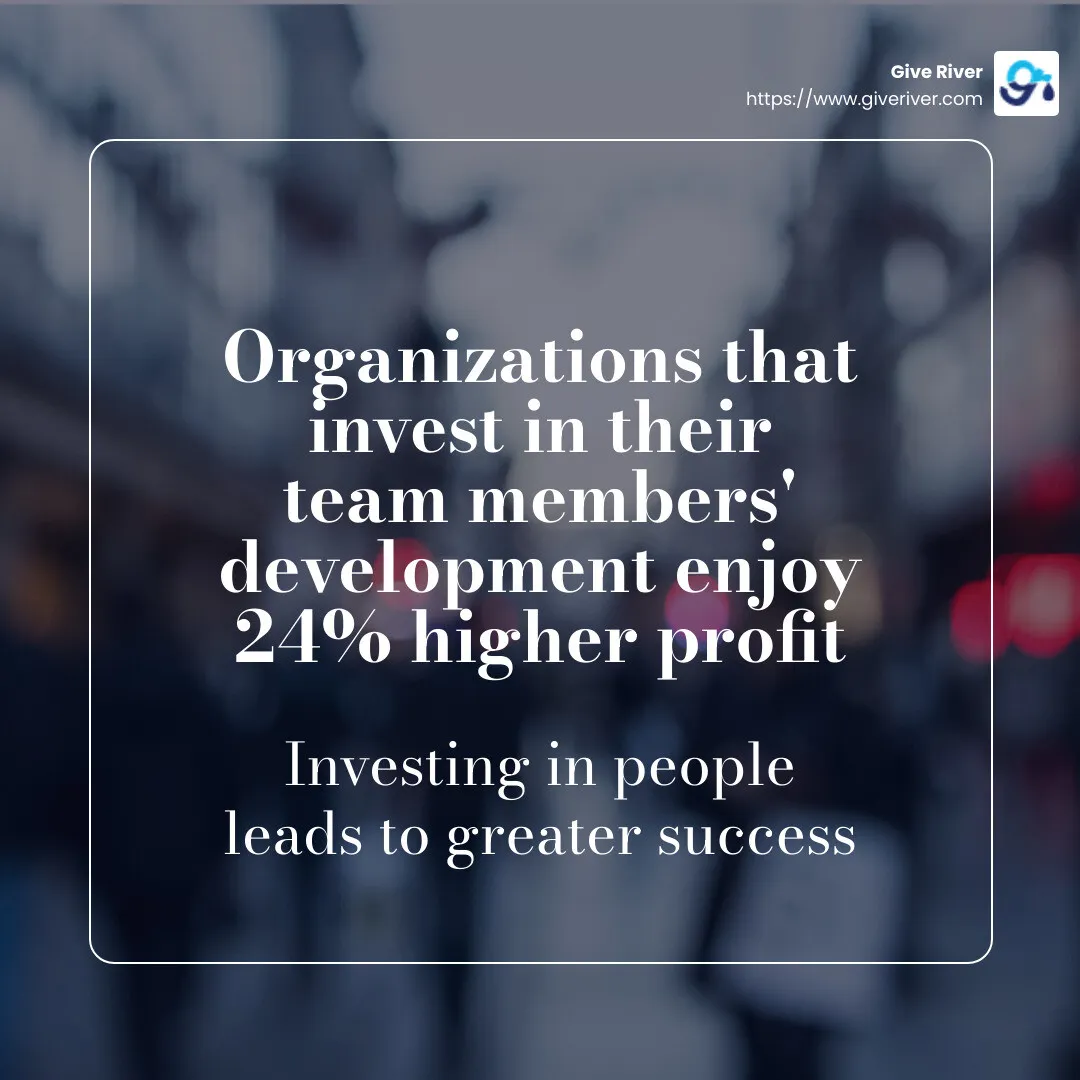
Quote: "Organizations that invest in their team members' development enjoy 24% higher profit."
By following these steps, you create a structured and dynamic professional development environment. This not only improves individual growth but also propels your organization toward greater success. Up next, we'll explore ten proven ways to support your team's career development, ensuring that professional growth is both achievable and sustainable.
10 Proven Ways to Support Employee Career Development
Supporting professional development for employees is key to fostering a thriving workplace. Here are ten effective strategies to help your team grow and succeed:
1. Skill Assessment
Begin by understanding the strengths and areas for growth of your team members. Regular performance evaluations and self-assessments can help pinpoint skills that need development. This step ensures that the right resources are allocated to the right people.
Example: A company that regularly assesses employee skills can tailor development plans that improve both individual and team performance.
2. Training Programs
Offer a variety of training programs that cater to both technical and soft skills. Technical training might include courses in data science or programming, while soft skills training could focus on communication and collaboration.
Statistic: Companies with comprehensive training programs report a 22% increase in productivity.
3. Mentorship
Pairing employees with mentors can accelerate their career growth. Mentors provide guidance, share valuable insights, and help steer career challenges. This relationship fosters personal and professional development.
Example: A mentorship program can lead to a 76% increase in employee satisfaction, as employees feel supported in their career journeys.
4. Managerial Training
Equip potential leaders with the skills needed for management roles through targeted training. Focus on areas like team motivation, conflict resolution, and strategic planning.
Statistic: Investing in leadership development can yield a 7:1 return on investment, according to recent studies.
5. Career Coaching
Offer career coaching to help employees identify their career goals and create actionable plans. This personalized approach ensures that employees feel empowered to take charge of their career paths.
Quote: "Career coaching opens doors to new opportunities and inspires employees to reach their full potential."
6. Career Development Plans
Develop personalized career development plans that align with both the employee's aspirations and the company's goals. These plans should include milestones and timelines to track progress.
Example: A well-structured career development plan can boost employee engagement and retention, as it provides a clear path for advancement.
7. Unique Skills
Encourage employees to develop unique skills that set them apart. This could involve learning a new language, mastering a niche software, or developing creative problem-solving techniques.
Example: Employees with unique skills often bring innovative solutions to the table, driving company success.
8. Cross-Functional Projects
Involve employees in cross-functional projects to broaden their experience and skill set. Working with different teams improves adaptability and fosters collaboration.
Statistic: Cross-functional collaboration can increase innovation by 30%, as diverse perspectives lead to creative solutions.
9. Networking
Facilitate networking opportunities both within and outside the company. Encourage attendance at industry conferences, workshops, and networking events to build valuable connections.
Example: Networking can open doors to new opportunities and career advancement, as employees gain insights from industry leaders.
10. Technology Tools
Provide access to technology and tools that support career development. Online learning platforms, webinars, and career assessment tools empower employees to take control of their growth.
Statistic: Companies that offer modern learning tools report 34% higher profit margins, linking tech investments to improved productivity.
By implementing these strategies, you create a supportive environment that nurtures employee growth and aligns with organizational success. Next, we'll address common questions about professional development for employees, providing clarity and guidance for your team's journey.
Frequently Asked Questions about Professional Development for Employees
What is employee professional development?
Employee professional development is all about helping your team grow and succeed. It involves setting career goals, gaining new skills, and boosting job satisfaction. Think of it as a roadmap for employees to improve their abilities and advance in their careers.
Professional development can include everything from workshops and online courses to mentorship programs. These activities help employees acquire new skills and knowledge, making them more valuable to the team and more satisfied in their roles.
Example: An employee who takes a course on data analysis might find new ways to contribute to their team, leading to a sense of accomplishment and job satisfaction.
How can professional development improve employee retention?
Employee retention is crucial for any organization, and professional development plays a big role in keeping your team around. When employees see that their company is invested in their growth, they feel more loyal and engaged.
Engagement is key. Engaged employees are more likely to stay with a company, reducing turnover rates. When employees have clear career growth paths, they are less likely to look for opportunities elsewhere.
Statistic: Companies that invest in employee development see a 30% increase in retention, according to recent studies.
What are examples of professional development activities?
There are many ways to support professional development for employees. Here are a few examples:
Workshops: These are interactive sessions where employees can learn new skills and best practices. They provide hands-on experience and are great for team building.
Online Courses: These offer flexibility and can be custom to an employee’s schedule. Topics can range from technical skills like programming to soft skills like communication.
Mentorship Programs: Pairing employees with experienced mentors can accelerate career growth. Mentors offer guidance, share insights, and help mentees steer challenges.
Each of these activities contributes to a more skilled and engaged workforce, leading to better performance and job satisfaction.
Statistic: Companies with robust professional development programs report a 24% increase in profitability, highlighting the business impact of investing in your team.
Next, we will explore how to implement effective professional development plans that align with both employee aspirations and company goals.
Conclusion
In today's world, professional development for employees is more than just a perk—it's a necessity. It drives employee fulfillment, improves professional growth, and fosters a positive workplace culture. At Give River, we understand the profound impact that a well-rounded development strategy can have on both individuals and organizations.
Employee fulfillment is at the heart of everything we do. When employees feel valued and see opportunities for growth, they are not only more engaged but also more productive. This sense of fulfillment leads to higher job satisfaction and retention rates, benefiting both the employee and the organization.
Professional growth is a journey, and at Give River, we provide the tools and resources to support this journey. Our platform integrates recognition, wellness, and growth tools to create a comprehensive approach to employee development. By focusing on skill improvement, leadership training, and personal wellness, we help teams open up their full potential.
A thriving workplace culture is built on continuous learning and development. Our unique 5G Method combines gamification, guidance, and community impact to create an environment where employees feel supported and motivated. This approach not only improves individual performance but also strengthens team dynamics and collaboration.
In conclusion, investing in professional development is not just about improving skills—it's about building a culture of growth and success. By prioritizing employee development, companies can achieve higher productivity, increased profitability, and a more engaged workforce. At Give River, we're committed to helping organizations create happier, healthier, high-performing teams.
Explore how our innovative solutions can transform your workplace culture by visiting our Generosity page. Let's empower your team to thrive and succeed together.
More from this category.

Employee Recognition Platforms With Learning & Development (2026)
Which recognition platforms include learning content? Six compared from their own sites, plus why one tool for recognition and learning beats paying for two.

Why Choosing the Right Learning and Development Platforms Matters in 2026
Learning and development platforms have become one of the most critical investments a company can make — yet with over 800 competing systems on the market, finding the right fit feels overwhelming.

Why Investing in Career Development is a Win-Win
A career development program sample gives HR leaders and CEOs a concrete starting point for building structured, meaningful growth pathways for their teams — without having to reinvent the wheel. Here are seven proven program types you can…
See the platform in action.
Free for up to 25 members, or try Core or Growth free for 30 days. A card is required; Free is never charged, and a trial bills when it ends unless you cancel.