Why Community Involvement Programs in Schools Matter
Community involvement programs in schools are collaborative relationships between educational institutions and local stakeholders like families, businesses, and non-profits. They are crucial for creating a supportive ecosystem that…
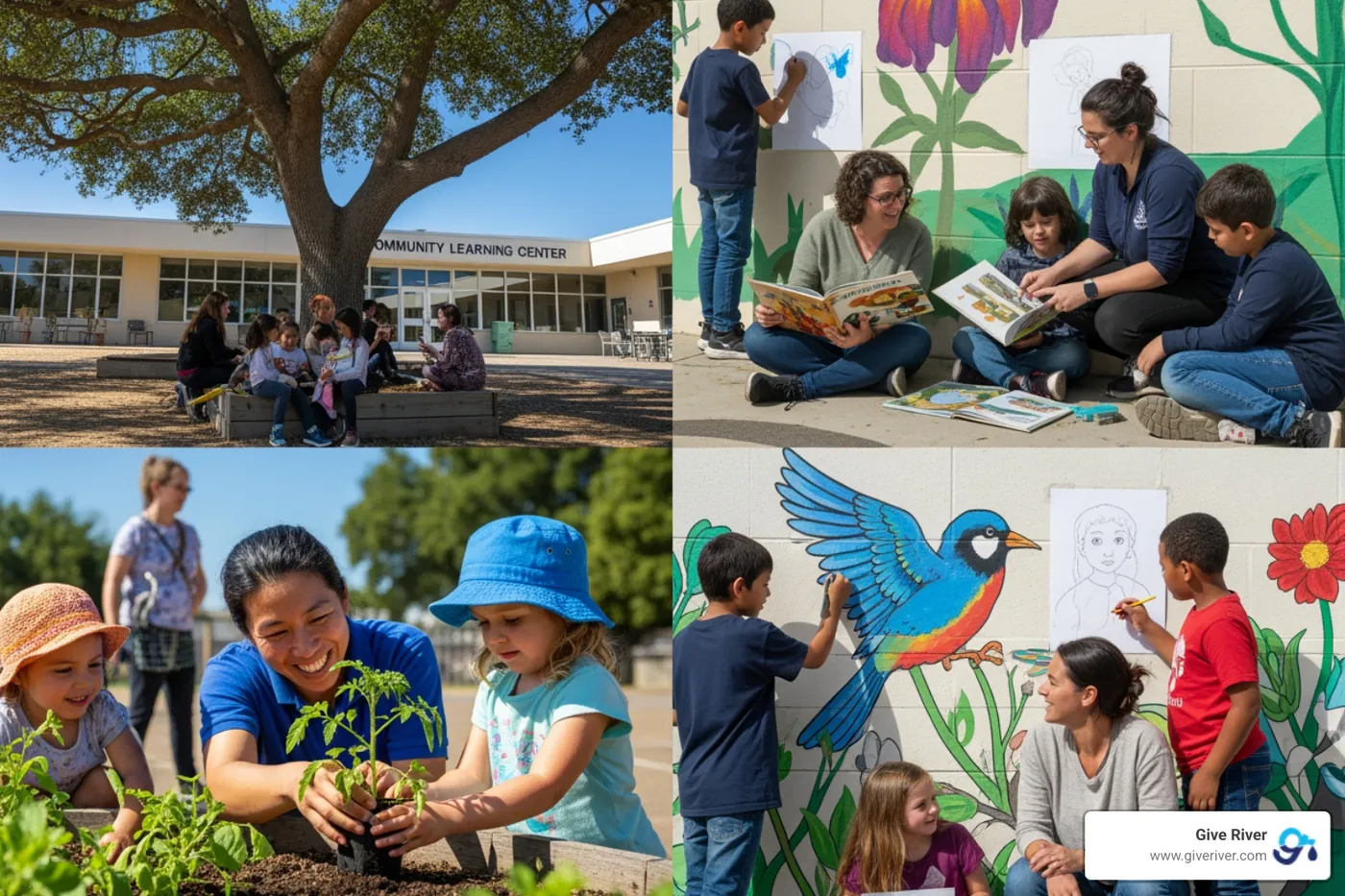
Community involvement programs in schools are collaborative relationships between educational institutions and local stakeholders like families, businesses, and non-profits. They are crucial for creating a supportive ecosystem that benefits students, educators, and the wider community. When schools actively engage with their communities, it significantly improves the learning environment and student outcomes.
Here are key types of community involvement programs in schools:
- Parental Engagement: Involving parents in school decisions and learning activities.
- Place-Based Learning: Using the community as a classroom through local projects and field trips.
- Service Learning: Merging academics with community service to solve real-world problems.
- Mentorship Networks: Linking students with professional role models for guidance.
- Cultural Events & Workshops: Celebrating diverse cultures to foster community understanding.
- Volunteering Opportunities: Welcoming community members to assist in various school roles.
- Administrative Partnerships: Including community representatives on school boards for shared decision-making.
- Technology-Facilitated Connections: Using digital tools for communication and virtual collaboration.
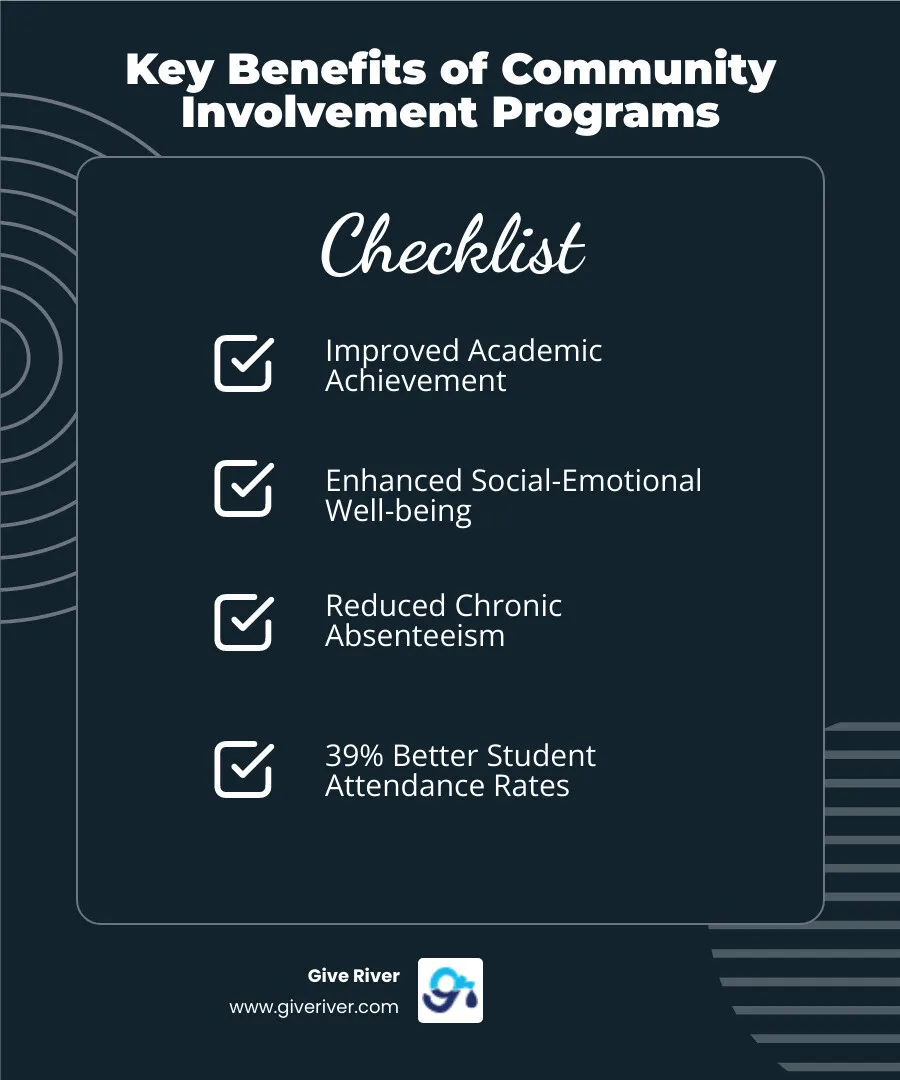
These partnerships lead to better academic achievement, improved social-emotional well-being, and reduced chronic absenteeism. Research shows that students with involved communities achieve higher grades and have better attendance. For instance, schools with stronger family engagement have seen 39% better student attendance rates, underscoring the power of these collaborative efforts.
As Meghan Calhoun, Co-Founder of Give River, I've seen how fostering strong connections can transform organizations. My work, including experience with community involvement programs in schools, has reinforced the profound impact that collaboration and shared purpose have on development and success.
The Spectrum of Impact: Key Benefits and Types of Community Involvement Programs in Schools
When we talk about community involvement programs in schools, we're discussing a powerful synergy that extends far beyond the classroom walls. These initiatives create a ripple effect, positively influencing students, teachers, and the entire community. Let's dig into the profound benefits and varied forms these programs can take.
Boosting Student, School, and Community Well-being
The primary beneficiaries of robust community involvement programs in schools are the students. The evidence is compelling:
- Academic Achievement: Students with community support achieve higher grades and test scores due to increased learning opportunities.
- Attendance and Retention: When schools and communities work together, students attend school more regularly. Schools with stronger family engagement have witnessed a remarkable 39% better student attendance.
- Social-Emotional Well-being: Community involvement fosters a sense of belonging and self-esteem, which is associated with higher life satisfaction and reduced feelings of loneliness.
- Physical Health: School-based programs with a community component are associated with greater decreases in students' Body Mass Index (BMI) and improvements in family physical health.
- Motivation and Attitude: Students with involved families exhibit more positive attitudes about schoolwork, leading to increased motivation.
But the benefits don't stop with students. Teachers feel more supported and optimistic, boosting their job satisfaction. The community itself also reaps rewards by fostering social cohesion and creating new opportunities for residents. Strong partnerships allow schools to leverage community assets to address challenges like basic family needs, childcare, and health, benefiting everyone.
The evidence base supporting these positive impacts is robust. You can explore more scientific research on child outcomes and the profound effects of these programs.
A Guide to Different Types of Community Involvement Strategies
Community involvement programs in schools are not one-size-fits-all. Here are some of the most effective strategies:
- Parental and Family Engagement: This cornerstone involves parents in decision-making and learning activities, creating a welcoming school environment where families feel valued.
- Place-Based Learning: This strategy uses the local community as a dynamic learning framework, connecting classroom content to the real world through field trips to local sites or nature reserves.
- Service Learning: This combines academics with community service. For example, the Florida 4-H Community Pride program empowers youth to identify community issues and implement solutions like creating sustainable gardens.
- Mentorship Networks: Bringing community role models and professionals into schools provides invaluable guidance, career advice, and academic support.
- Cultural Events and Workshops: Schools can become cultural hubs by hosting events that celebrate the diverse backgrounds of their students and the local community.
- Volunteering Opportunities: Schools can offer roles for community members, from classroom assistants to reading buddies, integrating them more deeply into the educational process.
- Administrative Partnerships: Engaging community members on school boards or advisory committees ensures that school policies reflect the broader community's needs.
- Community Schools Initiative: Large-scale programs, like the one in New York City, partner with community-based organizations to provide a wide range of services that empower students and families.
- Community Service as a Graduation Requirement: Some districts, like Atlanta Public Schools, mandate community service for graduation to foster an awareness of community needs.

The Role of Technology in Modern School-Community Partnerships
Technology has become an indispensable tool for facilitating community involvement programs in schools, breaking down barriers and creating new avenues for engagement.
- Online Engagement Platforms: Tools like ThoughtExchange enable schools to gather anonymous input from the community, facilitating participatory decision-making.
- Video Conferencing Facilities: This allows students to interact with experts from anywhere, enriching lessons with real-world perspectives.
- Interactive Displays: These tools can transform how students present community research and collaborate on projects.
- Improved Communication Tools: School newsletters, social media, and dedicated apps keep the community informed. Translating information is crucial for inclusivity.
At Give River, we understand the power of digital platforms to foster engagement. While platforms like Bonusly and Kudos excel at internal employee recognition, Give River offers a unique approach that integrates recognition, wellness, and growth with a strong emphasis on community impact. Our 5G Method, including gamification and generosity, can inspire a school community to contribute to local causes, track their collective impact, and celebrate their contributions. This approach can transform how schools engage their communities, turning good intentions into measurable, celebrated actions.
Building Bridges: A Practical Framework for Successful Implementation
Implementing successful community involvement programs in schools requires thoughtful planning, persistent effort, and a commitment to building genuine relationships where every voice feels valued.
Overcoming Common Barriers to Community Involvement Programs in Schools
While the benefits are clear, schools often face several challenges:
- Time and Resource Constraints: A common barrier is the lack of dedicated time and resources for staff and community members to plan and execute programs.
- Solution: Start with small, defined projects to build trust. A dedicated community liaison and a central resource hub can streamline efforts. Leverage community skills by offering framework development as a volunteer opportunity.
- Ambiguity of Engagement Processes: Community partners may not know how to engage, or their roles might be unclear, leading to disengagement.
- Solution: Proactively define roles, responsibilities, and expectations. Establish a shared vision with clear timelines and hold regular, open meetings to foster dialogue.
- Conflicting Ideas and Priorities: Educators, families, and community partners may have differing ideas on the best approach.
- Solution: Use inclusive decision-making processes, potentially facilitated by neutral platforms, to build consensus and create strategies that respect diverse viewpoints.
- Technological Limitations: Not all community members have reliable internet access or digital proficiency, creating a digital divide.
- Solution: Offer multi-faceted communication strategies that include traditional methods (phone calls, flyers) alongside digital ones. Provide training or access to school computer labs to bridge the gap.
Overcoming these barriers requires a strategic approach focused on clear communication and mutual respect.

Planning and Promoting Inclusive Community Involvement Programs in Schools
Effective programs are built on careful planning and inclusive promotion to ensure everyone feels empowered to participate.
- Needs and Assets Assessment: Understand the community by surveying students, families, and staff to identify needs and assets. Create a community resource map to leverage existing strengths.
- Establishing a Shared Vision: Collaboratively develop a shared vision with all stakeholders. Clearly define roles, establish measurable goals, and ensure shared accountability.
- Inclusive and Culturally Responsive Outreach: Intentionally reach out to all segments of the community. For immigrant and non-English speaking families, provide bilingual resources and interpreters. Create a welcoming environment by integrating culturally relevant materials and building authentic relationships at community events.
- Consistent Communication: Use school newsletters, social media, and local news to promote opportunities. Build genuine relationships based on mutual respect, not just transactional requests.
- Dedicated Leadership: Establish a site-based leadership team with broad representation. A dedicated community liaison is critical for coordinating efforts.
- Ensuring Reciprocity: Partnerships thrive when they are mutually beneficial. Consider how the school can give back, such as by opening facilities for community use.
- Ongoing Evaluation: Regularly evaluate partnership progress and provide professional development for staff and partners to build trust and improve collaboration.
Conclusion: Investing in the Future, One Partnership at a Time
Community involvement programs in schools are fundamental to creating thriving educational environments and robust communities. These collaborations boost student achievement and well-being, promote teacher optimism, and strengthen community bonds. While challenges like resource constraints exist, they are surmountable with thoughtful planning and a commitment to genuine relationship-building.
By conducting needs assessments, engaging diverse voices, and fostering reciprocity, schools can build impactful and sustainable partnerships. Investing in community involvement programs in schools is an investment in our collective future, recognizing that schools are vital community hubs where collaboration creates limitless potential.
At Give River, we believe in the power of collective action to drive meaningful impact. While platforms like Bonusly and Kudos excel at internal recognition, our unique 5G Method—focusing on gratitude, gamification, generosity, guidance, and growth—provides a framework that empowers schools and communities to foster even stronger connections with an emphasis on community impact. By recognizing contributions and encouraging generosity, we can build vibrant ecosystems where everyone thrives.
Ready to learn how your school or community can foster greater impact? Learn how to foster community impact
More from this category.

The Importance of Community Involvement
Community involvement programs are the heartbeat of social wellbeing, changing neighborhoods into collaborative and vibrant spaces. At their core, these programs enable both individuals and businesses to meaningfully participate in…

Recognition Software With Charitable Giving (2026): 6 Platforms Compared
Most recognition platforms let employees donate their rewards. Six compared on donations, company match, causes, and volunteering, from each vendor's own site.
Why Community Involvement Grants Matter for Your Organization's Impact
Community involvement grants provide essential funding to help organizations—from nonprofits and schools to businesses—create meaningful change. These grants can feel overwhelming to steer, but they offer a powerful way to address critical…
See the platform in action.
Free for up to 25 members, or try Core or Growth free for 30 days. A card is required; Free is never charged, and a trial bills when it ends unless you cancel.