Why Community Involvement Grants Matter for Your Organization's Impact
Community involvement grants provide essential funding to help organizations—from nonprofits and schools to businesses—create meaningful change. These grants can feel overwhelming to steer, but they offer a powerful way to address critical…
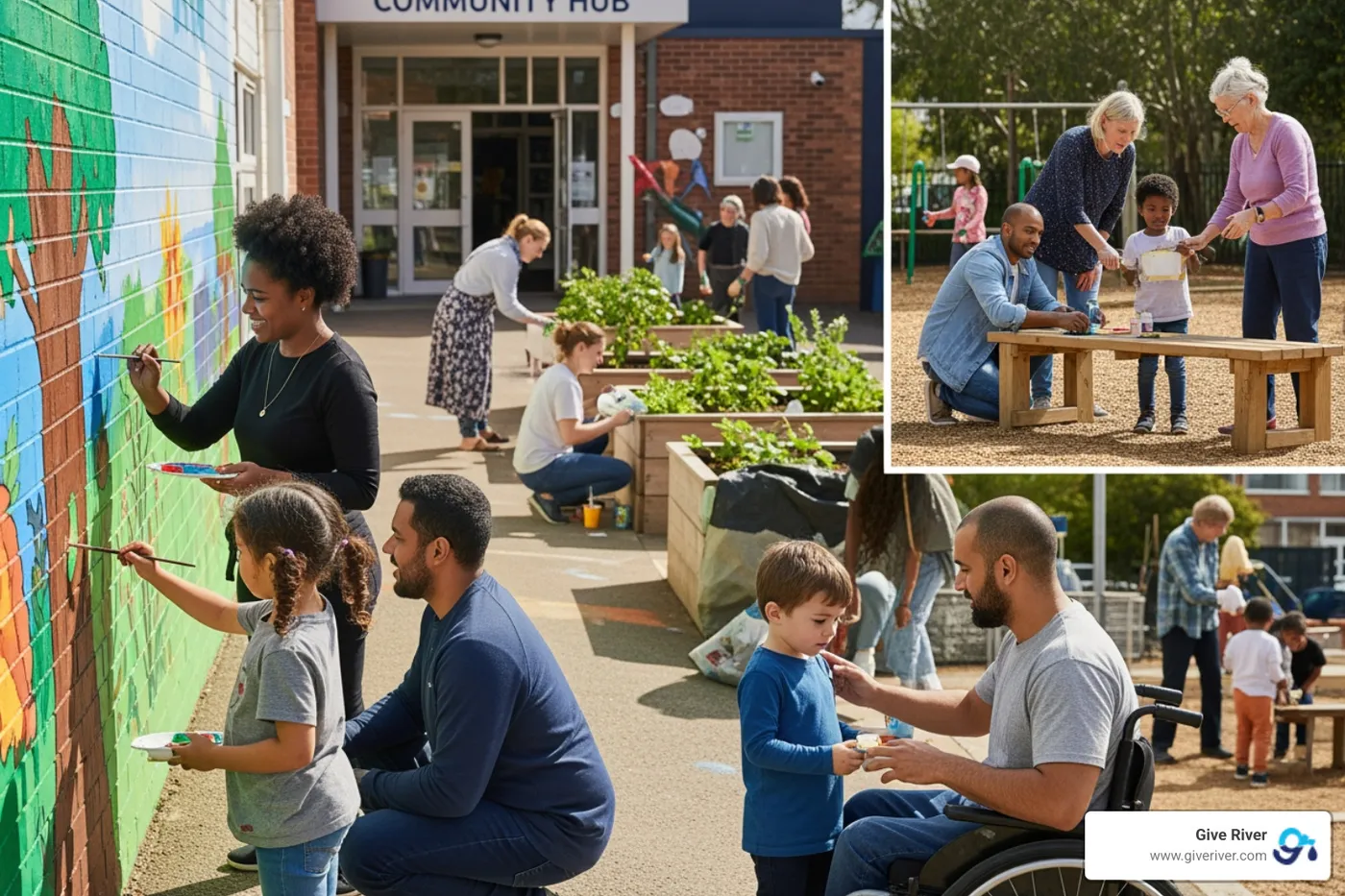
Community involvement grants provide essential funding to help organizations—from nonprofits and schools to businesses—create meaningful change. These grants can feel overwhelming to steer, but they offer a powerful way to address critical community needs while strengthening your team through purpose-driven work.
Key things to know:
- Grant amounts range from a few hundred dollars to over $250,000.
- Eligible organizations typically include 501(c)(3) nonprofits, government entities, schools, and faith-based groups with community-wide projects.
- Funded projects span education, health, technology, public safety, and more.
- Success factors include mission alignment, clear community impact, and sustainable planning.
Many leaders want to make a difference but find the grant-seeking process daunting. The good news is that these opportunities are available to a wide range of organizations, not just traditional nonprofits. Strategic grant funding can amplify both community outcomes and employee fulfillment.
I'm Meghan Calhoun, Co-Founder of Give River, and I've spent over two decades helping organizations build cultures where employees thrive by connecting their work to meaningful community impact. I've seen how these grants can transform communities and energize teams.
Your Roadmap to Securing Community Involvement Grants
Securing a community involvement grant can be a game-changer for your organization. Let's explore the essential components of navigating this landscape.
Who is Eligible and What Gets Funded?
Understanding eligibility is the first step. Funders have specific criteria to ensure their investments align with their mission.
Eligible Organizations: Most grants are directed toward organizations with a clear public benefit. This often includes:
- 501(c)(3) Public Charities: The most common recipients.
- Government Entities: Local, state, and tribal governments supporting public services.
- Schools and Universities: For projects related to student well-being and educational improvement.
- Faith-Based and Indigenous-Led Organizations: For projects with community-wide benefits that do not discriminate.
Understanding how your corporate social responsibility efforts align with these programs can also open doors to partnership opportunities.

Common Exclusions: Be aware of common ineligibilities:
- Organizations without a charitable purpose (like 501(c)(4)s or 501(c)(6)s).
- Grants for individuals.
- Projects involving political lobbying or campaigns.
- Organizations that practice discrimination.
- Certain operational costs, though some grants allow a percentage for administrative overhead.
Many grant programs also have specific geographic or demographic focuses, such as under-resourced communities, rural areas, youth development, or low-income individuals.
Understanding Grant Amounts and Funding Cycles
Next, identify opportunities that match your project's financial scope and timeline.
Grant amounts and funding cycles vary widely:
- Small Community Grants ($250 - $5,000): Often offered by local businesses and corporate programs with quarterly or annual deadlines. These are great for smaller, targeted projects.
- Mid-Range Grants (Up to $20,000): Provided by community foundations for more substantial, single-year projects. These often have biannual application cycles.
- Larger Project-Based Grants ($35,000 - $250,000+): For significant capital projects or programs with broad impact. These typically come from larger foundations with quarterly or biannual review cycles and longer decision timelines.
- Federal Programs: Block grants like the Community Services Block Grant (CSBG) provide massive funding to states, which then distribute it to local agencies to combat poverty.
Missing a deadline can delay your project, so map out potential grant opportunities and their timelines well in advance.
| Grant Program (Example) | Typical Grant Amount | Funding Cycle | Primary Focus |
|---|---|---|---|
| Local Corporate Grant | $250 - $5,000 | Quarterly | Local community needs |
| Community Foundation Grant | Up to $20,000 | Biannual | Youth health and education |
| Major Foundation Grant | $35,000 - $250,000 | Quarterly/Biannual | Capital projects, broad impact |
Key Criteria Funders Use for Evaluation
How do you stand out? Funders seek strategic investments that yield measurable, sustainable results.
Key evaluation criteria include:
- Mission Alignment: Your project must directly support the funder's stated goals.
- Demonstrated Impact: Show tangible results with clear, quantifiable metrics. Instead of "we'll help people," say "we will serve 100 families, resulting in a 20% increase in food security."
- Community Need: Provide evidence that your project addresses a genuine community gap.
- Financial Health: Demonstrate responsible financial management with current statements and a clear budget.
- Project Sustainability: Explain how the project will continue after the grant funding ends.
- Innovation and Technology: Highlight new approaches or how technology will amplify your impact.
- Community Engagement: Show that community members are involved in the project's design and implementation.
Community involvement grants are powerful catalysts for positive change. They help alleviate poverty, improve education, stimulate local economies, and build social cohesion by empowering local organizations to solve their own challenges.
From Application to Impact: A Winning Strategy
Once you understand the landscape, the next phase is crafting compelling applications and bringing your projects to life.
Examples of Successful Grant-Funded Projects
Real-world examples illustrate the power of community involvement grants.
Across various sectors, grants fuel initiatives that address community needs:
- Education and Youth Development: Funding can support school greenhouses, update computer and STEM labs at youth centers, or create digital learning hubs.
- Health and Wellness: Grants frequently purchase life-saving equipment like AEDs for first responders or support community health and wellness programming.
- Public Service and Safety: Projects include purchasing specialized equipment for fire departments or funding rapid-response initiatives during a crisis.
- Community Infrastructure: Grants can help improve parks and trails, fund community-led environmental clean-ups, or support arts and culture projects.
- Poverty Alleviation: Federal and local grants provide critical services like housing, nutrition, and transportation assistance, and are crucial for food banks to expand their operations.

Technology is a fundamental tool in maximizing the reach and efficiency of grant-funded projects. Funders increasingly prioritize projects that strategically integrate technology to improve service delivery, improve efficiency, and measure impact more effectively.
The Step-by-Step Process for Community Involvement Grants
Breaking the application process into manageable steps makes it much clearer.
- Research: Identify funders whose missions align with your project. Look at corporate giving programs, private foundations, and government initiatives like the federal programs like the CSBG.
- Check Guidelines: Thoroughly read the guidelines on eligibility, project types, and specific requirements.
- Engage Partners: Many grants favor collaborative projects. Engage partners early to demonstrate broad community support.
- Develop Your Plan: Clearly define your project's goals, activities, and anticipated outcomes.
- Craft a Compelling Proposal: Tell a clear, persuasive story of your project's impact.
- Create a Detailed Budget: Provide a realistic, itemized budget showing how funds will be used.
- Gather Documents: Prepare your 501(c)(3) letter, financial statements, board list, and letters of support.
- Submit: Pay close attention to submission instructions and deadlines.
- Follow-Up: If awarded, be prepared to submit progress reports. This builds trust for future funding.
Each step is an opportunity to showcase your organization's professionalism and dedication.
How to Prepare a Strong Application for Community Involvement Grants
A strong application tells a story, demonstrates capability, and inspires confidence.
To maximize your chances of success:
- Start with Strategic Alignment: Ensure your project is a perfect fit for the funder's priorities.
- Use Clear, Quantifiable Metrics: What will you achieve, and how will you measure it? Be specific.
- Craft a Compelling Narrative: Articulate the community need and paint a vivid picture of the positive change your project will bring.
- Showcase Strong Partnerships: Collaboration demonstrates broad support and a shared vision.
- Highlight Financial Health: Provide clear, current financial statements. For nonprofits, 100% board giving is a powerful signal of commitment.
- Emphasize Sustainability: Outline how your project will continue after the grant period.
- Integrate Employee Participation: Show how your team is actively involved. While platforms like Bonusly or Kudos are popular for internal recognition, their focus is primarily on employee morale. Give River provides a distinct advantage for grant proposals by connecting employee actions directly to measurable community outcomes. This creates a powerful, data-backed story of integrated impact that funders look for.
- Adhere to All Guidelines: Missing a deadline or a required document can lead to immediate disqualification.
By focusing on these elements, you're not just asking for money; you're presenting a strategic investment opportunity in your community's future.
Conclusion
Securing community involvement grants is a powerful way for organizations to amplify their impact, foster deeper community connections, and drive meaningful change. By researching eligibility, understanding funding cycles, and preparing strong applications that highlight measurable outcomes and community partnerships, your organization can open up significant resources.
At Give River, we believe that empowered employees are key to this potential. When employees are engaged in meaningful work and their contributions are recognized, the entire community benefits. Our platform helps organizations connect employee actions directly to measurable community outcomes, providing a unique edge in demonstrating collective impact for grant applications and beyond.
Ready to explore how your organization can improve its charitable impact and empower your team to make a difference? Explore Give River's solutions to learn how we can help you integrate generosity and community involvement into your workplace culture.
More from this category.

The Importance of Community Involvement
Community involvement programs are the heartbeat of social wellbeing, changing neighborhoods into collaborative and vibrant spaces. At their core, these programs enable both individuals and businesses to meaningfully participate in…
Recognition Software With Charitable Giving (2026): 6 Platforms Compared
Most recognition platforms let employees donate their rewards. Six compared on donations, company match, causes, and volunteering, from each vendor's own site.

Why Getting Involved Matters: More Than Just Giving Back
Community involvement ideas span from food drives and tutoring to charity runs and park clean-ups. Whether you prefer hands-on projects, skill-based opportunities, donation drives, or corporate volunteer programs, there are countless ways…
See the platform in action.
Free for up to 25 members, or try Core or Growth free for 30 days. A card is required; Free is never charged, and a trial bills when it ends unless you cancel.