Why Recognition Feels Broken in Today's Workplace
Picture this: your whole department gets the same canned "thank-you" email. It lands with a thud. Connected recognition exists to replace that hollow gesture with a system that consistently spotlights real contributions.

What is Connected Recognition? From Buzzword to Business Imperative
Picture this: your whole department gets the same canned "thank-you" email. It lands with a thud. Connected recognition exists to replace that hollow gesture with a system that consistently spotlights real contributions.
Before Cisco introduced Connected Recognition in 2014, praise happened in pockets—some teams were showered with bonuses while others went months with nothing. That uneven experience eroded trust and fueled attrition. Their story isn't unique: when recognition is siloed and inconsistent, employees feel invisible, engagement plummets, and turnover rises.
The Core Definition of Connected Recognition
Connected recognition is a holistic strategy that weaves appreciation into daily workflows, links peers and leaders at every level, and anchors each "thank-you" to company values. Think of it as upgrading from a single spotlight to a network of lights that brightens the whole stage.
Why It's Crucial for Modern Workplaces
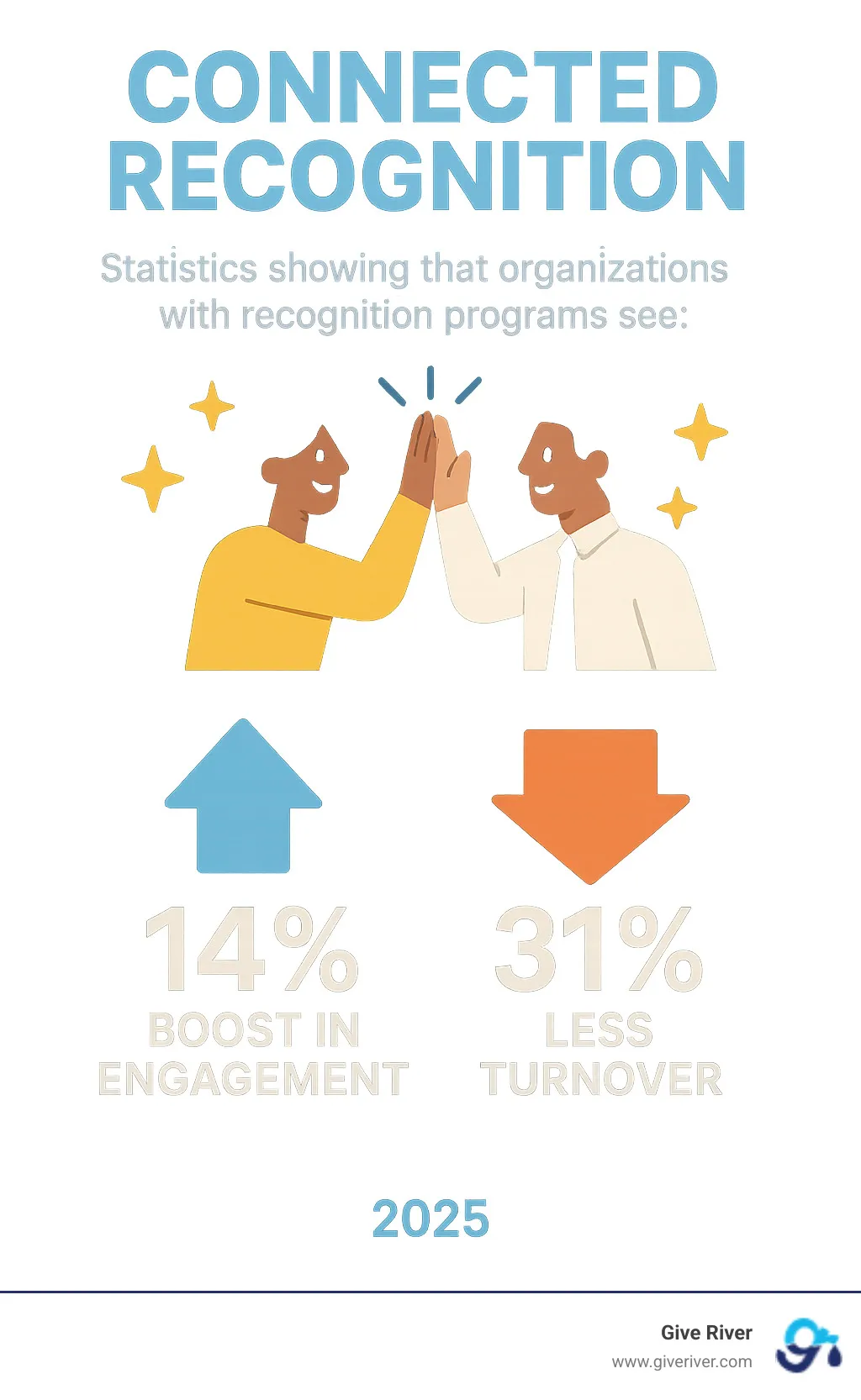
In hybrid teams, hallway high-fives have vanished. Yet 62% of employees still crave stronger relationships. Organizations that adopt connected recognition report a 14% lift in engagement, a 31% drop in voluntary turnover, and employees who are 2.7× more likely to be highly engaged.
The secret isn't just praising more often—it's building connections. Cisco found that its most engaged employees were recognized by 10 or more unique colleagues each year, creating a web of appreciation that strengthens psychological safety and belonging.
Disconnected vs. Connected Recognition Experience
| Disconnected | Connected |
|---|---|
| Siloed | Integrated across teams |
| Inconsistent | Frequent & reliable |
| Generic | Specific & value-aligned |
| Top-down only | 360-degree participation |
| Low impact | High impact on culture & results |
While platforms like Bonusly and Kudos focus primarily on peer-to-peer recognition and rewards, Give River's 5G Method takes a more comprehensive approach by pairing recognition with guidance, wellness, growth, gamification, and community impact—turning appreciation into the natural rhythm of how work gets done.
The Anatomy of a Successful Connected Recognition Program
When I look at organizations that have truly mastered connected recognition, I see something beautiful happening. It's not just about having a program - it's about creating a living, breathing culture where appreciation flows naturally through every interaction. Let me show you what makes these programs work so well.
Multi-Directional and Frequent Appreciation
Here's something that might surprise you: at Cisco, nearly half of all recognition awards come from peers recognizing peers. Not managers praising employees, but colleagues acknowledging each other's daily contributions. There's something powerful about being recognized by someone who truly understands your work challenges.
But here's the secret sauce - frequency matters more than formality. The most engaged employees at Cisco receive recognition every 30 to 40 days. This isn't about overwhelming people with constant praise. It's about creating a steady rhythm of appreciation that becomes as natural as saying "good morning."
When recognition flows in all directions, magic happens. Peer-to-peer recognition creates authentic connections between colleagues. Manager-to-employee recognition provides crucial feedback and guidance. Leadership participation shows that appreciation matters at every level - in fact, 92% of Cisco's executive leaders actively gave recognition in 2018.
The beauty of this approach is that it makes recognition accessible to everyone. You don't need a budget or special authority to appreciate a colleague's help. You just need to notice and speak up. When everyone can give recognition, everyone feels empowered to build a better workplace culture.
Value-Aligned and Specific Feedback
Generic recognition is like getting a form letter - it feels hollow because it could apply to anyone. Connected recognition does something different. It ties every moment of appreciation back to what your organization truly values.
Instead of "Great job on that project," imagine hearing: "Sarah, your attention to detail during the client presentation perfectly exemplified our value of excellence. The way you anticipated their questions and prepared comprehensive responses helped us secure the contract and strengthened our relationship with them."
This specificity creates ripple effects throughout your organization. When you reinforce company values through recognition, you're teaching everyone what excellence looks like. You're clarifying expectations so people understand exactly what behaviors matter most. You're creating learning opportunities where others can see how to excel in their own roles.
Research from the Journal of Business and Economics confirms what we see in practice: specific recognition reinforces successful behaviors and encourages people to repeat them. When we make recognition detailed and value-aligned, we're not just appreciating past performance - we're actively shaping the future of our workplace culture.
Seamless Integration with Technology
Let's be honest - if your recognition program requires people to log into a separate system, remember passwords, and steer complex interfaces, it's going to fail. The adoption success rate of digital tools in traditional industries sits between 4-11%, which means your recognition platform needs to be as easy to use as sending a text message.
Organizations with mobile employee recognition programs experience 28.6% lower voluntary turnover rates. Why? Because mobile access makes recognition immediate and authentic. When someone does great work, you can recognize them in the moment, not weeks later when you finally remember to send that email.
The best recognition technology integrates with collaboration tools your team already uses daily. It provides mobile-first access so recognition can happen anywhere, anytime. It creates social feeds that make appreciation visible and build momentum across the organization. Most importantly, it tracks meaningful metrics that help you understand what's working and what needs improvement.
At Give River, we've learned that when recognition tools integrate seamlessly with how teams already work, participation soars. The technology should feel invisible - just a natural extension of how people communicate and collaborate.
Personalized and Meaningful Rewards
Here's something fascinating: Cisco's $25 peer recognition awards often have more impact on engagement than larger cash bonuses from managers. Why? Because they're more frequent, more personal, and come from people who truly understand your daily work.
Not everyone is motivated by the same rewards. Some employees thrive on public recognition and visibility. Others prefer private appreciation and quiet acknowledgment. Some want experiential rewards like that Thailand vacation we mentioned earlier. Others prefer charitable donations made on their behalf, connecting their work to causes they care about.
The most successful programs balance intrinsic motivators - like connection to company mission and opportunities for growth - with extrinsic motivators like monetary rewards and flexible work arrangements. But here's the key: they offer choice. When employees can select rewards that align with their personal values and preferences, recognition becomes deeply meaningful rather than just another corporate gesture.
This personalization is where connected recognition truly shines. It recognizes that your team is made up of unique individuals with different motivations, preferences, and ways of feeling valued. When you honor those differences, recognition becomes a powerful tool for building genuine connection and engagement.
How to Build and Sustain a Culture of Connected Recognition

Launching a recognition platform is easy; nurturing a culture of recognition takes intention. Follow this lean four-step framework and keep momentum long after the launch confetti settles.
1. Define Objectives & Secure Leadership Buy-In
Start with the business problem—whether it’s attrition, engagement, or siloed teams—and tie clear metrics to success. Cisco invests 1 % of payroll in its program, a signal that recognition matters. Budget is important, but visible executive participation matters more: when leaders nominate publicly, others follow.
2. Design a Program That Fits Your Culture
Use surveys and focus groups to learn what truly motivates your people. Do they prefer public shout-outs or private notes? Monetary perks or volunteer hours? Craft categories and rewards that mirror your core values, not a generic template.
3. Launch, Communicate, Lead by Example
Roll out with a clear “why,” simple instructions, and quick wins. Recruit a network of “recognition champions” to spotlight early success stories. Provide managers micro-learning on how to give feedback that’s timely, specific, and values-based.
4. Braid Recognition Into Everyday Workflows
Fold appreciation into onboarding, 1-on-1s, team meetings, and performance reviews so it never feels like an extra task. Give River’s 5G Method connects recognition to wellness, guidance, growth, gamification, and community impact, embedding appreciation deep into the employee experience.
Measuring Success: Data-Driven Recognition

A great recognition program doesn’t just feel good—it produces metrics your CFO can rally behind. Tracking the right data turns your kudos feed into a live dashboard of team health.
Must-Have Participation Metrics
- Recognition frequency
- Participation rate (givers & receivers)
- Unique nominators (breadth of recognition)
- Cross-departmental shout-outs
- Leadership participation
Quality Metrics That Matter
- Specificity of messages (are they detailed or generic?)
- Value alignment (how often do kudos mention core values?)
- Social engagement (likes, comments, shares)
Tie Data to Business Outcomes
Correlate recognition trends against engagement surveys, retention, and productivity scores to prove ROI. In Cisco’s 60,000-employee study, those widely recognized were far more likely to feel they could use their strengths daily—a predictor of high performance identified by Gallup.
Actionable Insights in Minutes
Recognition analytics spotlight your unsung heroes, reveal departments that need support, and surface which values truly guide day-to-day work. For example, lower recognition rates among remote employees signal a need for targeted nudges. With Give River’s dashboard, these insights are one click away.
The Future of Recognition: Beyond Praise to Purpose
Recognition is evolving from a pat on the back into a full-fledged employee-experience ecosystem.
Wellness & Growth, Seamlessly Linked
Soon, a kudos for creative problem-solving could auto-suggest a design-thinking course, while points might convert into meditation apps or gym passes. Integrating recognition with wellness and learning keeps appreciation tied to personal development.
Gamification & Social Impact
Badges and leaderboards make giving fun, but the real magic happens when rewards fuel causes employees love. Cisco users donated $32 k to global charities through peer awards—proof that generosity amplifies motivation.
Smart Tech, Human Results
AI can nudge managers to recognize on time, recommend personalized rewards, and surface quiet contributors. Used well, this tech supports richer human connection rather than replacing it.
At Give River, our 5G Method already blends recognition, guidance, wellness, growth, and community impact—laying the groundwork for this purpose-driven future.
Conclusion: Build a Culture Where Everyone Feels Valued
When I think about the future of work, I keep coming back to one simple truth: people want to feel valued. Not just appreciated with a generic "thanks for your hard work" email, but genuinely seen and celebrated for the unique contributions they bring to their teams every day.
Connected recognition isn't just another HR initiative you can check off your list. It's about creating a workplace where recognition flows naturally between colleagues, where appreciation aligns with your deepest values, and where every team member feels genuinely connected to something bigger than themselves.
The organizations that get this right don't just see better numbers on their engagement surveys. They create workplaces where people actually want to show up - where a team member in Thailand can feel grateful to their colleagues at Cisco, where peer recognition carries as much weight as manager praise, and where recognition becomes part of the daily rhythm of how work gets done.
The key ingredients we've explored throughout this guide - systematic approaches that integrate with daily workflows, multi-directional appreciation flowing between all levels, value-aligned feedback that reinforces culture, technology that makes recognition accessible, personalized rewards that match individual motivations, and data-driven optimization that demonstrates real business impact - these aren't just best practices. They're the building blocks of cultures where people thrive.
What excites me most about the future of recognition is how it's expanding beyond simple appreciation into something more holistic. When recognition connects to wellness initiatives, professional growth opportunities, community impact, and genuine purpose, it stops feeling like a program and starts feeling like a way of being together.
At Give River, we've seen this change happen when organizations accept our 5G Method. Recognition becomes one thread in a larger mix that includes guidance, personal wellness, professional growth, gamification, and community impact. When these elements work together, they create something powerful - a comprehensive approach to building happier, healthier, high-performing teams through what we like to call "a game of good deeds."
The research is clear: employees are 2.7 times more likely to be highly engaged when recognition is integrated into their daily experience. Organizations see 31% less turnover and 14% productivity boosts when they get recognition right. But beyond the numbers, there's something deeper happening - people are finding more meaning, connection, and fulfillment in their work.
Ready to transform your workplace culture? Explore Give River's Recognition Platform Solutions to build a culture where every contribution is seen, celebrated, and connected to a bigger purpose. Because when recognition becomes truly connected, it doesn't just change how people feel about their work - it changes how they feel about themselves and their place in the world.
The future belongs to organizations that understand this simple truth: when everyone feels valued, everyone wins.
More from this category.
Best Employee Recognition Software for Nonprofits (2026)
What nonprofits need from recognition software, what six platforms charge mission-driven teams, and how to get a grant-funded Season of Give River for free.
Employee Recognition Software Pricing in 2026: What 6 Platforms Charge
What Give River, Bonusly, Motivosity, Nectar, Awardco, and Workhuman charge in 2026, from their own sites: pricing models, minimums, fees, and contract terms.

How to Improve Employee Recognition Across Multiple Locations
Six practical ways to make recognition reach every site and shift, what to look for in a platform, and how a 25-location nonprofit did it.
See the platform in action.
Free for up to 25 members, or try Core or Growth free for 30 days. A card is required; Free is never charged, and a trial bills when it ends unless you cancel.