Understanding Gamification in the Workplace
Employee disengagement is a significant concern for many organizations today, impacting productivity and morale. Employee engagement through gamification offers an innovative solution by changing mundane tasks into exciting experiences. By…

Employee disengagement is a significant concern for many organizations today, impacting productivity and morale. Employee engagement through gamification offers an innovative solution by changing mundane tasks into exciting experiences. By integrating game elements like leaderboards, rewards, and challenges, companies can boost motivation and cultivate a dynamic, engaging workplace culture.
- Boosts Employee Motivation: Gamification makes tasks fun and competitive, leading to higher engagement.
- Improves Productivity: Employees feel more driven when their efforts are recognized through gamified rewards.
- Fosters Team Collaboration: Shared challenges and goals promote teamwork and camaraderie.
As employee disengagement hits worrying peaks, gamification emerges as a powerful tool for change. This approach not only appeals to workers' intrinsic motivations but also drives tangible improvements in job satisfaction and performance.
I'm Meghan Calhoun, and with over twenty years of experience in fostering workplace engagement and well-being, I co-founded Give River to harness gamification for positive organizational change. Let's explore how employee engagement through gamification can make your organization thrive.
Handy employee engagement through gamification terms:
Understanding Gamification in the Workplace
Gamification is changing how we approach work by infusing game elements into everyday tasks. This approach taps into our natural desires for achievement and competition, making work not just a duty, but a dynamic and engaging experience.
Game Elements: The Building Blocks
Game elements are the core components that make gamification effective. These include:
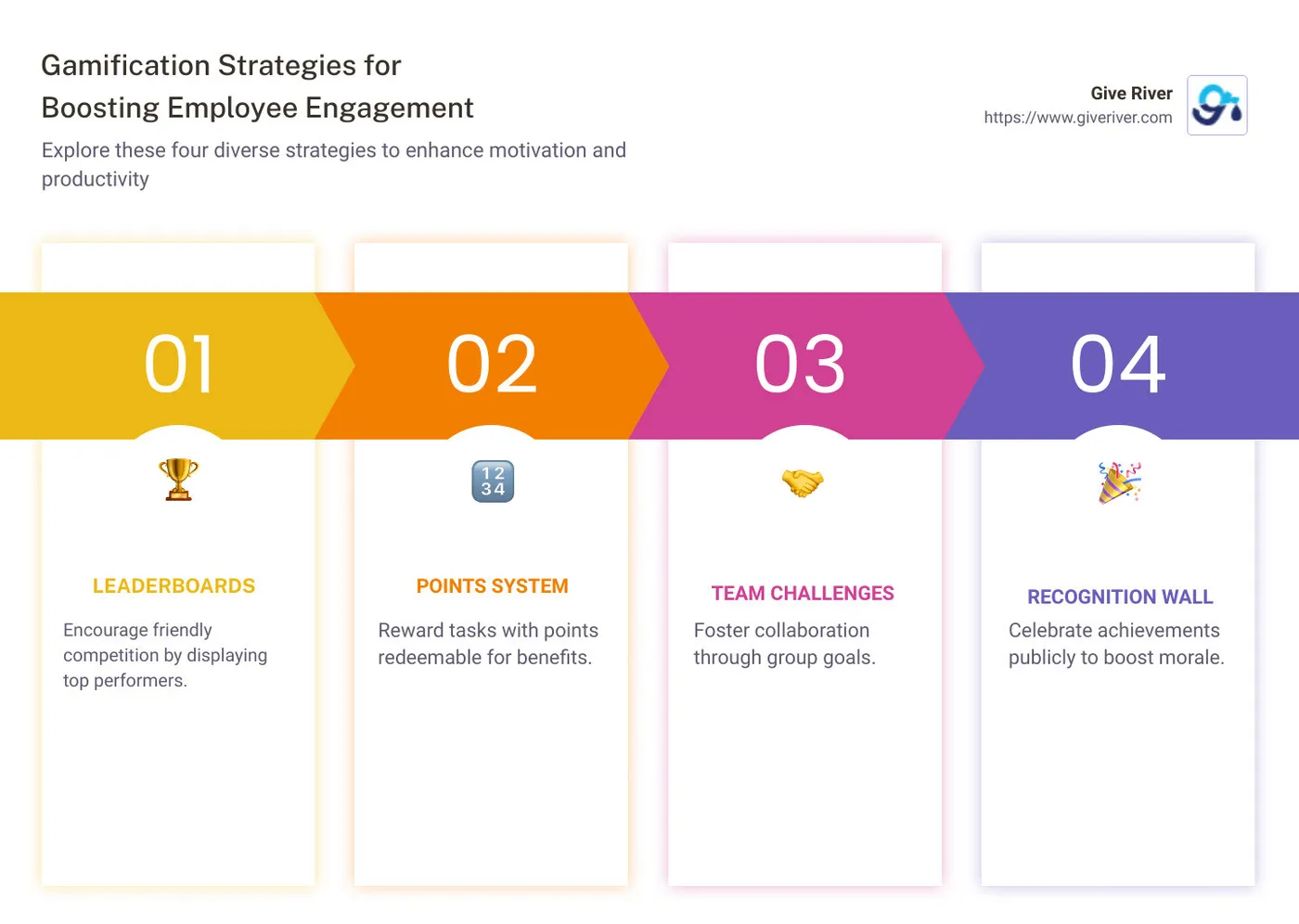
Leaderboards: They introduce a friendly competition, encouraging employees to strive for the top spot. Seeing your name climb on a leaderboard can be a powerful motivator.
Badges and Achievements: These provide visual recognition of accomplishments. Whether virtual or physical, badges serve as milestones that employees can proudly display.
Points System: This quantifies efforts and achievements, offering clear metrics for performance. Employees earn points for completing tasks, which can be redeemed for rewards.
Motivational System: Driving Engagement
A well-structured motivational system is essential for gamification success. It aligns with employees' intrinsic desires for autonomy, competence, and purpose:
Autonomy: Employees have control over their tasks and can choose how to earn points or badges. This freedom improves job satisfaction.
Competence: As employees open up achievements, they gain a sense of mastery and confidence in their abilities.
Purpose: Gamification connects daily tasks to larger organizational goals, providing a sense of meaning and direction.
Employee Motivation: The Key to Success
Gamification directly boosts employee motivation by making work more enjoyable and rewarding. When tasks are gamified, employees are more likely to:
Engage Deeply: They become more involved in their work, driven by the desire to achieve and compete.
Collaborate Effectively: Shared challenges foster teamwork and strengthen relationships among colleagues.
Stay Committed: Recognized efforts lead to higher job satisfaction and reduced turnover.
When employee disengagement is a growing concern, gamification offers a promising solution. By leveraging game elements, organizations can create a vibrant workplace culture that not only motivates but also sustains long-term engagement.
10 Gamification Ideas to Boost Employee Engagement
Gamification is revolutionizing employee engagement by introducing fun and motivation into everyday tasks. Here are ten effective gamification techniques to improve your team's experience at work.
1. Leaderboards
Leaderboards are a classic gamification tool that adds a competitive edge to the workplace. They allow employees to see how they rank against their peers. This visibility encourages them to push their limits and strive for excellence. When employees see their names at the top, it boosts their morale and instills a sense of pride.
2. Badges and Achievements
Badges provide visual recognition for accomplishments. They serve as milestones, allowing employees to showcase their achievements. Whether virtual or physical, badges tap into the innate human desire for recognition and accomplishment. This sense of achievement can significantly boost engagement.
3. Points System
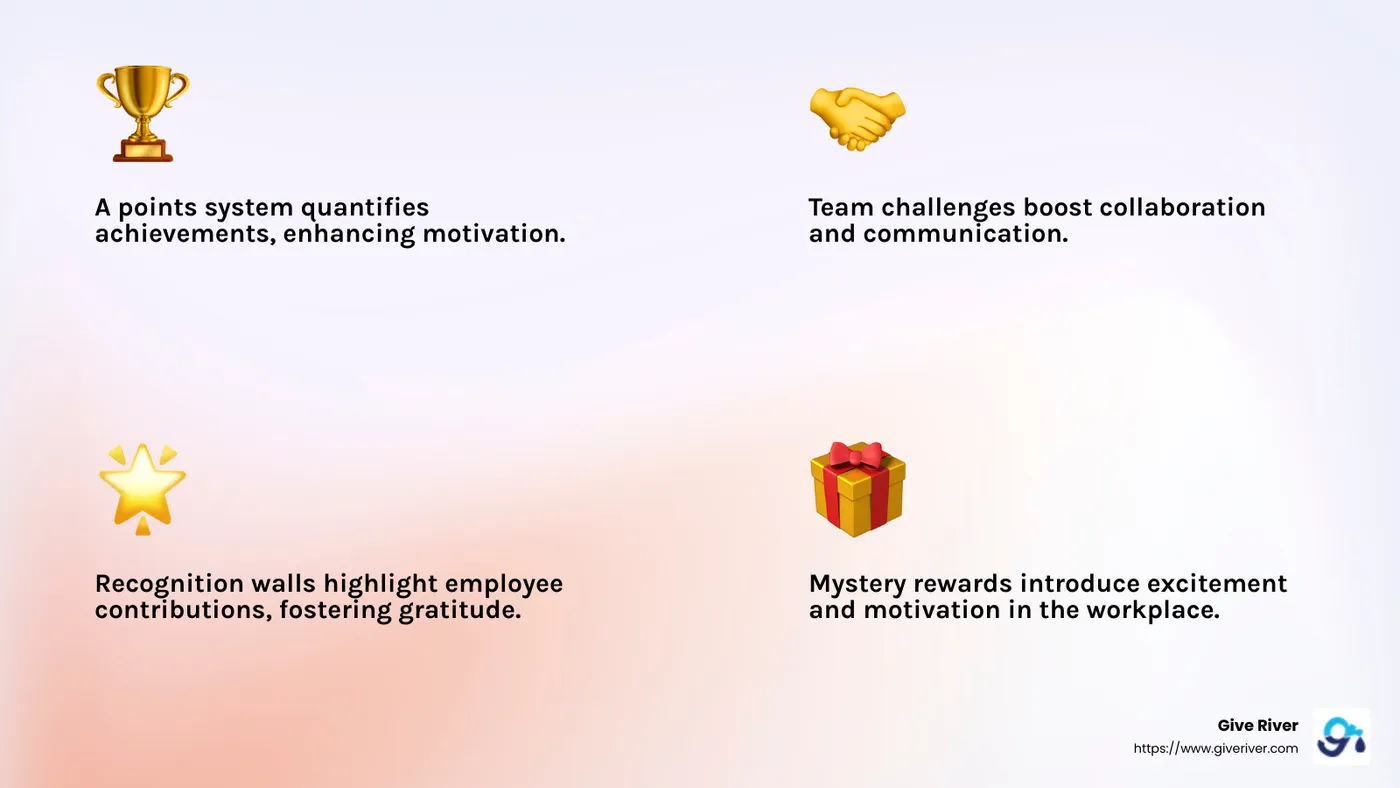
A points system quantifies efforts and achievements, offering clear metrics for performance. Employees earn points for completing tasks, which can be redeemed for rewards. This system creates anticipation and a natural incentive to perform well, driving productivity.
4. Team Challenges
Team challenges foster collaboration and camaraderie. By dividing employees into groups and assigning tasks or projects, you encourage teamwork and communication. These challenges not only improve skills but also build stronger team dynamics.
5. Training Quests
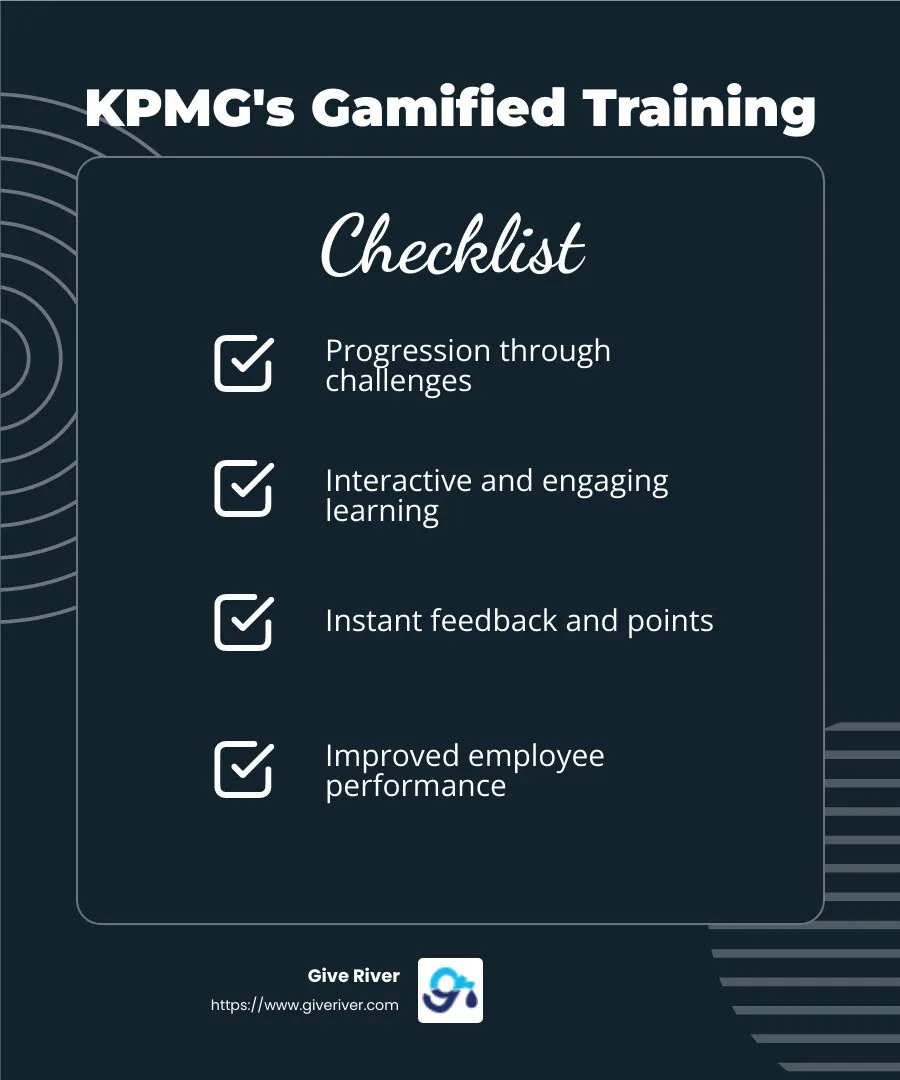
Training quests turn learning into an engaging journey. Structured as a series of challenges, they make skill development interactive and enjoyable. Employees complete tasks to achieve specific objectives, ensuring they stay engaged and motivated throughout the training process.
6. Recognition Wall
A recognition wall is a public display of appreciation for employees' hard work. It highlights achievements and contributions, fostering a culture of gratitude and recognition. This visible acknowledgment boosts morale and encourages others to strive for similar recognition.
7. Mystery Rewards
Mystery rewards add an element of surprise to the workplace. These unexpected incentives keep employees motivated and excited. Whether it's a spot bonus, a day off, or a special lunch, mystery rewards reinforce the idea that dedication can lead to delightful outcomes.
8. Feedback Games
Changing feedback sessions into games makes them less intimidating and more engaging. By incorporating points or badges for valuable input, you encourage open dialogue and a deeper understanding of team dynamics. This approach fosters a culture of continuous improvement.
9. Storytelling Challenges
Storytelling challenges allow employees to share their experiences and insights. By weaving stories around projects or values, they create connections and understanding among team members. This gamified approach strengthens company culture and highlights shared goals.
10. Wellness Challenges
Wellness challenges promote healthier lifestyles through gamification. By integrating teamwork and rewards, these challenges make exercise, nutrition, and mindfulness activities fun and engaging. Employees are inspired to accept wellness initiatives and sustain healthier habits.
Incorporating these gamification strategies can transform your workplace, making it more dynamic and engaging. By tapping into the natural human desire for achievement and recognition, you can motivate your team to reach new heights.
Employee Engagement through Gamification
Gamification is a powerful tool that can transform how employees feel about their work. By focusing on autonomy, competence, and purpose, you can significantly boost employee engagement.
Autonomy
Autonomy is the freedom to make decisions and control how tasks are completed. When employees feel autonomous, they are more motivated and satisfied with their work. Gamification can improve autonomy by allowing employees to choose their challenges or set their own goals. For example, a points system where employees decide which tasks to tackle first gives them control over their workday. This sense of ownership can lead to increased engagement.
Competence
Competence is about feeling capable and effective in your work. Gamification nurtures competence by providing clear goals and feedback. Leaderboards and badges, for instance, offer immediate recognition of skills and accomplishments. This feedback loop helps employees see their progress and understand their strengths. As a result, they feel more competent and are more likely to engage deeply with their tasks.
Purpose
Purpose is the feeling that your work has meaning and contributes to a larger goal. Gamification can connect daily tasks to a broader mission. Storytelling challenges, for example, allow employees to share how their work aligns with company values. This connection to purpose can be incredibly motivating, as employees see their role in the bigger picture.
By integrating these elements into your gamification strategy, you create an environment where employees feel empowered, skilled, and purposeful. This approach not only boosts engagement but also fosters a positive company culture.
Real-Life Examples of Gamification Success
Let's explore some real-world examples where gamification has successfully transformed the workplace. These stories highlight how industry leaders and innovative companies have harnessed the power of game elements to drive employee engagement and productivity.
Give River's Step Count Challenge
At Give River, we introduced a step count challenge to encourage healthy habits among employees. Teams competed to accumulate the highest number of steps, with each participant contributing to their team's progress using fitness trackers. This challenge not only promoted physical health but also fostered a sense of camaraderie and friendly competition. Employees were more satisfied and motivated, creating a vibrant and supportive work environment.
Trivia Competitions to Boost Company Knowledge
Some companies have used trivia competitions to improve employee understanding of their organization's history, values, and achievements. By turning learning into a game, employees engage in lively interactions that deepen their connection to the company's mission and culture. This approach not only makes learning enjoyable but also aligns employees with core values, resulting in a well-informed and connected workforce.
Centrical's Employee Engagement Platform
Centrical, a leading gamification platform, has integrated advanced tools like ChatGPT to lift employee engagement. By using game mechanics in onboarding and training, Centrical helps companies keep their teams engaged from day one. New hires experience quizzes, trivia, and icebreakers that introduce them to the company culture in a fun and interactive way. This innovative approach breaks up the monotony of traditional onboarding, making it a positive and memorable experience.
These examples demonstrate that gamification is not just a trend but a powerful strategy to improve employee engagement. When thoughtfully implemented, it can transform the workplace into a more engaging and productive environment.
Frequently Asked Questions about Gamification
How does gamification increase employee engagement?
Gamification boosts employee engagement by tapping into key psychological drivers like autonomy, competence, and purpose. When employees feel they have control over their tasks (autonomy), believe they are improving skills (competence), and see the bigger picture of their work (purpose), they are more motivated and engaged.
Adding game elements, such as leaderboards and reward systems, creates a motivational system that encourages employees to participate actively. For example, a leaderboard can spark friendly competition, pushing employees to excel. Rewards, whether tangible or virtual, offer recognition and a sense of achievement, further enhancing engagement.
What are the 5 C's of employee engagement?
The 5 C's of employee engagement are essential components that drive a positive work environment:
- Care: Show genuine concern for employees' well-being.
- Connect: Foster strong relationships and open communication.
- Coach: Provide guidance and opportunities for growth.
- Contribute: Encourage employees to play an active role in the organization.
- Congratulate: Regularly acknowledge and celebrate achievements.
By incorporating these elements into your workplace culture, you create an environment where employees feel valued and motivated.
What is an example of gamification in HR?
A prime example of gamification in HR is the use of online games for training and development. Companies can design games that simulate real-life scenarios, allowing employees to learn and practice skills in a virtual environment. This method not only makes learning enjoyable but also improves retention and application of knowledge.
Another example is implementing a reward system tied to performance metrics. Employees earn points for completing tasks, which can be exchanged for rewards. This system not only motivates employees to achieve their goals but also recognizes their efforts, boosting morale and engagement.
These strategies demonstrate how gamification can be a valuable tool in HR to improve employee satisfaction and performance.
Conclusion
In today's work environment, keeping employees engaged and motivated is more crucial than ever. This is where Give River comes in. By integrating game mechanics into workplace culture, we help transform everyday tasks into engaging experiences. Our unique approach focuses on employee engagement through gamification, offering a fresh way to boost morale and productivity.
Gamification benefits extend beyond just making work more enjoyable. It taps into fundamental psychological drivers such as autonomy, competence, and purpose. When employees feel they have control over their work, are developing their skills, and understand the impact of their contributions, they are naturally more engaged. This engagement translates into higher productivity, better teamwork, and increased job satisfaction.
At Give River, we harness the power of gamification to create a vibrant, interactive workplace. From leaderboards that foster friendly competition to badges that recognize achievements, our platform is designed to inspire and motivate. We also offer customizable challenges and rewards that cater to the unique needs of your team, ensuring continuous engagement and growth.
But the benefits don't stop there. Our platform also supports wellness and community impact initiatives, helping teams to build strong connections and a sense of purpose. By focusing on these areas, we not only improve individual fulfillment but also contribute to a positive and supportive workplace culture.
Ready to see how gamification can transform your team? Explore more about our growth tools and how we can help you level up your workplace culture. Let's create happier, healthier, high-performing teams together.
More from this category.

The 5 Best Employee Engagement Platforms in 2026, Compared
Give River, Culture Amp, WorkTango, Engagedly, and Kudos compared from each vendor's own site: pricing, gamification, learning, surveys, and who each one fits.

Employee Engagement Software for Companies With 50–200 Employees (2026)
What a 50–200 person company needs from engagement software, what six platforms cost at that size, who each fits, and how fast you can launch.
What Is a Digital Engagement Platform? (And Why It Matters Right Now)
Understanding the digital engagement platform definition starts with a simple idea: it's a technology framework that centralizes how an organization communicates with, supports, and motivates its people — employees or customers — across…
See the platform in action.
Free for up to 25 members, or try Core or Growth free for 30 days. A card is required; Free is never charged, and a trial bills when it ends unless you cancel.