Why Remote Teams Are Refinding the Magic of Classic Game Shows
Family feud virtual team building is a powerful way to combat remote work isolation and rebuild team connections. With 73% of remote workers feeling lonely, teams need more than another Zoom meeting - they need shared experiences that…
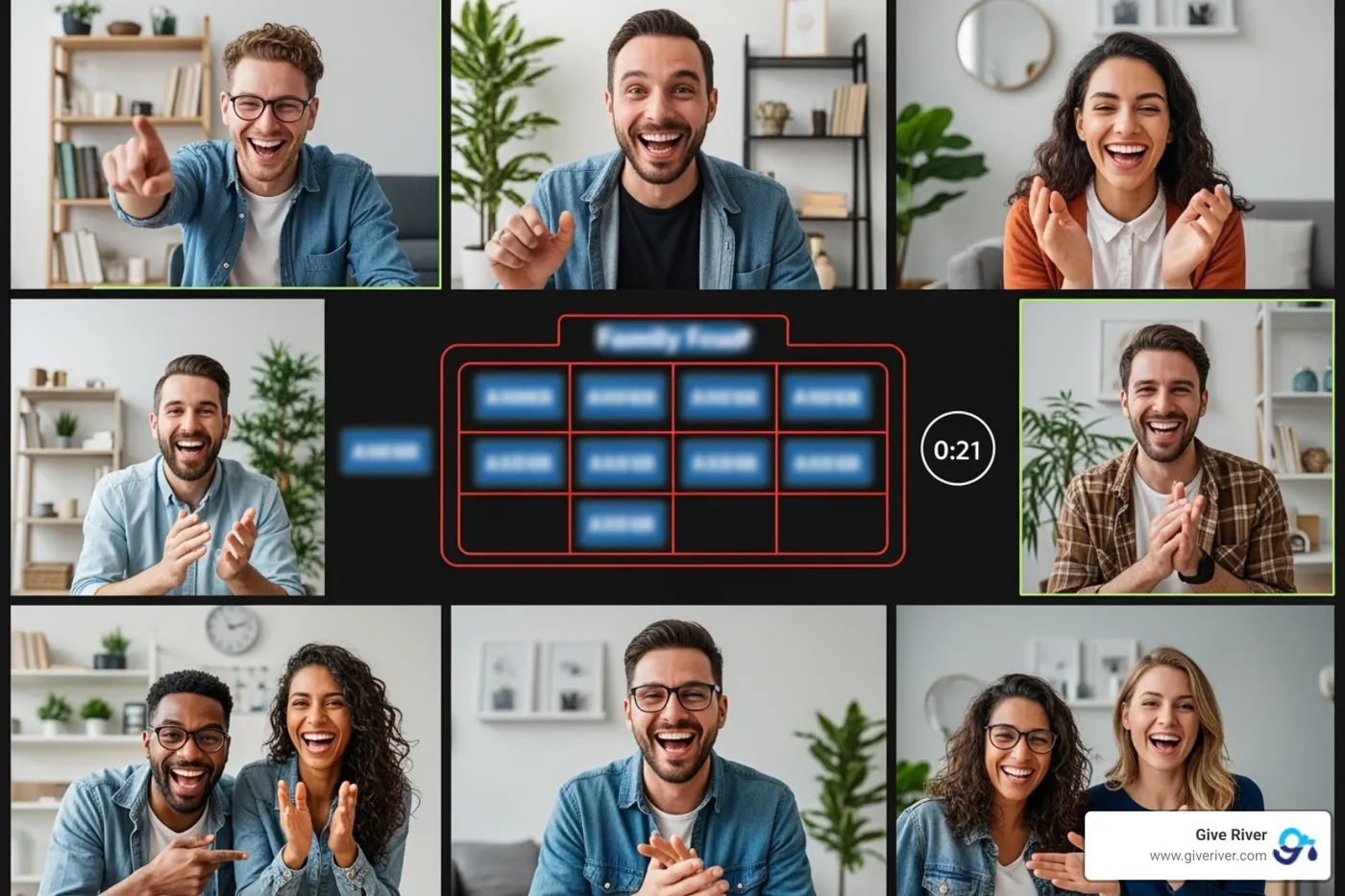
Family feud virtual team building is a powerful way to combat remote work isolation and rebuild team connections. With 73% of remote workers feeling lonely, teams need more than another Zoom meeting - they need shared experiences that spark genuine laughter and create lasting bonds.
Top Virtual Family Feud Team Building Benefits:
- Improves Communication: Teams practice listening and collaborative decision-making.
- Builds Empathy: Players must think from their colleagues' perspectives to guess popular answers.
- Reduces Stress: Friendly competition and humor provide natural stress relief.
- Strengthens Bonds: Shared laughter creates inside jokes and memorable moments.
- Accommodates All Personalities: The format welcomes introverts and extroverts equally.
- Scales Easily: Works for teams of 4 to 500+ participants across time zones.
The beauty of virtual Family Feud lies in its simplicity. While recognition platforms like Bonusly or Kudos are designed to track individual performance with points and badges, they often miss the opportunity for spontaneous group connection. Give River's approach is different, using interactive games to create the shared laughter and memories that build a strong, long-term culture.
Research shows that teams who laugh together perform better. Employees who participate in regular team-building activities are 50% more likely to report high job satisfaction and 27% less likely to leave their organization.
As Meghan Calhoun, I've spent over two decades creating engaging experiences. My expertise in family feud virtual team building comes from a simple truth: the best connections happen when people feel safe to be playful, creative, and authentic.
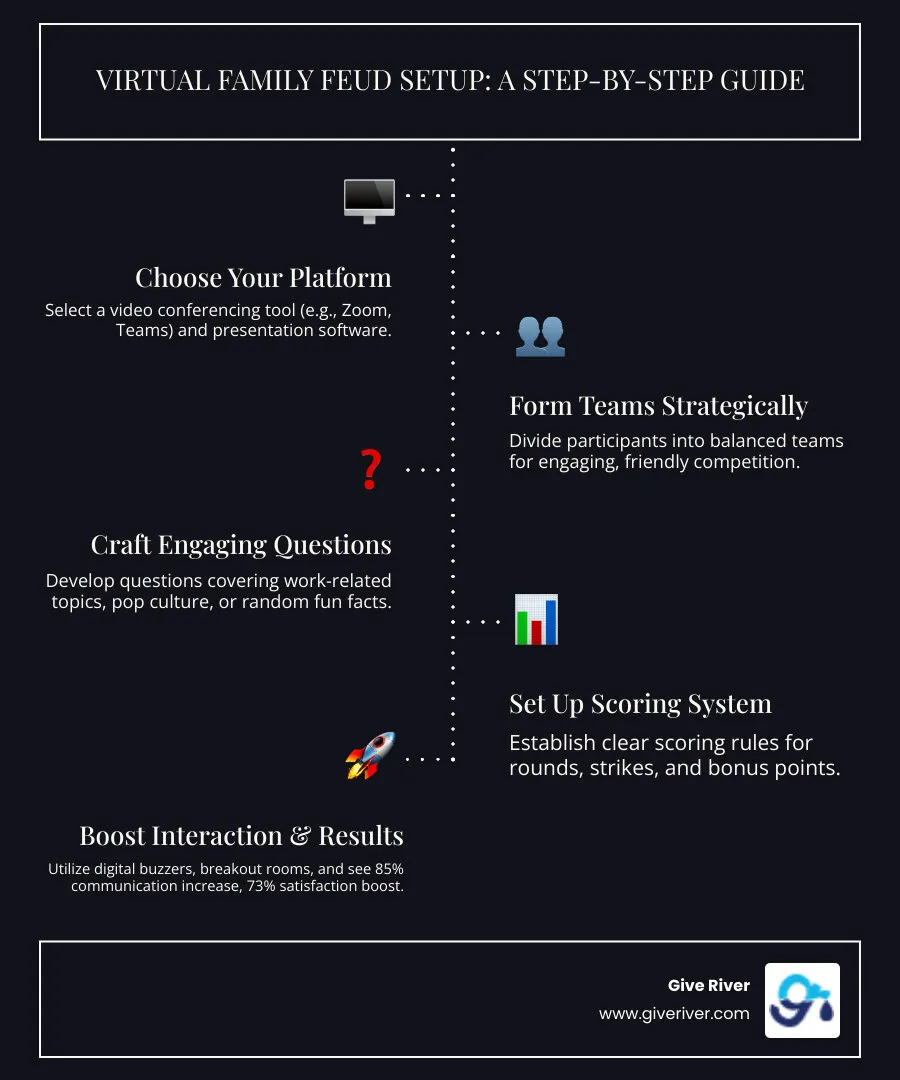
Family feud virtual team building terms simplified:
How to Host an Unforgettable Family Feud Virtual Team Building Event
There's something magical about family feud virtual team building that transforms even reserved team members into animated contestants. Unlike trivia, Family Feud's success depends on understanding how others think, not just what you know. This mechanic makes empathy a strategy, ensuring everyone's perspective matters.
After hosting over 900 virtual team building sessions, we've seen teams consistently rate their Family Feud experience a 9 out of 10. The game breaks down barriers - when a normally serious colleague passionately argues for "pizza" as the top comfort food, you see them in a new light.
Why Virtual Family Feud Boosts Team Morale and Connection
Gamification works because it taps into our desire for play and competition. When you turn team building into a game show, people relax, laugh, and connect authentically. Family feud virtual team building creates a low-stakes environment where the only goal is to think like your teammates.
The improved communication during gameplay is remarkable. In breakout rooms, teams debate answers and share perspectives they wouldn't in a regular meeting. Debates over "coffee" vs. "reliable internet" as a workplace necessity reveal different work experiences, fostering understanding and collaboration.
Empathetic thinking becomes the secret weapon. Players must step outside their own experiences and consider how colleagues might respond. This exercise in perspective-taking translates to daily work, helping team members better understand each other's needs.
The stress relief is significant. In high-pressure work environments, having permission to be silly and celebrate wild guesses provides a needed mental break. The friendly competition energizes teams, while shared laughter builds genuine camaraderie.
Unlike recognition platforms like Bonusly or Kudos, which focus on individual achievements, family feud virtual team building creates immediate, shared experiences that bond entire groups. While those platforms build appreciation over time, our game show format generates instant connection. The importance of social connection at work becomes clear when a team erupts in laughter over a surprise answer.
These connections extend beyond the game, building the psychological safety that makes authentic collaboration possible. For more insights, explore our guide on Team Building Activities.
Setting Up Your Game: DIY vs. Give River's Hosted Experience
When planning your family feud virtual team building event, you can choose a DIY approach or a professionally hosted one. Both can be memorable but require different investments of time and energy.
The DIY route appeals to teams wanting full control. You'll need a platform like Zoom or Microsoft Teams, PowerPoint templates for the game board, and Google Forms for surveys. The process involves surveying colleagues, designing visuals, and appointing an enthusiastic host.
DIY offers full customization for questions about company culture and inside jokes. However, it demands significant prep time - typically 4-6 hours. Your chosen host also needs strong facilitation skills to keep energy high.
Give River's professionally hosted experience is a polished production. Our experienced facilitators bring true game show energy with custom graphics, sound effects, and digital buzzers. We handle all logistics and scoring, so your team can just play and connect.
Our hosted sessions accommodate group sizes from 8 to 500+ participants, with a typical duration of 60-90 minutes. We also offer customization options, incorporating your company-specific questions into a professional format.
| Approach | DIY Family Feud | Give River Hosted |
|---|---|---|
| Cost | Free (with existing tools) | Professional investment |
| Preparation | 4-6 hours of setup required | Minimal - we handle logistics |
| Host Quality | Depends on internal talent | Professional facilitator guaranteed |
| Technical Features | Basic screen sharing | Digital buzzers, custom software, polished visuals |
| Group Capacity | 8-50 (challenging beyond that) | 8-500+ seamlessly managed |
| Customization | Complete control | Professional customization options |
The choice depends on your team's bandwidth and desired quality. DIY is great for smaller teams with an enthusiastic host. Professional hosting ensures guaranteed engagement and seamless execution for larger or high-stakes events.
For more budget-friendly ideas, check out our guide to Free Virtual Team Building Activities for the Workplace.
Crafting the Perfect Work-Friendly Questions & Answers
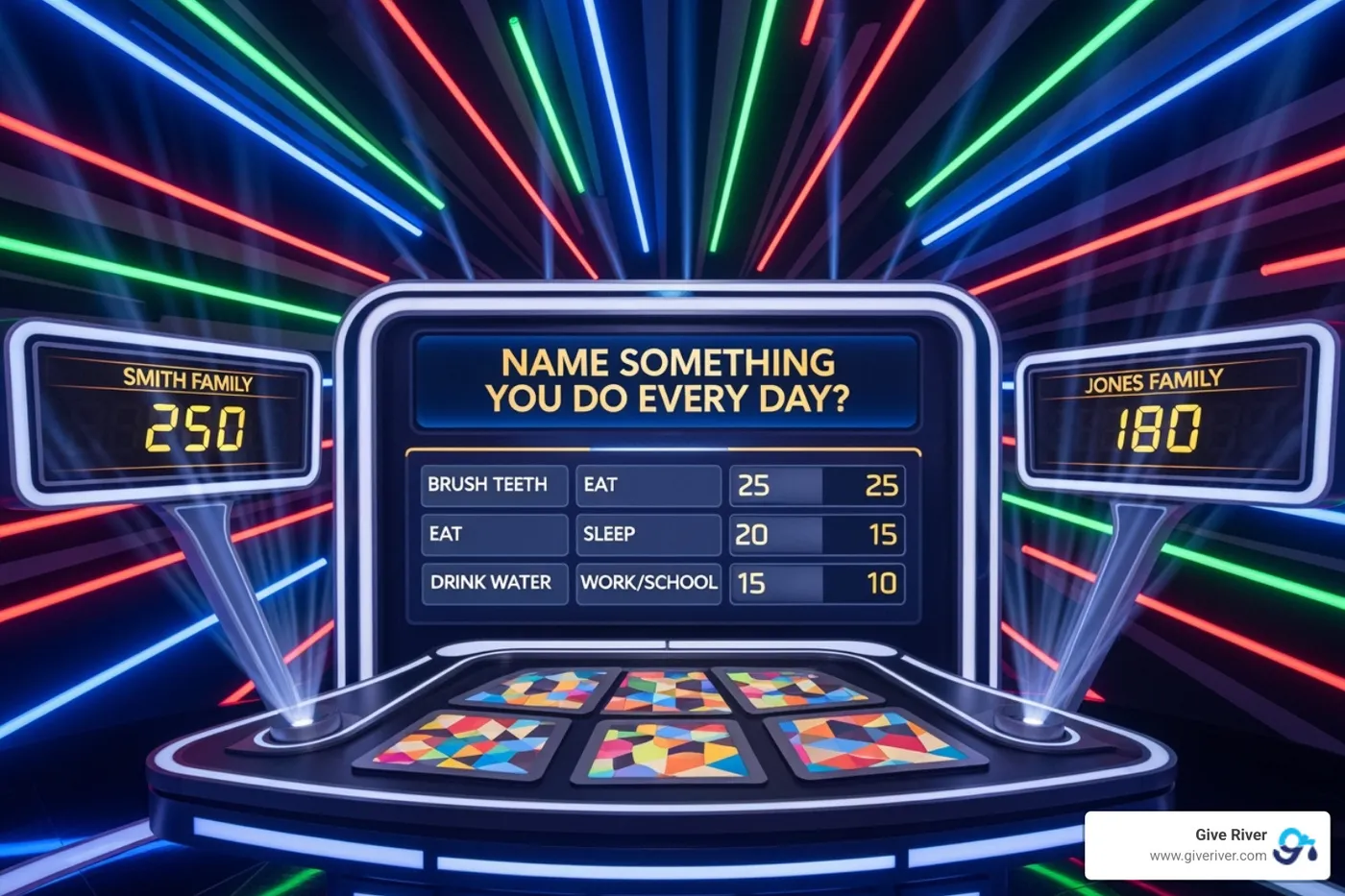
The magic of family feud virtual team building lies in its questions, which explore shared experiences rather than testing knowledge. The best questions blend work-related topics, humor, and random curiosities to spark conversation.
Creating custom surveys makes your game resonate with your culture. Poll your team with 10-15 questions. Survey at least 30 people for meaningful data - more responses make the "survey says" answers more authentic. Focus on relatable topics, avoiding anything too personal.
Here are five sample questions that consistently generate engaging gameplay:
"Name something you couldn't survive a workday without" reveals Coffee (35 points), Computer/Laptop (25 points), Internet Connection (20 points), Phone (15 points), and Water Bottle (5 points). This sparks debates on essential items.
"What's the most common reason people are late to work?" surfaces Traffic (40 points), Overslept/Alarm Issues (30 points), Public Transit Delays (15 points), Family/Pet Emergencies (10 points), and Forgot Something at Home (5 points). Teams often share their own late-to-work stories.
"Name a skill that's essential in our industry" generates responses like Communication (35 points), Problem-Solving (25 points), Adaptability (20 points), Teamwork (15 points), and Technical Knowledge (5 points). This leads to valuable conversations about professional development.
"What's the most popular office snack?" brings out answers like Chips/Crackers (30 points), Cookies (25 points), Fruit (20 points), Nuts (15 points), and Candy (10 points). Food questions always generate passionate opinions.
"Name something that distracts people from getting work done" reveals Social Media (35 points), Email Notifications (25 points), Chatty Colleagues (20 points), Meetings (15 points), and Hunger/Snacks (5 points). This often leads to honest discussions about productivity.
Balance obvious answers with surprising ones that create memorable "How did that make the board?" moments.
For more ideas, explore our collection of Fun Activities for Online Meetings.
Pro Tips for Maximum Engagement in Your Family Feud Virtual Team Building Game
An unforgettable family feud virtual team building experience requires more than great questions - it needs attention to the human elements that drive bonding. These engagement details make the difference.
Selecting an energetic host is crucial. An ideal host is enthusiastic, quick-thinking, and warm. They should celebrate all guesses to keep spirits high.
Using breakout rooms strategically creates crucial bonding moments. Give teams 60-90 seconds to discuss answers privately. These mini-huddles generate as much connection as the main game.
Digital buzzers and creative scorekeeping add game show excitement. Simple solutions work well: teams can use the chat, shout their name, or create physical buzzers. Real-time scorekeeping on a shared screen builds suspense.
Offering prizes, even small ones, boosts participation. Digital gift cards, extra vacation time, or custom virtual trophies are great incentives. Make prizes special and aligned with team values.
Themed rounds keep energy fresh. Try "Company History Feud," "Industry Insider Feud," or seasonal topics. Custom sound effects or background music can also improve the atmosphere.
Encouraging participation means creating psychological safety. Rotate who gives final answers and celebrate creative thinking over correct guesses. The best games happen when participants forget they're at work and just enjoy connecting.
Test your setup beforehand, have backup plans, and designate a tech support person. Building in buffer time accommodates delays without stress.
Focus on creating memorable moments. Take screenshots, celebrate inside jokes, and follow up with highlights to reinforce the positive experience.
For deeper insights on game-based engagement, explore our guide to Gamification in the Workplace.
Conclusion: Fostering Connection Beyond the Game

The magic of family feud virtual team building extends beyond the final buzzer. Shared laughter and triumphant cheers transform how teams connect long after the game. It breaks down barriers that remote work creates in a way that formal recognition platforms like Bonusly and Kudos can't, creating spontaneous joy and authentic connections.
Building lasting team bonds happens in these unguarded moments. When a quiet developer becomes an enthusiastic team captain, it builds the foundation for stronger workplace relationships. Research shows that teams with shared positive experiences are 73% more likely to collaborate effectively.
The impact on building a positive culture is profound. The game creates shared stories and inside jokes that become cultural touchstones, strengthening team identity and morale.
At Give River, we know true employee fulfillment comes from genuine connection. Our 5G Method uses gamification to create meaningful moments that bring out the best in people. Virtual Family Feud embodies this, combining fun competition with authentic human connection.
The continuous engagement continues after the game. Teams report better communication and a more relaxed, collaborative atmosphere. The psychological safety from shared laughter leads to more innovative and resilient teams committed to collective success.
Whether you DIY or partner with professionals, you're investing in more than entertainment—you're creating the conditions for trust, empathy, and camaraderie to flourish in your remote team.
Ready to see how engaging team experiences can transform your workplace culture? Explore our Team Building Solutions and let's build a workplace where connection and collaboration thrive.
More from this category.

Best Gamified Employee Engagement Platforms (2026)
Six engagement platforms compared on leaderboards, challenges, and campaigns, from their own sites, plus how to gamify engagement without making it childish.

Why the Best Team Meeting Ice Breakers Are Worth Every Minute
The best team meeting ice breakers can be the difference between a room full of disengaged faces and a team that's genuinely ready to collaborate. Whether you're running a daily standup, a new-hire kickoff, or a large all-hands, how you…
Why Cheer Team Bonding Exercises Are the Foundation of Every Great Squad
Cheer team bonding exercises are structured activities designed to build trust, improve communication, and strengthen the relationships that make a squad perform as one. Here are the most effective types to get you started:
See the platform in action.
Free for up to 25 members, or try Core or Growth free for 30 days. A card is required; Free is never charged, and a trial bills when it ends unless you cancel.