Why Your Personal Growth Journey Needs a 'Play' Button
Gamified personal growth transforms self-improvement from a grueling marathon into an engaging adventure. Instead of relying on willpower, you harness the same psychological principles that make games irresistible—points, levels,…
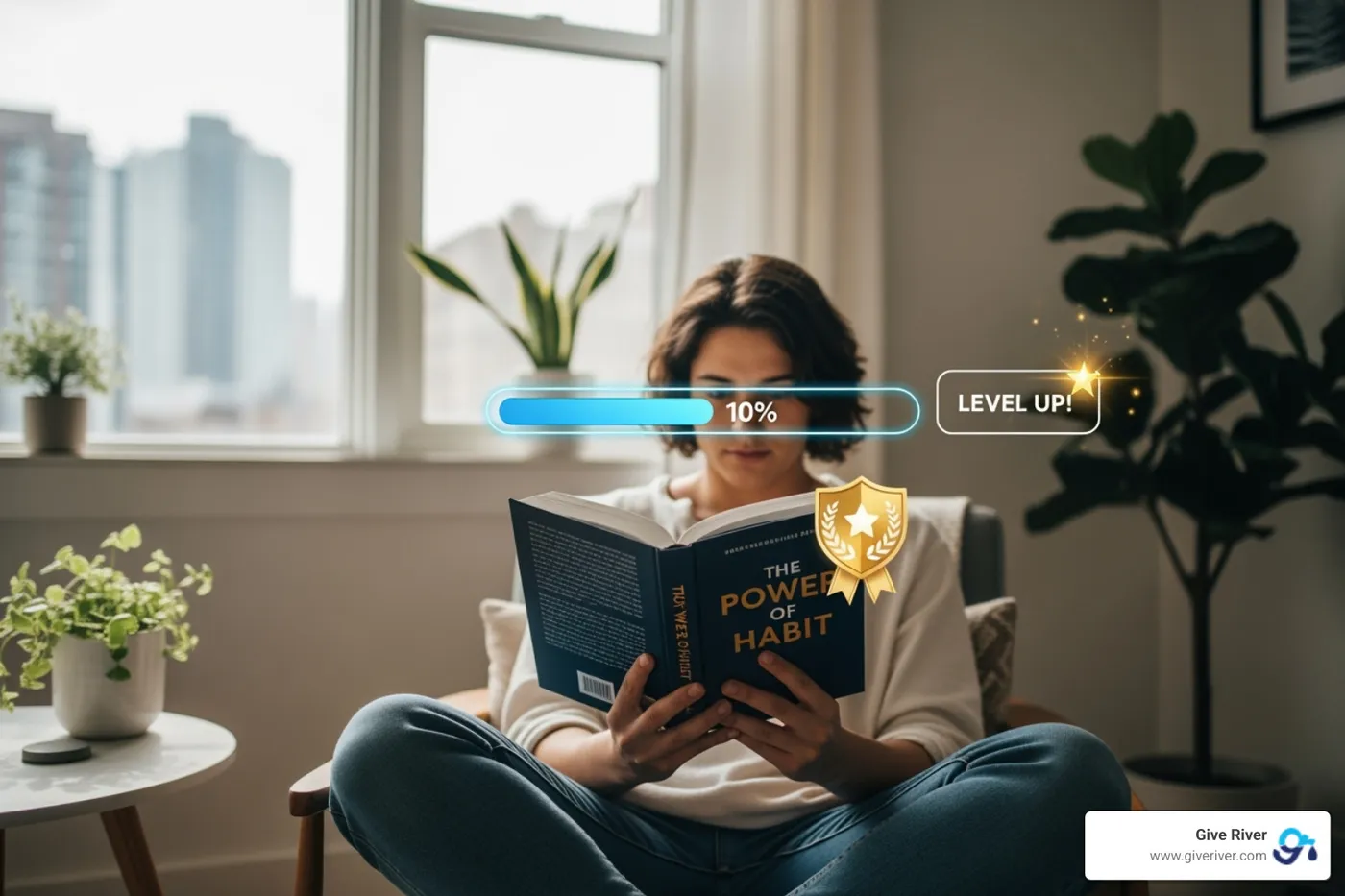
Gamified personal growth transforms self-improvement from a grueling marathon into an engaging adventure. Instead of relying on willpower, you harness the same psychological principles that make games irresistible—points, levels, achievements, and social connection—to build lasting habits.
This approach works by breaking large goals into smaller "missions," tracking progress with points, and offering immediate recognition for your efforts. This aligns with how our brains seek dopamine rewards, making the process enjoyable rather than a chore. Research shows that users of gamified systems are 3x more likely to maintain long-term habits, especially when recovery mechanisms for setbacks are built in.
At Give River, we've seen how these principles can transform both individual development and workplace culture, helping teams build stronger connections while pursuing meaningful goals together.
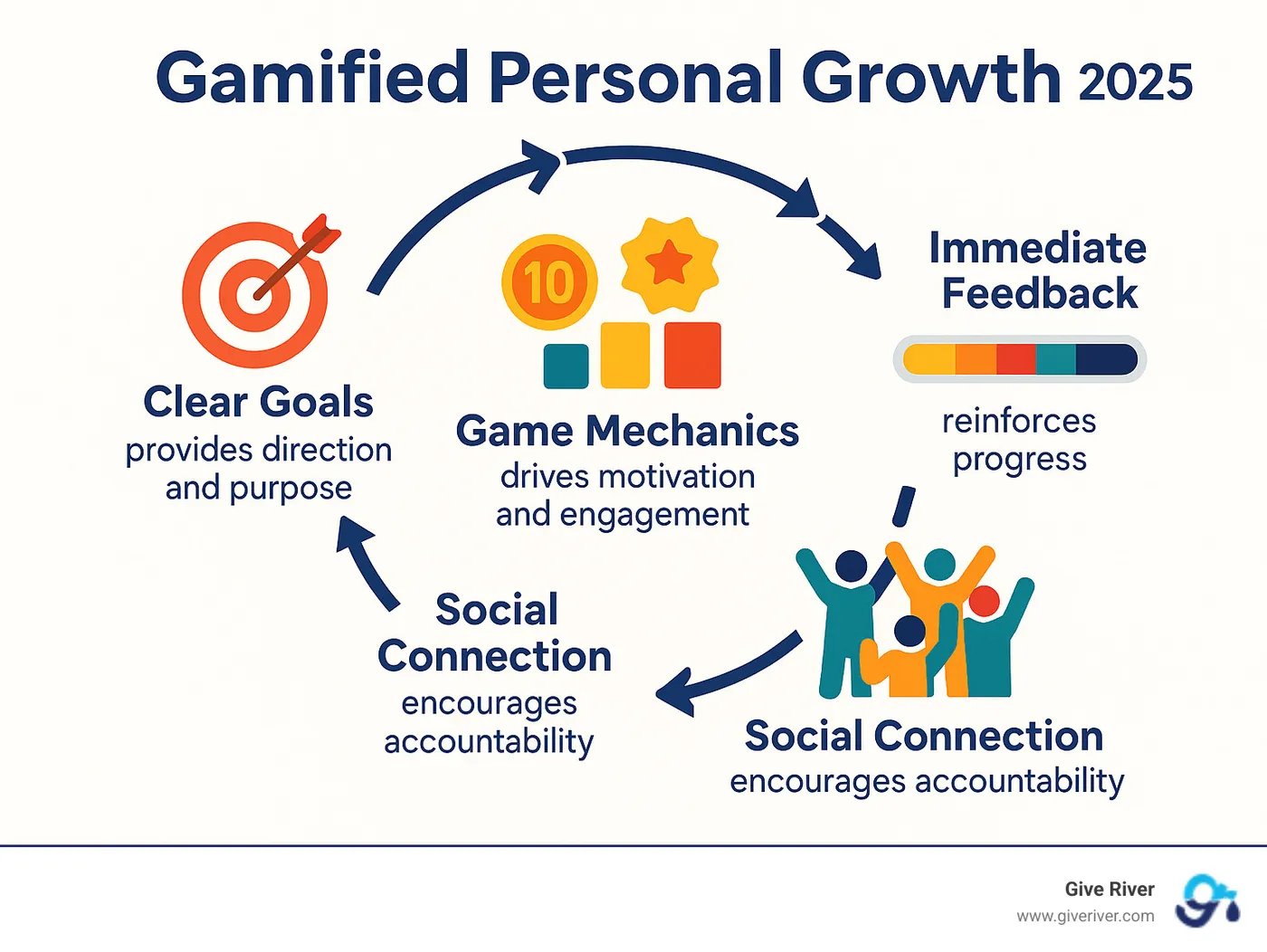
What is Gamified Personal Growth and Why is it Effective?
At its core, gamified personal growth applies game design elements to non-game contexts. It uses challenges, rewards, and progress tracking to make tasks that might feel like chores exciting and rewarding.
This is effective because it taps into our intrinsic motivation—our natural desire for achievement, mastery, and connection. Gamification provides a structured framework that makes abstract goals concrete and progress visible. This constant feedback loop helps overcome procrastination and makes self-improvement genuinely fun. The core principles of gamification align with our psychological drivers, including:
- Development & Accomplishment: The drive to make progress and overcome challenges.
- Social Influence & Relatedness: Motivation from social connections, competition, and collaboration.
- Loss & Avoidance: The desire to prevent negative outcomes, like losing a progress streak.
These carefully chosen Game Elements make the process less about willpower and more about consistent, enjoyable engagement. To dig deeper, you can Define Gamification here.
How Gamification Fosters a Growth Mindset
A profound benefit of gamified personal growth is its ability to cultivate a growth mindset—the belief that our abilities can be developed through dedication. Gamification inherently supports this by:
- Reframing Failure as Feedback: In games, 'losing' is a chance to learn and try again. A gamified approach encourages viewing setbacks as valuable information to adjust your strategy.
- Celebrating Small Wins: Games break down large goals into smaller milestones. Each completed quest reinforces that consistent effort leads to progress, building confidence.
- Promoting Continuous Improvement: Leveling up or gaining experience points (XP) emphasizes ongoing development, encouraging incremental gains that compound over time.
By shifting our perspective from "I can't do it" to "How can I level up?", gamification empowers us to accept challenges and learn from mistakes. This fosters a "growth owner" mindset, where we actively take ownership of our development. Research on mindset and achievement supports the power of this shift: https://www.pnas.org/doi/10.1073/pnas.1812218116.
The Game Designer's Toolkit: Your Guide to Gamified Personal Growth
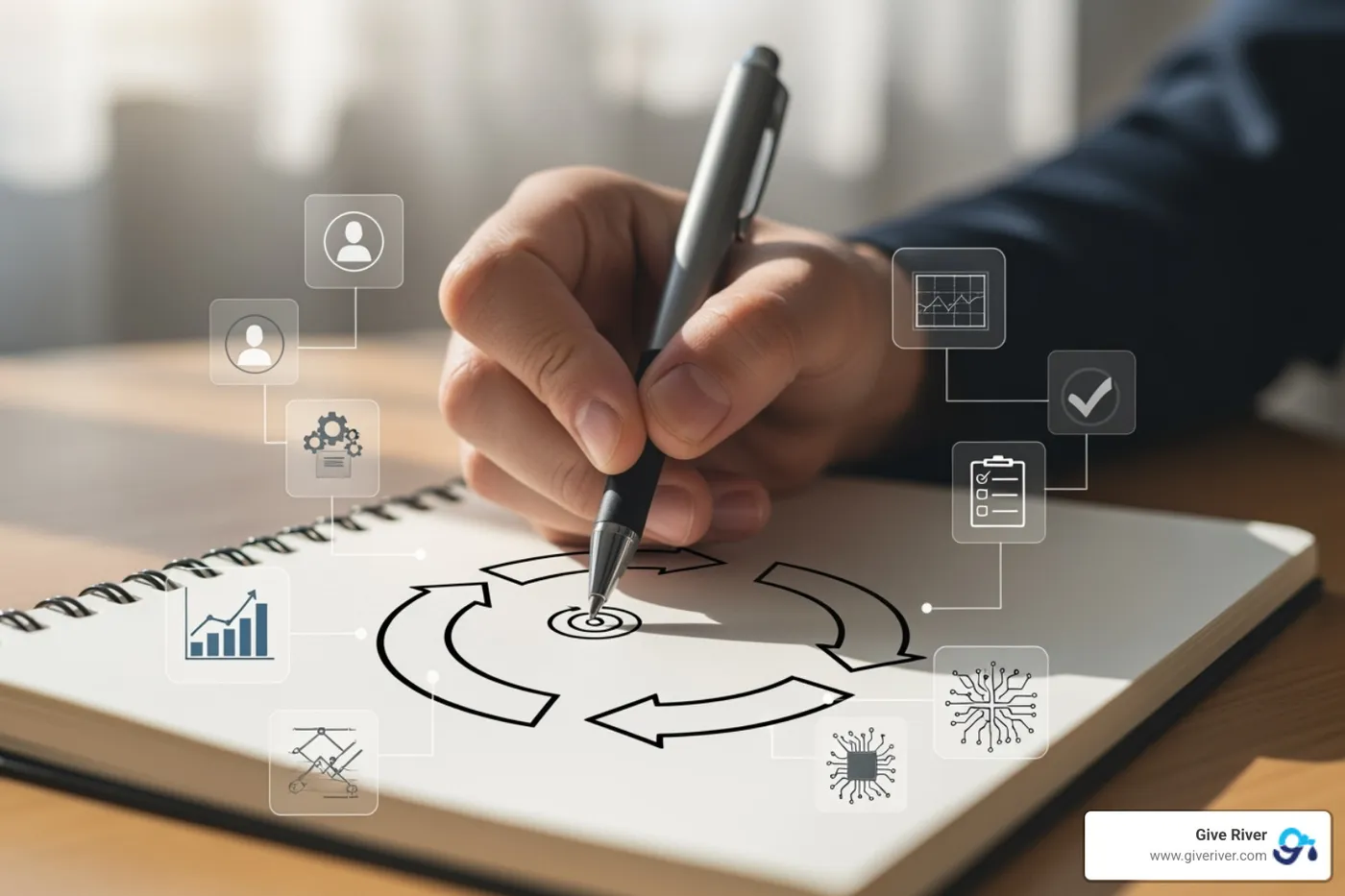
Think of yourself as the architect of your own adventure. Gamified personal growth is about thoughtful system design that works with your brain's natural wiring. The magic lies in personalization; your system needs to celebrate your wins in ways that matter to you. Visual progress tracking—through streaks, levels, or points—provides the satisfying dopamine hit that keeps you motivated.
Step 1: Define Your Quest and Understand Your 'Player' Motivation
Every great game starts with a clear mission. Vague goals like "get healthier" lead to decision fatigue. Instead, get specific and measurable: "do 20 pushups before my morning coffee" is much more effective than "exercise more."
Before you start, identify your 'why.' Are you learning a new skill to advance your career or getting fit to keep up with your kids? This deeper motivation is your north star. Also, understand your motivation pattern. Are you an Achiever who loves progress bars, a Socializer energized by accountability groups, a Collector who enjoys earning badges, or a Competitor driven by leaderboards?
Recognizing your dominant pattern helps you choose the right Game Elements for your system. For more inspiration, explore our Personal Growth Content.
Step 2: Design Your Core Loop and Choose Your Game Mechanics
Next, design your core loop—the repeatable sequence that builds habits. This engine for your system follows a simple pattern: Trigger (a cue), Action (the habit), Feedback (the reward), and Bridge (a connection to the next cycle). For example, your trigger could be finishing dinner, the action could be studying a language for 15 minutes, and the feedback could be earning XP in an app.
Choose game mechanics that match your motivation pattern:
- Points and XP for quantifiable progress.
- Badges and achievements for meaningful milestones.
- Leaderboards to energize competition (even against yourself).
- Streaks to leverage loss aversion.
Apps like Habitica, Forest, and SuperBetter demonstrate these principles well. Habitica turns your to-do list into an RPG, while Forest gamifies focus sessions.
When designing your system, aim for resilience, not perfection. Build in recovery mechanisms for missed days. A successful system is flexible, so start simple, track what works, and iterate over time. Your personal growth game should evolve as you do.
Leveling Up: Applying Gamification for Long-Term Success and Fulfillment

The true power of gamified personal growth is its ability to foster long-term change and fulfillment. It's about building sustainable habits and a mindset of continuous improvement. The long-term benefits include increased self-awareness, improved resilience, and a greater sense of purpose.
To maintain motivation, keep your system enjoyable, focus on intrinsic rewards, and don't over-gamify every aspect of your life. Most importantly, build in recovery mechanisms for missed days—a setback is a chance to learn, not a failure.
Applying Your System to Key Life Areas: Health, Learning, and Career
Gamification is highly adaptable and can turn mundane tasks into exciting challenges in any area of your life.
- Gamifying Health: Make fitness and mental wellness stick. Apps like Zwift turn cycling into a game, while trackers like Fabulous use quests for healthy routines. For mental wellness, apps like SuperBetter use challenges to build resilience.
- Gamifying Learning: Boost engagement with new skills. Duolingo makes language learning addictive with points and streaks. For organizations, a gamified Learning and Development Solution can significantly improve skill acquisition.
- Gamifying Career Goals: Increase productivity and job satisfaction. Apps like Habitica turn your to-do list into an RPG. For your own growth, you can create a personal Employee Development Plan with XP and achievements. For businesses, integrating gamification into Career Development Programs or focusing on Professional Development for Employees can lead to highly motivated teams.
The Ultimate Co-Op Mode: Gamification in the Workplace
While powerful for individuals, gamification truly amplifies in a social context. Gamification in the Workplace uses social interaction, friendly competition, and collaboration to drive collective progress and boost employee engagement. Public recognition for achievements provides social validation and boosts morale, leading to numerous Benefits of Gamification in the Workplace.
However, it's crucial to use gamification ethically—to empower, not manipulate. While platforms like Bonusly or Kudos are excellent for peer-to-peer recognition, a truly integrated system is key to holistic employee fulfillment. At Give River, our 5G Method goes beyond basic recognition by combining it with guidance, wellness content, gamification, and community impact into a "game of good deeds" that transforms workplace culture. Find out how we can help your team level up at /solutions/team-building.
Conclusion
Gamified personal growth is more than a productivity hack; it's a fundamental shift in how we approach self-improvement. By working with our natural psychology, we can transform personal development into an engaging and sustainable journey.
As we've explored, you can revolutionize your growth by setting clear quests, designing engaging core loops, and fostering a growth mindset that turns setbacks into learning opportunities. These principles are adaptable, whether you're improving your health, learning new skills, or advancing your career.
These concepts are even more powerful in a professional setting. While platforms like Bonusly or Kudos offer excellent tools for peer recognition, a truly integrated system that also combines wellness and growth creates a culture where people thrive.
At Give River, our comprehensive 5G Method does just that, bringing together recognition, guidance, personal wellness and professional growth content, gamification, and community impact to create a "game of good deeds." We focus on creating environments where growth feels as natural as play.
Are you ready to become the game designer of your own life? Start small, experiment with what motivates you, and remember the goal is progress, not perfection. Your growth journey doesn't have to feel like work—the most profound changes happen when we give ourselves permission to play.
More from this category.

Employee Recognition Platforms With Learning & Development (2026)
Which recognition platforms include learning content? Six compared from their own sites, plus why one tool for recognition and learning beats paying for two.

Why Choosing the Right Learning and Development Platforms Matters in 2026
Learning and development platforms have become one of the most critical investments a company can make — yet with over 800 competing systems on the market, finding the right fit feels overwhelming.

Why Investing in Career Development is a Win-Win
A career development program sample gives HR leaders and CEOs a concrete starting point for building structured, meaningful growth pathways for their teams — without having to reinvent the wheel. Here are seven proven program types you can…
See the platform in action.
Free for up to 25 members, or try Core or Growth free for 30 days. A card is required; Free is never charged, and a trial bills when it ends unless you cancel.