Why Team Building Is More Than Just Fun and Games
Team building games are structured activities designed to improve collaboration, communication, and trust. When done right, they are more than just forced fun; they are strategic tools for building a high-performing culture. The most…

Team building games are structured activities designed to improve collaboration, communication, and trust. When done right, they are more than just forced fun; they are strategic tools for building a high-performing culture. The most effective games fall into key categories:
- Icebreakers (Two Truths and a Lie, Virtual Scavenger Hunt) - for breaking down barriers
- Problem-Solving Games (The Barter Puzzle, Blind Drawing) - for developing critical thinking
- Outdoor Activities (Human Knot, Field Day) - for building trust and camaraderie
- Strategic Games (All Adrift, Geocaching) - for revealing team dynamics
The need is urgent: with nearly 77% of employees experiencing burnout, costing businesses $550 billion annually, fostering connection is critical. Research shows that helping employees avoid isolation can increase productivity by 21%. The key is authenticity—creating genuine opportunities for colleagues to connect and solve problems together.
Effective team building games reveal communication styles, build psychological safety, and develop the trust that improves workplace performance. Whether your team is remote, hybrid, or in-person, the right activities can break down silos, boost collaboration, and create a culture where people want to work.
I'm Meghan Calhoun, Co-Founder of Give River. With over two decades of experience in driving team performance, I've seen how intentional team building games can transform a workplace when tied to clear organizational goals. The games in this guide are strategic tools for building the skills your team needs to thrive.
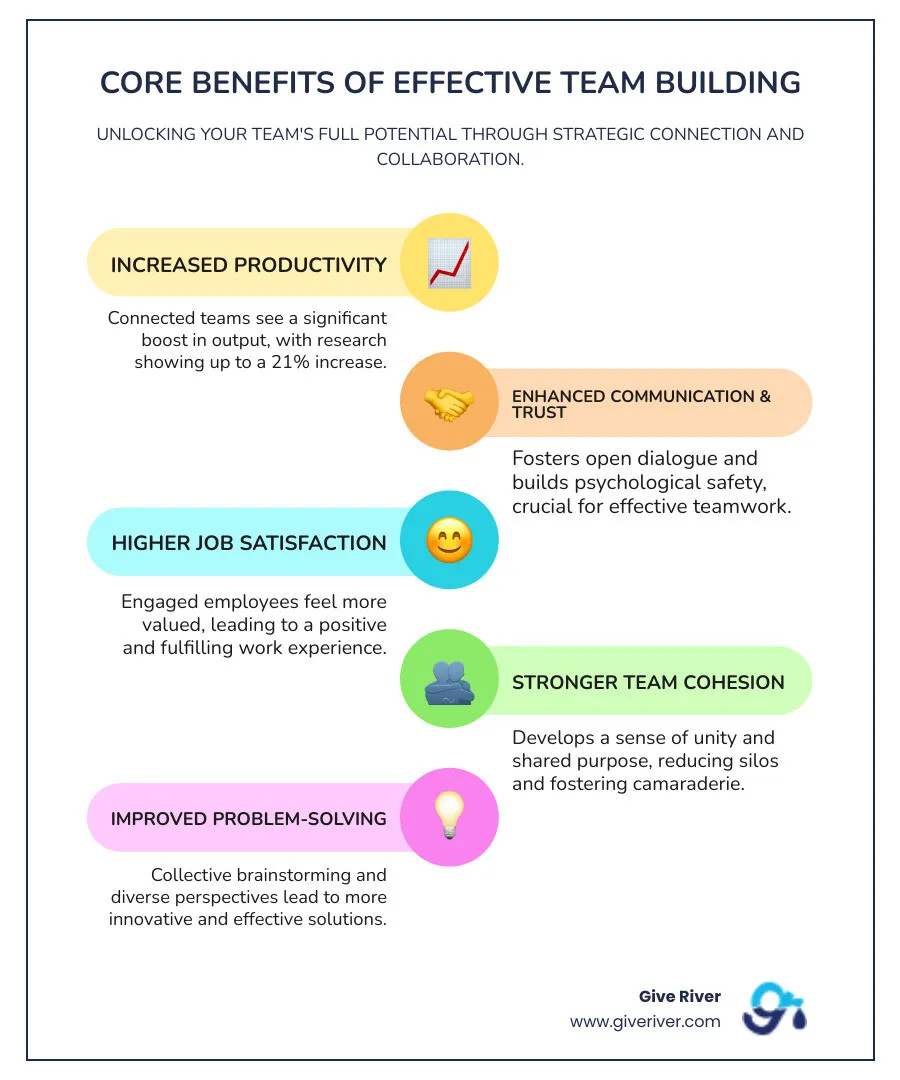
Core benefits of effective team building: 21% productivity increase, improved communication and trust, higher job satisfaction, stronger team cohesion, reduced turnover, and improved problem-solving abilities.
10 Unforgettable Team Building Games for Every Team
Every team is unique, so we've curated team building games for various needs—from quick icebreakers to complex problem-solving challenges. These activities are designed to help your team connect, collaborate, and thrive in a culture where everyone feels valued.
Quick & Engaging Icebreakers (Virtual & In-Person)
Icebreakers create a low-pressure environment for colleagues to connect, fostering psychological safety and setting a positive tone.

1. Two Truths and a Lie: Each person shares three "facts" about themselves—two true, one false. The team guesses the lie. This classic game is a fun way to uncover surprising details about colleagues and practice active listening.
2. Virtual Scavenger Hunt: Perfect for remote teams, this game challenges participants to find items in their homes based on prompts like "something red" or "your favorite coffee mug." It’s a dynamic way to engage everyone and share a glimpse into personal lives, fostering connection across distances. Find more ideas in our resources on Fun Ice Breaker Questions for Virtual Meetings and Remote Working Icebreaker Games.
3. Show and Tell (Adult Edition): Team members share an object that holds personal significance or represents a hobby. This simple activity is a powerful way to foster empathy and a deeper appreciation for the diverse experiences within the team.
These games are inclusive, require minimal setup, and are ideal for meeting warm-ups or virtual check-ins.
Collaborative Problem-Solving & Strategic Games
These games challenge teams to think creatively, communicate effectively, and leverage individual strengths to achieve a common goal.

4. The Barter Puzzle: Divide the team into groups, each with a jigsaw puzzle missing pieces that other groups have. To win, teams must negotiate, strategize, and barter to complete their puzzle. This game is a fantastic exercise in collaboration and creative problem-solving, mirroring real-world resource allocation.
5. Blind Drawing: In pairs, one person describes an image while the other draws it without seeing the original. The results are often hilarious and offer powerful insights into the importance of clear communication and active listening. It’s a simple, effective way to highlight how instructions can be interpreted differently.
6. All Adrift (Lifeboat Game): Teams face a hypothetical survival scenario (e.g., a sinking ship) and must collectively decide which items or people to save. This strategic game tests decision-making, negotiation, and consensus-building under pressure, revealing how a team handles difficult dilemmas.
These problem-solving games help teams work as a cohesive unit and foster a culture where everyone's contribution is valued.
High-Energy Outdoor & In-Person Activities
Getting out of the office can boost mood, reduce stress, and build camaraderie. These energetic activities provide a change of scenery and a chance for playful, physical challenges.

7. Human Knot: Participants stand in a circle, grab two different hands, and work together to untangle the human "knot" without letting go. This classic game is a fun, physical puzzle that requires clear communication and teamwork to solve.
8. Field Day: Organize a day of classic outdoor games like relay races, tug-of-war, or giant Jenga. Offering a mix of activities ensures everyone can participate. A field day is a great way to energize your team, build community, and enjoy some fresh air.
9. Geocaching: This modern-day treasure hunt uses GPS coordinates to lead teams to hidden containers called "geocaches." It's an ideal activity for teams that enjoy technology and outdoor exploration, as it encourages problem-solving and teamwork. You can learn more about this global game at the official Geocaching website. For more adventurous ideas, see our Amazing Race Challenges for Team Building.
These activities offer unique opportunities for colleagues to connect on a personal level, building trust and a stronger sense of community.
How to Choose the Perfect Team Building Games
Choosing the right game is key to a positive experience. Match the activity to your team's specific goals.
Here's a quick guide:
| Game Type | Primary Goal | Time Commitment | Ideal Format (Virtual/In-Person) |
|---|---|---|---|
| Icebreaker | Communication, Connection, Psychological Safety | 15-30 minutes | Both |
| Problem-Solving | Critical Thinking, Strategy, Team Dynamics | 30-90 minutes | Both |
| Outdoor/Strategic | Trust, Camaraderie, Leadership, Decision-Making | 1-4 hours (or more) | In-Person |
Key Considerations:
- Purpose: What do you want to achieve (e.g., better communication, trust, or just fun)?
- Team Dynamics: Consider team size, personalities, and physical comfort levels to ensure inclusivity.
- Logistics: Factor in available time, resources, and whether the team is virtual or in-person.
If a game isn't working, don't be afraid to adapt. The goal is learning and connection, not just following rules. For more ideas, see our guide to Team Building Activities Ideas.
The Importance of Debriefing: Always end with a debrief (about 10 minutes). This is where the real learning happens. Ask questions like, "What did you learn about how our team works?" and "How can we apply this to our projects?" This connects the game to real-world applications, ensuring the fun translates into growth.
From Games to Growth: Sustaining Team Momentum
Team building games shouldn't be one-off events. To create lasting change, integrate them into a broader employee engagement strategy. Success isn't just about having fun; it's measured by long-term improvements in engagement, morale, and productivity.
This is where Give River differs from platforms like Bonusly or Kudos. While they are effective for peer-to-peer recognition, Give River offers a more holistic solution. Our unique 5G Method integrates guidance, wellness, growth, gamification, and community impact to drive employee fulfillment. This approach weaves the benefits of team building into your company's DNA, creating a sustainable culture of gratitude and high performance. Explore our resources on Remote Work Culture Activities and Culture Building Activities Virtual to learn more.
Frequently Asked Questions about Team Building Games
Here are answers to common questions about team building.
What are the main benefits of team building activities for adult teams? They improve communication, trust, and problem-solving skills. Key benefits include a 21% increase in productivity, higher job satisfaction, boosted morale, and a better understanding of team dynamics.
How can games be adapted for virtual teams? Many games work well over video conferencing. Use virtual whiteboards, online game apps, and features like breakout rooms. Activities like virtual scavenger hunts and online escape rooms are great for remote teams. See our guide on Team Building Activities for the Remote Workplace for more ideas.
How do you choose the right game? Define your goal (e.g., improve communication), consider your team's size and comfort levels, and factor in time and resources. Always choose inclusive activities and end with a debrief to discuss what was learned.
Do these games serve a deeper purpose beyond fun? Yes. While fun is important, the main purpose is strategic. These games reveal team dynamics, build psychological safety, and develop skills that directly translate to better workplace performance and a stronger culture.
Ready to transform your workplace culture? Explore our team building solutions and see how Give River can help.
More from this category.

Best Gamified Employee Engagement Platforms (2026)
Six engagement platforms compared on leaderboards, challenges, and campaigns, from their own sites, plus how to gamify engagement without making it childish.

Why the Best Team Meeting Ice Breakers Are Worth Every Minute
The best team meeting ice breakers can be the difference between a room full of disengaged faces and a team that's genuinely ready to collaborate. Whether you're running a daily standup, a new-hire kickoff, or a large all-hands, how you…
Why Cheer Team Bonding Exercises Are the Foundation of Every Great Squad
Cheer team bonding exercises are structured activities designed to build trust, improve communication, and strengthen the relationships that make a squad perform as one. Here are the most effective types to get you started:
See the platform in action.
Free for up to 25 members, or try Core or Growth free for 30 days. A card is required; Free is never charged, and a trial bills when it ends unless you cancel.