Why Top Companies Are Embracing Mindfulness
Mindfulness in workplace settings has evolved from a wellness trend to a business imperative. In today's demanding work environment, where 83% of American workers suffer from work-related stress and workplace stress costs businesses over…

Mindfulness in workplace settings has evolved from a wellness trend to a business imperative. In today's demanding work environment, where 83% of American workers suffer from work-related stress and workplace stress costs businesses over $150 billion annually, forward-thinking organizations are turning to mindfulness as a strategic solution.
What is mindfulness in the workplace?
- Present-moment awareness without judgment during work activities
- Intentional attention management to improve focus and decision-making
- Practices that reduce stress and increase emotional regulation
- A shift from reactive to responsive behavior in professional settings
Key benefits include:
- 28% decrease in stress levels (Aetna study)
- 20% improvement in sleep quality
- 62 minutes of increased productivity per week
- 56% increase in job performance through improved sense of belonging
- 75% reduction in sick days when employees practice mindfulness
The workplace challenges are undeniable. Nearly half of workers report feeling stressed at their jobs, with 70% citing workload and work-life balance as primary stressors. This chronic stress doesn't just affect individual well-being—it directly impacts your bottom line through increased absenteeism, reduced productivity, and higher turnover rates.
Yet leading companies like Google, SAP, and LinkedIn have finded that mindfulness isn't just about managing stress. It's about creating a competitive advantage through improved focus, better decision-making, and stronger team dynamics. These organizations report measurable improvements in employee engagement, innovation, and overall performance.
I'm Meghan Calhoun, and after two decades in high-pressure work environments—from television hosting to advertising sales—I've experienced how mindfulness in workplace settings transforms both individual performance and team culture. Through my journey toward Positive Intelligence certification and co-founding Give River, I've seen how integrating mindfulness with purposeful work creates thriving, resilient teams.
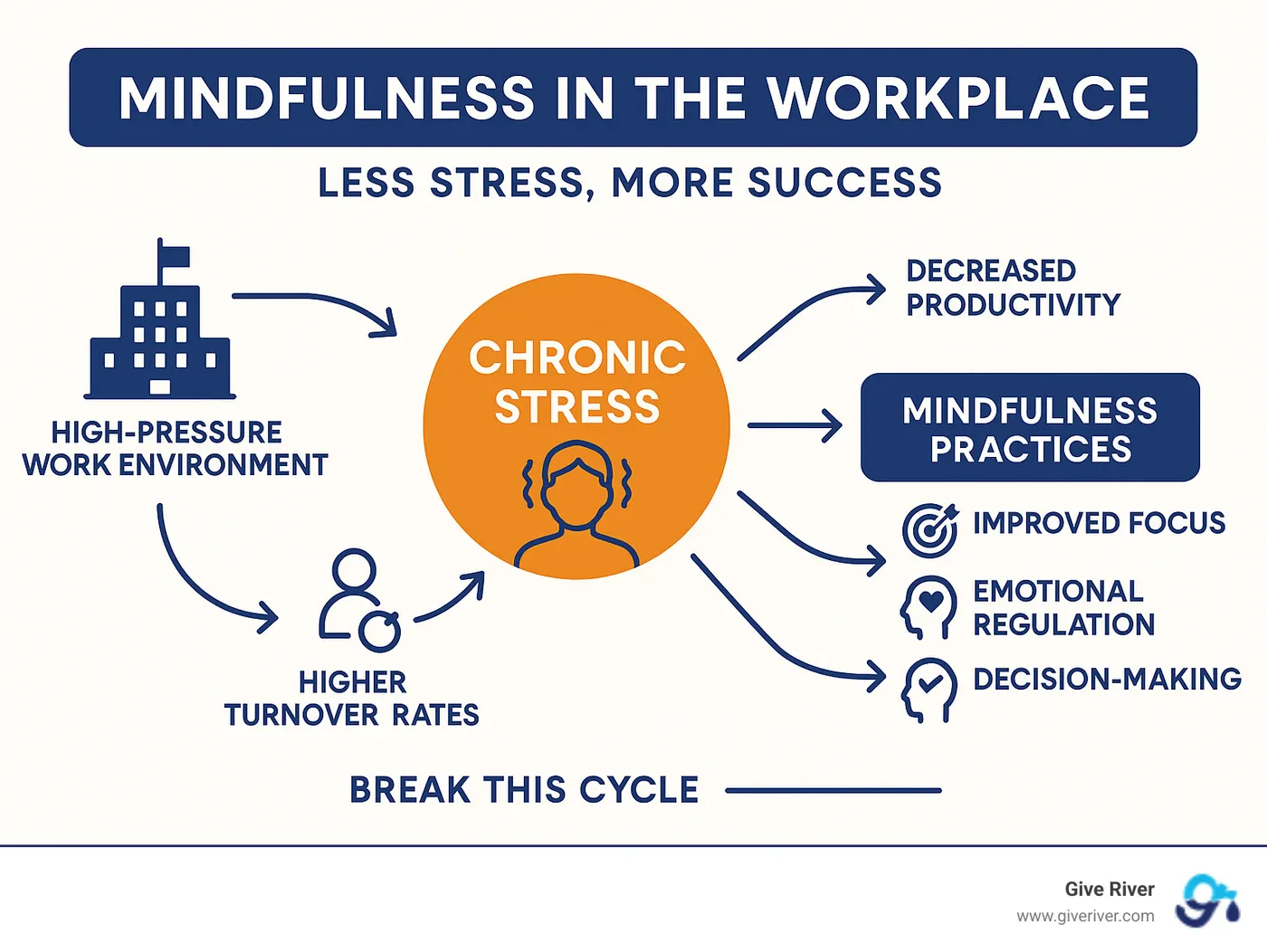
Mindfulness in workplace terms made easy:
A Practical Guide to Mindfulness in the Workplace
The concept of mindfulness in workplace environments might seem like adding another task to your already overflowing plate. But here's the beautiful truth: mindfulness isn't about doing more—it's about being more present with what you're already doing. As companies worldwide find the transformative power of intentional awareness, let's explore how we can weave these practices into the fabric of our daily work lives.
Understanding Mindfulness: What It Is and Why It Matters Now
Picture this: you're in a meeting, but your mind is racing through your to-do list. Sound familiar? Mindfulness in workplace settings is the antidote to this scattered attention. At its essence, mindfulness means being purposefully present—maintaining moment-by-moment awareness of our thoughts, feelings, and surroundings through a gentle, non-judgmental lens.

Think of mindfulness as attention management rather than time management. In our knowledge economy, where our brains are our primary tools, this skill has become more crucial than ever. We're constantly bombarded with information overload, yet research shows that multitasking reduces productivity by up to 40%. Mindfulness in workplace practices encourages single-tasking—giving our full attention to one activity at a time.
Here's what makes this approach revolutionary: instead of reacting automatically to every email ping or interruption, we learn to respond thoughtfully. We become aware of our mental filters and preconceived notions, making us more receptive to new possibilities and better at seeking creative solutions.
It's important to distinguish mindfulness from meditation. While meditation is like going to the gym for your attention muscle, mindfulness is using that strengthened muscle throughout your day. You can practice present-moment awareness whether you're typing an email, walking to a meeting, or listening to a colleague share an idea.
This shift toward non-judgmental observation transforms how we work. Instead of getting frustrated when our minds wander during a presentation, we simply notice the wandering and gently guide our attention back—without the self-criticism that usually follows.
At Give River, we've seen how mindfulness in workplace initiatives align perfectly with Wellness in the Workplace strategies and support the development of a Purpose-Driven Workplace where employees thrive both personally and professionally.
The Tangible Benefits of Mindfulness in the Workplace: How It Boosts Performance and Well-being
The evidence for mindfulness in workplace programs isn't just compelling—it's transformative. When Aetna implemented their mindfulness initiative, they didn't just see happier employees; they witnessed measurable business impact that changed how they viewed employee wellness investments.

The stress reduction benefits alone justify the investment. With over 83% of American workers suffering from work-related stress, and workplace stress costing businesses more than $150 billion annually, the Aetna study's findings were remarkable: participants experienced a 28% decrease in stress levels and 20% improvement in sleep quality. But the real surprise? Increased productivity of 62 minutes per week per participant.
Safety improvements tell an equally compelling story. Since stress contributes to up to 80% of workplace accidents due to lack of focus, mindfulness in workplace settings becomes a crucial safety investment. When employees are more present and aware, they make fewer errors and avoid more accidents—protecting both people and bottom lines.
The connection between mindfulness and Employee Engagement and Retention is particularly striking. Employees practicing mindfulness report increased job performance through an improved sense of belonging—with studies showing up to a 56% boost in performance metrics. Even more impressive: organizations see up to a 75% reduction in sick days among mindfulness practitioners.
Better decision-making emerges naturally when we're more present and less reactive. Leaders report improved clarity in complex situations, while team members become better listeners and more empathetic colleagues. This improved emotional regulation creates ripple effects throughout the organization.
The physiological benefits extend beyond the workplace too. Scientific research on mindfulness and blood pressure shows measurable health improvements, including increased gray matter density in brain areas associated with memory and empathy.
SAP's 200% return on investment from their mindfulness and leadership training program demonstrates that these aren't just feel-good initiatives—they're strategic investments in Employee Wellness and Productivity that deliver measurable business results.
Simple Mindfulness Exercises for a Busy Workday
The beauty of mindfulness in workplace practices lies in their simplicity. You don't need meditation retreats or hour-long sessions—just intentional moments woven into your existing routine.
Mindful breathing serves as your anchor throughout the day. When deadlines loom or tensions rise, taking three conscious breaths can reset your entire nervous system. Companies like SAP have acceptd "The Minute to Arrive" practice—starting meetings with a collective pause for deep breathing and intention-setting. This simple ritual helps everyone transition from their previous task and arrive fully present.
Mindful walking transforms those trips to the printer or coffee machine into mini-meditation sessions. Feel your feet connecting with the ground, notice the rhythm of your steps, observe the environment around you. These brief moments of awareness can refresh your mind more effectively than scrolling social media.

Mindful transitions between tasks prevent the scattered feeling that comes from jumping between activities. Before opening that next email or joining another video call, pause. Take a breath. Set an intention for how you want to show up in this next moment. This practice helps you fully disengage from one activity before engaging with the next.
Mindful email management can revolutionize your day. Instead of constantly checking messages, schedule specific times for email. When reading, give it your full attention—understand the content and intent before reacting. This prevents the constant disruption that fragments focus throughout the day.
Technology can support your practice too. Apps for guided meditation like Calm or Headspace offer short exercises designed for busy schedules. Many employees find these particularly helpful when starting their mindfulness journey.
Teams can integrate these practices seamlessly. Try incorporating Wellbeing Activities for Virtual Team Meetings that foster presence and connection. Gratitude practices, explored in The Power of Gratitude in the Workplace, are forms of mindfulness that strengthen team bonds while connecting us to positive emotions.
Fostering a Mindful Culture: A Blueprint for Leaders to Champion Mindfulness in the Workplace
Individual practices create personal change, but mindful leadership creates organizational revolution. When leaders accept mindfulness in workplace initiatives, they don't just change their own experience—they give permission for entire cultures to shift toward greater presence, empathy, and intentional action.

Leading by example forms the foundation of cultural change. When Satya Nadella transformed Microsoft's culture by emphasizing empathy and continuous learning, or when Arianna Huffington advocates for well-being through Thrive Global, they demonstrate that success doesn't require sacrificing employee wellness. These leaders show that mindful decision-making, ethical practices, and genuine care for people create competitive advantages.
Creating quiet spaces in your office signals organizational commitment to mindfulness. Whether it's a dedicated meditation room or simply ensuring conference rooms can serve double-duty as reflection spaces, physical environment supports practice. But the most important space you create is psychological—an atmosphere where taking mindful moments is valued, not viewed as unproductive.
Gaining senior management support requires connecting mindfulness to business outcomes. Share the compelling ROI data, like SAP's 200% return on investment, and align initiatives with strategic priorities. When leadership takes ownership, mindfulness in workplace programs move from nice-to-have wellness perks to essential business strategies.
Recruiting internal champions amplifies your efforts exponentially. Identify enthusiastic early adopters who can share their experiences and normalize the practices. These ambassadors help create the social proof that encourages broader participation.
Integrating mindfulness into meetings can transform team dynamics. Start with brief centering moments, encourage single-tasking during discussions, and model present-moment listening. These small shifts create ripple effects that improve communication, collaboration, and decision-making quality.
While recognition platforms like Bonusly or Kudos can boost morale, fostering a truly mindful culture requires a deeper approach. It means integrating wellness into the very fabric of your organization's core. At Give River, we believe this holistic approach creates more than employee satisfaction—it builds the foundation for Building a Supportive Environment where people genuinely thrive.
Mindful leaders develop the resilience essential for How to Lead Your Team Through Crisis. By offering Learning & Development Solutions that include mindfulness training, organizations equip their teams with mental fortitude to steer challenges effectively while maintaining their humanity and connection to purpose.
Conclusion: Start Your Journey to a More Mindful Workplace
The evidence is compelling: mindfulness in workplace environments isn't just a wellness trend—it's a strategic imperative that delivers measurable results. Throughout our exploration, we've seen how simple practices can transform stress into success, how present-moment awareness boosts productivity by 62 minutes per week, and how organizations like Aetna achieve 200% returns on their mindfulness investments.
But perhaps the most powerful insight is this: mindfulness has become a core skill in today's knowledge economy. Just as we train employees in technical skills and safety protocols, developing attention management and emotional regulation capabilities is now essential for peak performance. When we cultivate mindfulness, we're not just reducing stress—we're fostering a resilient workforce that can steer complexity with clarity and compassion.
The change begins with a single breath, a moment of presence, or a leader who chooses to listen with full attention. It grows when teams start meetings with a minute to arrive, when employees practice single-tasking instead of multitasking, and when organizations create spaces for both quiet reflection and meaningful connection.
At Give River, we believe that integrating personal wellness with professional growth and recognition creates an unstoppable force for good. Our unique 5G Method recognizes that true employee fulfillment comes from connecting individual well-being to purposeful work and community impact. While platforms like Bonusly or Kudos offer valuable recognition tools, a truly mindful culture integrates wellness into its core—creating environments where people don't just perform, but thrive.
Your journey toward a more mindful workplace can start today. Whether you're a leader looking to model present-moment awareness, an HR professional designing wellness initiatives, or an individual contributor seeking better focus, every mindful moment matters. The path forward isn't about perfection—it's about progress, presence, and the profound impact that occurs when we bring our full attention to the work that matters most.
Ready to Improve Workplace Culture through the power of mindful presence? Learn how to build a culture of purpose and impact with Give River's solutions and find how mindfulness in workplace settings can become the foundation of your thriving, resilient organization.
More from this category.

Understanding Workplace Culture
Improve workplace culture by focusing on key elements that lead to a more engaging and fulfilling work environment. Company culture isn't just an HR buzzword; it's the heartbeat of any thriving organization. It shapes how employees feel,…

Why Building a Strong Volunteer Culture Is Critical for Your Organization's Success
Creating a volunteer culture goes beyond filling positions; it's about cultivating an environment where volunteers feel valued, connected to your mission, and empowered to make a meaningful impact.

Why Workplace Aspiration Is the Missing Link in Employee Engagement
Knowing how to empower the aspiration in the workplace is one of the most high-leverage things a leader or HR professional can do in 2026 — and most organizations are still getting it wrong.
See the platform in action.
Free for up to 25 members, or try Core or Growth free for 30 days. A card is required; Free is never charged, and a trial bills when it ends unless you cancel.