Why Building a Strong Volunteer Culture Is Critical for Your Organization's Success
Creating a volunteer culture goes beyond filling positions; it's about cultivating an environment where volunteers feel valued, connected to your mission, and empowered to make a meaningful impact.

Creating a volunteer culture goes beyond filling positions; it's about cultivating an environment where volunteers feel valued, connected to your mission, and empowered to make a meaningful impact.
Here's how to build a thriving volunteer culture:
- Assess your current state - Survey volunteers, review retention rates, and identify pain points
- Define your ideal culture - Establish core values and articulate what success looks like
- Educate and unite - Create comprehensive onboarding with handbooks and clear expectations
- Appoint strong leaders - Select volunteers who embody your values and possess both technical skills and empathy
- Communicate consistently - Establish clear channels for feedback, updates, and recognition
- Celebrate and recognize - Acknowledge contributions meaningfully and regularly
- Leverage technology - Use volunteer management platforms to streamline coordination and engagement
The stakes are high. A healthy volunteer culture boosts retention, turning volunteers into advocates who recruit others and become donors. Conversely, a negative culture breeds dissatisfaction, burnout, and conflict that can undermine your mission. That first impression a new volunteer gets—and every interaction that follows—shapes whether they become a long-term contributor or quietly disappear.
Many organizations struggle with high volunteer churn, often a symptom of systemic cultural issues rather than individual problems. The good news is that culture can be intentionally built and improved. Whether you lead a nonprofit, church, or community program, the principles are the same: volunteers thrive when they feel their contributions matter, receive proper support, and see the tangible impact of their efforts.
I'm Meghan Calhoun, Co-Founder of Give River. With over two decades of experience building high-performing teams, I've learned that the same principles driving employee fulfillment also power passionate volunteer communities. The strategies in this guide draw from research-backed best practices and real-world experience building teams that don't just perform—they thrive.
The Heartbeat of Your Mission: Understanding Volunteer Culture
At its core, a volunteer culture is the sum of the values, beliefs, and behaviors that shape the volunteer experience. It’s not just about what tasks get done, but how they get done and how volunteers feel in the process.
For many non-profits, volunteers are the lifeblood. They offer time, skills, and passion to support your mission. That's why creating a volunteer culture isn't just beneficial; it's essential for longevity and impact. A strong culture ensures volunteers are engaged, productive, and encouraged to stay. Happy volunteers become advocates, inviting others to join and often becoming donors themselves.
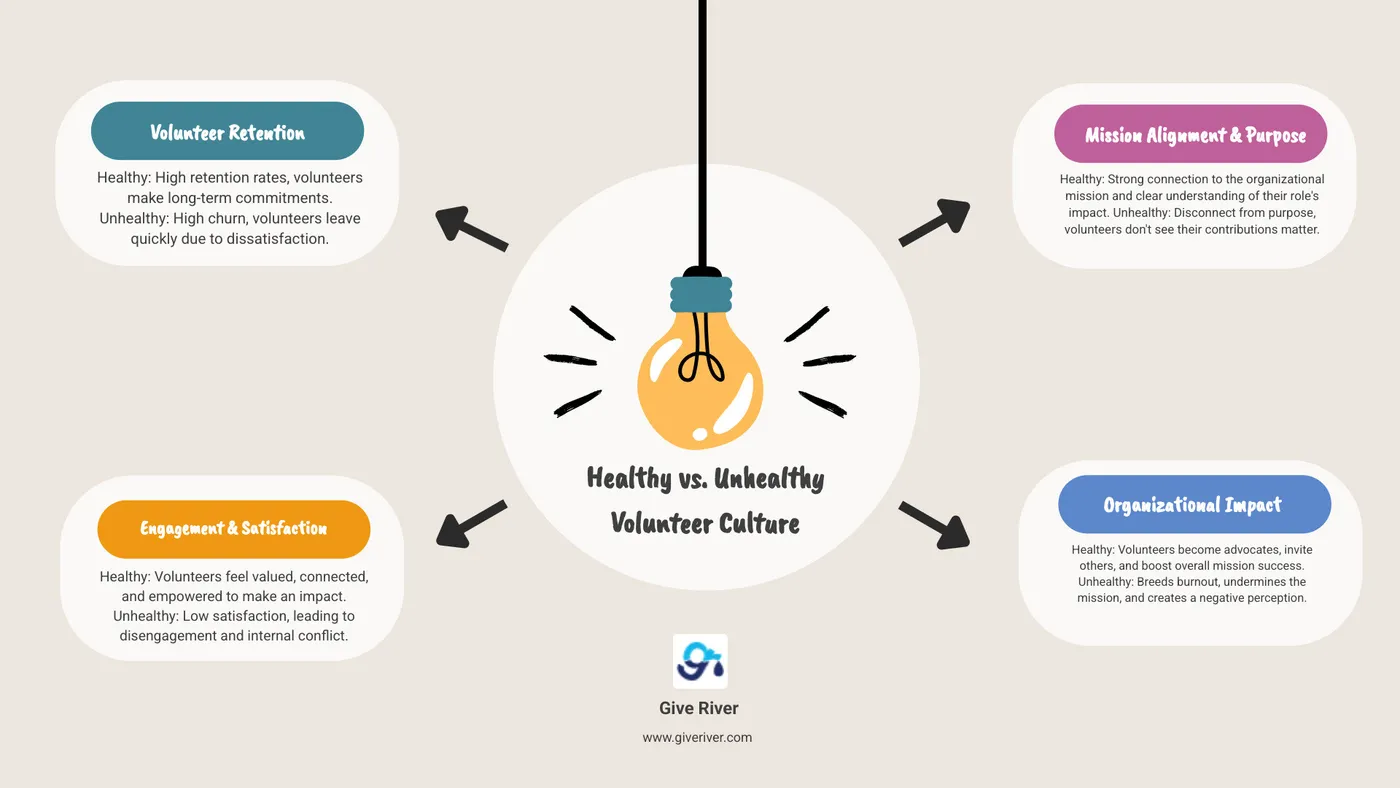
Hallmarks of a Healthy vs. Unhealthy Volunteer Culture
Understanding the difference between a healthy and unhealthy culture is the first step toward improvement.
Signs of a Healthy Volunteer Culture:
- High Engagement & Retention: Volunteers are enthusiastic, proactive, and stay long-term.
- Strong Leadership & Mutual Respect: Capable leaders inspire teams, and staff and volunteers value each other.
- Inclusivity and Safety: The volunteer base is diverse, and everyone feels respected, included, and safe.
- Open Communication: Clear channels exist for feedback, and volunteers feel heard.
- Clear Mission Connection: Volunteers see how their work contributes to the bigger picture.
Warning Signs of an Unhealthy Volunteer Culture:
- High Volunteer Churn: A revolving door of volunteers signals systemic issues.
- Burnout and Low Morale: Volunteers are exhausted, disengaged, and dissatisfied.
- Mission Disconnect: Volunteers feel their work lacks purpose, leading to apathy.
- Conflict and Negative Feedback: Frequent interpersonal conflicts and complaints are common.
- Lack of Diversity: A homogenous volunteer base may indicate an unwelcoming environment.
| Characteristic | Healthy Volunteer Culture | Unhealthy Volunteer Culture |
|---|---|---|
| Volunteer Retention | High, long-term commitment, volunteers become advocates. | High churn, constant recruitment efforts, volunteers quickly disappear. |
| Engagement Levels | Enthusiastic, proactive, innovative, volunteers invite others. | Apathetic, minimal effort, disengaged, volunteers merely fulfill obligations. |
| Volunteer Morale | High, sense of purpose, feeling valued, positive word-of-mouth. | Low, dissatisfaction, resentment, negative feedback, poor reputation. |
| Mission Alignment | Clear understanding of impact, strong connection to organizational goals. | Disconnected from mission, unclear purpose, feeling like "just a cog in the machine." |
| Leadership | Inspiring, supportive, ethical, empowers volunteers. | Ineffective, unsupportive, creates conflict, micromanages or neglects volunteers. |
| Communication | Open, two-way, regular updates, feedback is valued and acted upon. | Poor, one-way, lack of information, feedback is ignored or dismissed. |
| Burnout Risk | Low, adequate support, reasonable demands, work-life balance encouraged. | High, overwhelming demands, insufficient support, constant pressure. |
| Community Impact | Efficient, effective, amplified by dedicated volunteers, strong public perception. | Hindered by volunteer issues, inconsistent output, negative public perception. |
Aligning Passion with Purpose
Defining your ideal volunteer culture helps attract individuals who resonate with your values. Volunteers are driven by a desire to contribute meaningfully. When you clearly communicate your vision and show how their efforts make a difference, you foster a shared sense of purpose. This connection is a primary motivator and a cornerstone of a healthy culture.
We can improve this alignment by involving volunteers in Community Impact Initiatives and demonstrating our commitment to What is Corporate Social Responsibility and Why is it Important. When volunteers see your organization living its values, their passion ignites.
A Practical Guide to Creating a Volunteer Culture That Lasts
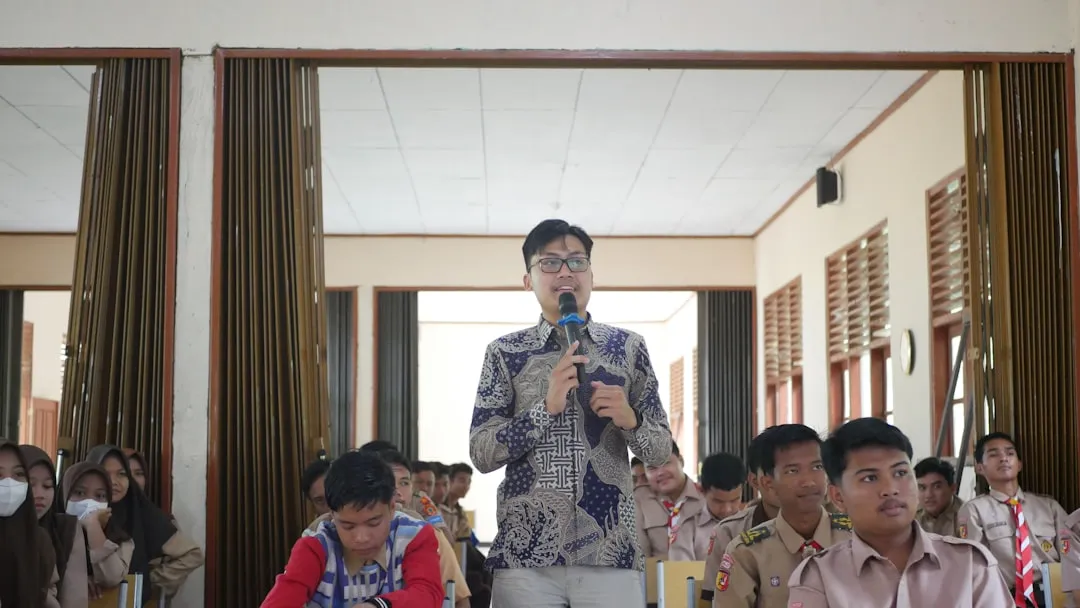
Building a healthy volunteer culture is a strategic process requiring intentional effort across the entire volunteer lifecycle. Let's explore the actionable steps you can take.
Step 1: Assess, Define, and Educate
First, objectively assess your current culture by reviewing turnover rates, surveying volunteers, and conducting exit interviews. Once you have a clear picture, define your ideal culture by articulating core values and desired characteristics.
Finally, unite and educate your team to foster this shared vision:
- Create a Comprehensive Volunteer Handbook: This resource should outline your mission, code of conduct, roles, and procedures to ensure everyone is on the same page.
- Implement a Robust Onboarding Process: Use orientation to immerse new volunteers in your culture, introduce them to the team, and explain how their work fits into the bigger picture.
These steps lay a foundation for a transparent and purposeful culture. Volunteering also offers profound scientific research on the health benefits of volunteering, such as reduced stress and a greater sense of purpose. For more guidance, see our New CSR Initiatives Guide.
Step 2: Empower Leaders and Foster Open Communication
Effective volunteer leadership is critical. Dynamic leaders inspire action, while ineffective ones can breed dissatisfaction.
- Appoint Capable Leaders: Choose leaders who possess both hard skills (e.g., organization) and soft skills (e.g., empathy, communication). They must embody your values and act as role models for the team.
- Foster Open Communication: Establish clear channels for information flow, such as emails, messaging apps, or regular meetings. Consistent check-ins and accessible feedback channels ensure everyone feels connected and heard.
- Ensure Flexibility and Variety: Attract and retain diverse talent by offering flexible scheduling, a variety of roles (from hands-on to remote), and different commitment levels. This approach makes volunteering more accessible and fulfilling.
Exploring different Community Involvement Programs can provide valuable insights into effective engagement strategies.
Step 3: The Power of Recognition and Technology in creating a volunteer culture
Volunteers give their time generously, and their contributions should be noticed. Recognition isn't about payment; it's about appreciation and reinforcing the value of their efforts.
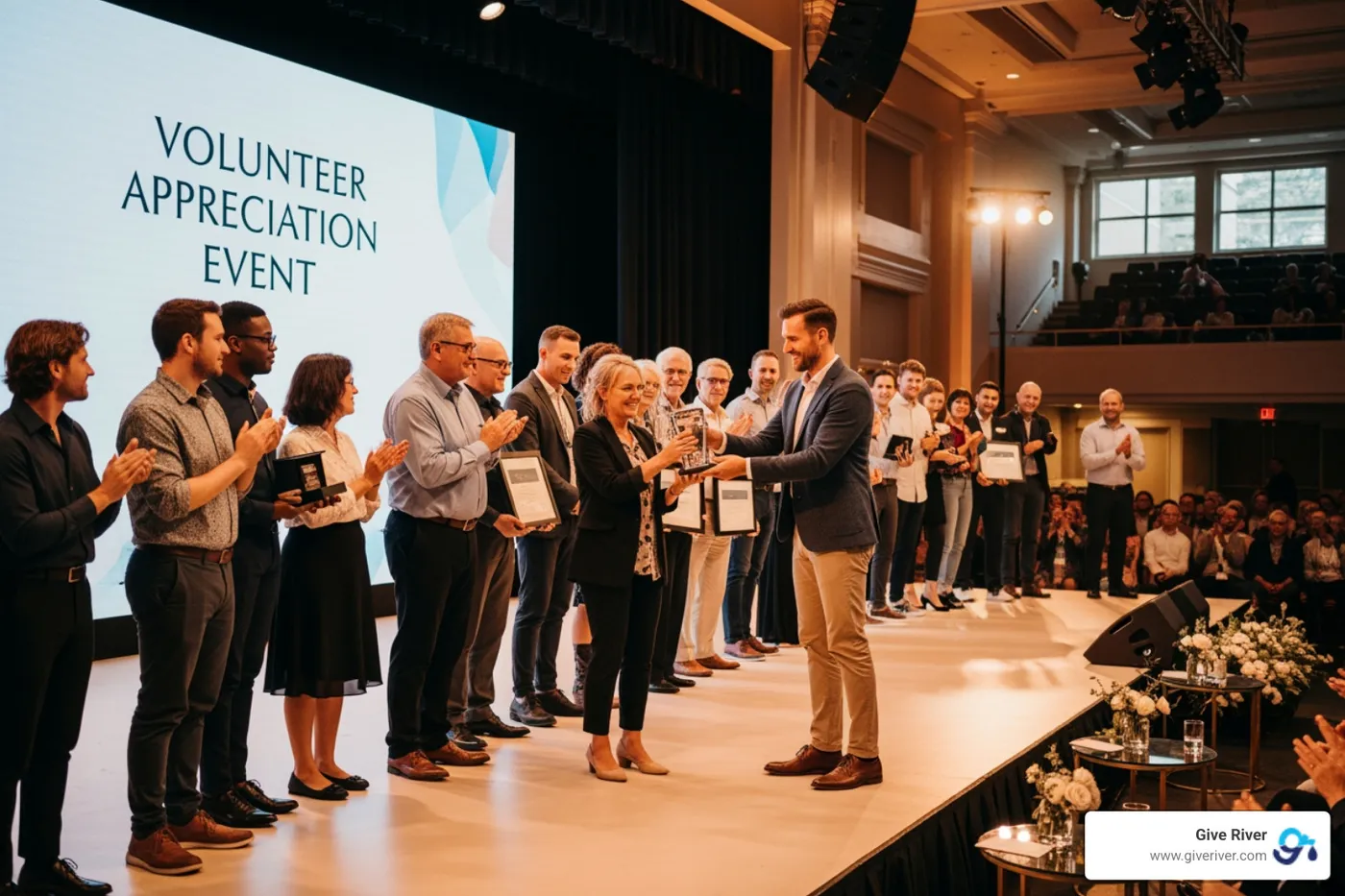
Celebrate Achievements: Make a conscious effort to recognize volunteers. This can range from a simple, heartfelt thank-you and public shout-outs in newsletters to formal awards or offering professional references. The key is to be consistent and sincere.
Leverage Volunteer Management Software: Technology is pivotal in creating a volunteer culture that is efficient and engaging. These platforms streamline coordination by simplifying communication, scheduling, data management, and feedback collection.
While employee recognition platforms like Bonusly and Kudos are common in corporate settings, they often lack the specific features needed to manage a volunteer program effectively. This is where Give River stands apart. Unlike platforms focused solely on peer-to-peer recognition, Give River integrates powerful volunteer management tools. It streamlines coordination, scheduling, and communication while also celebrating contributions. This reduces administrative chaos, allowing you to focus on fostering genuine connections rather than getting bogged down in logistics. Integrating these efforts with broader initiatives like Workplace Giving Programs can further amplify your impact.
From Program to Passion: Sustaining Your Volunteer Culture
Building a strong volunteer culture is an ongoing commitment, not a one-time project. To ensure your culture thrives, focus on continuous improvement and long-term engagement.
Creating a Volunteer Culture for Lasting Community Impact
Sustaining momentum requires vigilance. Continuously monitor your program and seek regular feedback to identify areas for improvement and keep your culture vibrant and responsive.
Making volunteering part of your organization's DNA offers immense benefits. It boosts employee health, morale, and skills while increasing engagement and productivity. Today's top talent craves purpose, making a strong volunteer culture a powerful tool for attracting and retaining the best people. It's an investment in both your community and your team.
At Give River, we know that building a passionate volunteer culture aligns with our mission to improve workplace culture. Our unique 5G Method boosts employee fulfillment through recognition, guidance, wellness, growth, gamification, and, critically, community impact. By applying these principles, we help create an environment where volunteers become integral, passionate members of your mission.
Ready to transform your volunteer program into a thriving community? Explore how we can help you foster meaningful Charitable Impact and build a volunteer culture that lasts.
More from this category.

Understanding Workplace Culture
Improve workplace culture by focusing on key elements that lead to a more engaging and fulfilling work environment. Company culture isn't just an HR buzzword; it's the heartbeat of any thriving organization. It shapes how employees feel,…

Why Workplace Aspiration Is the Missing Link in Employee Engagement
Knowing how to empower the aspiration in the workplace is one of the most high-leverage things a leader or HR professional can do in 2026 — and most organizations are still getting it wrong.

Why Top Companies Are Embracing Mindfulness
Mindfulness in workplace settings has evolved from a wellness trend to a business imperative. In today's demanding work environment, where 83% of American workers suffer from work-related stress and workplace stress costs businesses over…
See the platform in action.
Free for up to 25 members, or try Core or Growth free for 30 days. A card is required; Free is never charged, and a trial bills when it ends unless you cancel.