Why Recognition Program Best Practices Make or Break Your Workplace Culture
The recognition program best practices that separate high-performing organizations from struggling ones aren't complicated — but they are specific. If you're looking to build or improve your employee recognition program, here's what the…
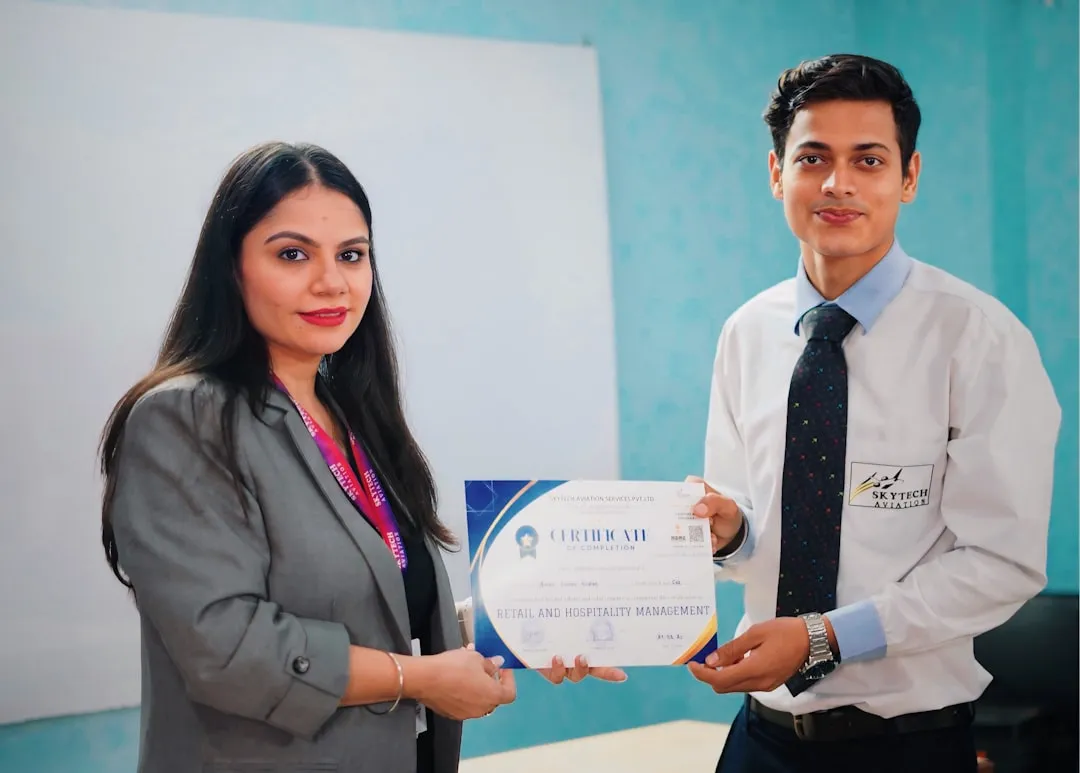
The recognition program best practices that separate high-performing organizations from struggling ones aren't complicated — but they are specific. If you're looking to build or improve your employee recognition program, here's what the research consistently shows works:
Recognition program best practices at a glance:
- Set clear objectives — Tie recognition to measurable goals like retention, engagement, or productivity benchmarks
- Make it timely and specific — Recognize behaviors and achievements close to when they happen, with meaningful context
- Enable peer-to-peer recognition — Don't rely solely on top-down praise; colleague recognition is often more credible and frequent
- Balance monetary and non-monetary rewards — Combine spot bonuses, gift cards, and experiences with genuine verbal and written appreciation
- Personalize the experience — Different employees value different forms of recognition; one size does not feel right for all
- Use technology to scale — Recognition platforms help reach remote, hybrid, and deskless workers consistently
- Measure and iterate — Track participation rates, engagement scores, and turnover to assess real impact
- Secure leadership commitment — Recognition culture starts at the top and is reinforced by trained managers
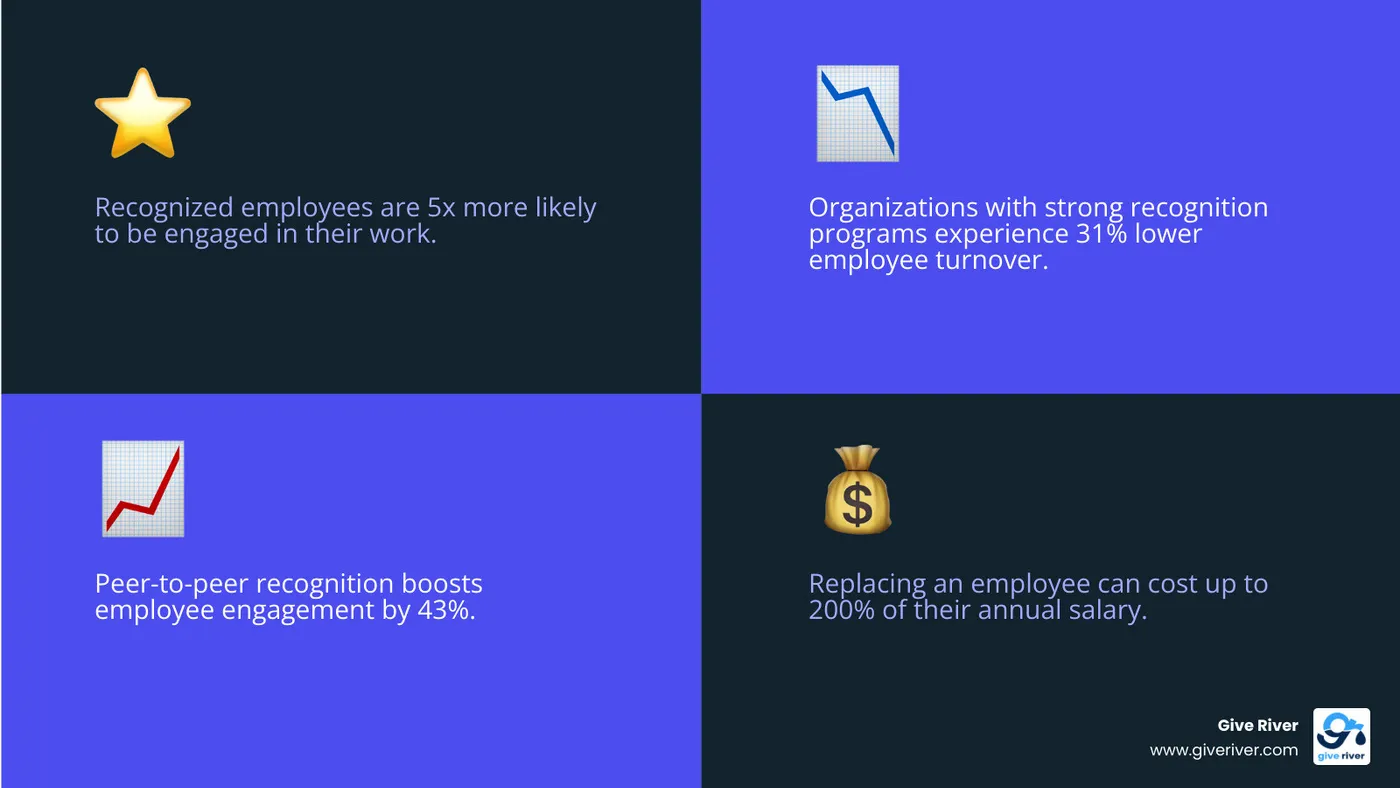
Here's a number that should stop you mid-scroll: employees who feel adequately recognized are five times as likely to be engaged in their work, according to Gallup research. Yet the majority of organizations are still running recognition programs that feel like an afterthought — an annual award plaque, a generic "employee of the month" post, or a gift card that arrives three weeks late.
The result? Disengagement, quiet quitting, and turnover that costs companies up to 200% of an employee's annual salary to replace. In April 2026, with competition for talent as fierce as ever, this is no longer a "nice-to-have" problem. It's a strategic one.
The good news is that building a recognition program that genuinely moves the needle doesn't require a massive budget. It requires intention — and the right framework.
I'm Meghan Calhoun, Co-Founder of Give River and a workplace culture strategist with over two decades of experience leading high-performing teams across some of the most demanding sales and service environments imaginable — experience that directly shaped my thinking on recognition program best practices and the science of sustainable team performance. In the sections ahead, I'll walk you through everything you need to design, launch, and sustain a recognition program that actually works.
Recognition program best practices terms to learn:
Core Recognition Program Best Practices for Modern Workplaces
When we talk about recognition program best practices, we aren't just talking about saying "good job" in a hallway. We are talking about a strategic business capability. In the modern workplace of April 2026, where the median employee tenure sits at roughly 3.9 years, recognition is the glue that keeps your top talent from looking for the exit.
The impact of getting this right is staggering. Research shows that effective recognition programs can:
- Increase employee loyalty by 3X.
- Boost engagement by 43%.
- Increase productivity by 14%.
- Reduce turnover by a massive 31%.
But why does it work? It’s rooted in Maslow’s hierarchy of needs. Beyond a paycheck (survival), humans have a fundamental need to belong and to be appreciated. When we ignore this, we aren't just being "cold" leaders; we are being inefficient ones. Employees who receive strong recognition are 33% more likely to be innovative and generate twice as many new ideas per month.
To help you visualize the shift from "old school" to "modern," look at how the impact differs between traditional top-down models and the peer-integrated models we advocate for:
| Feature | Traditional Top-Down | Peer-to-Peer & Integrated |
|---|---|---|
| Frequency | Annual or Quarterly | Daily or Weekly |
| Source | Direct Manager Only | Everyone (Peers, Reports, Leaders) |
| Visibility | Private or Formal Event | Social Feed / Real-time |
| Credibility | High (if manager is liked) | Highest (peers see daily effort) |
| Retention Impact | Moderate | High (4 years longer tenure) |
Defining Objectives and Recognition Program Best Practices
Before you buy a single gift card or sign up for a platform, you must define your "why." Are you trying to cut turnover in your frontline staff? Are you trying to boost innovation in your R&D team? Without a clear objective, your program will likely become "feel-good fluff" that fails to deliver ROI.
We recommend following the SMART philosophy for your program design: Sincere, Meaningful, Adaptable, Relevant, and Timely. A successful program should align directly with your company’s core values. If "Generosity" is a value, your program should reward those who help others. If "Speed" is a value, recognize those who hit tight deadlines without sacrificing quality.
A great place to start is with a stakeholder audit. Don't just ask HR what they think; interview your managers, your high performers, and especially your "quiet achievers." You might find that your current Modern Employee Recognition Programs Best Practices are actually causing friction because they feel biased or performative.
Balancing Tangible Rewards and Recognition Program Best Practices
One of the most common questions we get is: "How much should we spend?" While recognition doesn't have to be expensive, the data suggests that budgeting $200-$350 per employee per year on recognition helps companies achieve the greatest impact.
However, money isn't everything. In fact, while cash is appreciated, it’s rarely memorable. Heartfelt, non-monetary appreciation often impacts the heart more than a $50 bonus that gets swallowed up by taxes and groceries. We suggest a "mixed bag" approach:
- Tangible Rewards: Gift cards, branded merchandise, extra PTO, or "Lifestyle Spending Accounts" (LSAs).
- Appreciation: Public shout-outs, handwritten thank-you notes, or a "Wall of Fame."
The key here is equity. If only the sales team gets recognized because their wins are "loud," your operations and back-office teams will feel invisible. Use Employee Recognition Strategies that standardize criteria so that everyone—from the developer to the delivery driver—has a fair shot at being seen.
Implementing Peer-to-Peer Systems and Reflective Recognition
If managers are the only ones giving recognition, you’re missing 80% of what’s actually happening in your company. Managers simply cannot see every late night, every helpful tip shared between coworkers, or every crisis averted. This is why peer-to-peer recognition is the "secret sauce."
When peers recognize peers, it carries a unique weight. Your colleagues know exactly how hard that project was because they were in the trenches with you. Encouraging this creates a culture of "bragging rights" and mutual support rather than cutthroat competition.
But there’s an even deeper level of appreciation we call Reflective Recognition.
Traditional praise is a leader telling an employee what they did well. Reflective recognition is a leader asking an employee what they are proud of. It’s a simple, three-step process:
- Invite: During a one-on-one, ask: "What have you been working on recently that you are proud of?"
- Probe: Ask positively, "How were you able to do that? What did it take to make it happen?"
- Reflect: Mirror back what you heard to validate their effort. "It sounds like you really had to navigate some complex barriers to get that launch across the line."
This method uncovers "unseen work" and reduces burnout because the employee feels truly understood, not just "noted."
While platforms like Bonusly or Kudos offer great tools for social shout-outs and point-based rewards, Give River is built to solve the "transactional" trap. Unlike those platforms that focus primarily on peer-to-peer points, Give River differentiates by integrating the human connection of reflective recognition and our unique 5G Method. We believe technology should facilitate these human moments and drive charitable impact, ensuring recognition feels like a contribution to the greater good rather than just a digital exchange.

Leveraging Technology for Inclusive and Timely Appreciation
In 2026, your workforce is likely a mix of remote, hybrid, and "deskless" workers. If your recognition program relies on a physical bulletin board in the breakroom, you've already excluded half your team.
Technology is the bridge to inclusivity. A digital Peer To Peer Recognition Software Complete Guide allows for:
- Automation: Never miss a work anniversary or birthday again.
- Mobile Access: Essential for the 2.7 billion deskless workers (80% of the global workforce) who don't sit at a computer.
- Social Amplification: A "social feed" where everyone can see and "like" recognition moments, creating a ripple effect of positivity.
For example, a manufacturing firm we studied used a mobile-friendly portal to reach their floor workers. Leaders even dressed up in themed costumes during the launch to hand out digital "points." The result? 95% uptake and a massive boost in morale for a group that usually feels disconnected from "corporate" initiatives.
Measuring Success and Avoiding Common Pitfalls
"If you can't measure it, you can't manage it." This old adage applies perfectly to recognition program best practices. To ensure your program is actually a strategic asset, you need to track both leading and lagging indicators. Scientific research on recognition and engagement shows that consistent measurement is key to long-term success.
Key Metrics to Monitor:
- Participation Rate: What percentage of your team is giving and receiving recognition? (Aim for 80% or higher).
- Nomination Velocity: How often are people being recognized?
- Retention Rates: Compare the turnover of recognized employees vs. unrecognized ones.
- Engagement Scores: Look for correlations between recognition activity and your annual engagement surveys.
Common Pitfalls to Avoid:
- The "Employee of the Month" Trap: This often becomes a "popularity contest" or a "whose turn is it?" rotation, which feels insincere and creates resentment.
- Inconsistency: If a manager recognizes one person for a task but ignores another for the same effort, it breeds a sense of unfairness.
- Delayed Gratitude: Recognition given months after the fact loses its punch. It needs to be timely.
- Lack of Specificity: "Good job, Sarah" is weak. "Sarah, your creative design on the Q3 brochure helped us increase our click-through rate by 15%" is powerful.
By creating feedback loops—using surveys and focus groups—you can keep your program dynamic and prevent it from going stale.
Real-World Success Stories and Actionable Launch Steps
Let’s look at some heavy hitters who have mastered recognition program best practices:
- ICF: Their program is so data-rich that it predicts employee turnover 91% of the time. By identifying who isn't being recognized, they can intervene before an employee quits.
- Capital One & CIBC: These organizations use integrated platforms to ensure that values-based recognition is part of the daily workflow, not a separate "task."
Ready to launch? Follow this Employee Recognition Action Plan Complete Guide:
- Form a Committee: Include a diverse group (not just HR!) to act as "recognition heroes."
- Brand Your Program: Give it a fun name and a visual identity that matches your culture. One school we worked with called their rewards "Nest Eggs."
- Train Your Managers: Managers drive 70% of the variance in team engagement. If they don't know how to give meaningful praise, the program will fail.
- Launch with Fanfare: Don't just send an email. Host a launch event, run a countdown, and get your senior leaders to lead by example.
Sustaining a Culture of Gratitude and Growth
At the end of the day, a recognition program is just a tool. The goal is a culture of gratitude. This is where Give River’s unique 5G Method comes into play. We don't just stop at "Gratitude." We integrate it with:
- Guided: Clear paths for performance.
- Gamified: Making the process engaging and fun.
- Growth: Providing professional and personal development content.
- Generosity: Connecting recognition to charitable impact.
Imagine an employee receiving a "shout-out" from a peer and, along with it, a few "Drops" (our digital currency) that they can use to fund a clean water project or a local food bank. This transforms a simple "thank you" into a moment of global significance.
By using a comprehensive Recognition Platform, you ensure that your recognition program best practices are baked into the very DNA of your organization. You aren't just checking a box; you are building a workplace where people feel seen, valued, and empowered to do their best work.
So, what’s your first step? Maybe it’s a simple "reflective" question in your next one-on-one. Or maybe it’s finally ditching that dusty "Employee of the Month" plaque for a system that actually empowers your team. Whatever you choose, remember: the best time to start recognizing your team was yesterday. The second best time is right now.
Ready to see how Give River can transform your culture? Explore our solutions here and let's build a high-performing team together.
More from this category.
Best Employee Recognition Software for Nonprofits (2026)
What nonprofits need from recognition software, what six platforms charge mission-driven teams, and how to get a grant-funded Season of Give River for free.

Employee Recognition Software Pricing in 2026: What 6 Platforms Charge
What Give River, Bonusly, Motivosity, Nectar, Awardco, and Workhuman charge in 2026, from their own sites: pricing models, minimums, fees, and contract terms.

How to Improve Employee Recognition Across Multiple Locations
Six practical ways to make recognition reach every site and shift, what to look for in a platform, and how a 25-location nonprofit did it.
See the platform in action.
Free for up to 25 members, or try Core or Growth free for 30 days. A card is required; Free is never charged, and a trial bills when it ends unless you cancel.