Why Virtual Team Development Programs Are the New Foundation of Remote Work Success
Virtual team development programs are structured initiatives designed to build connection, collaboration, and cohesion among remote and hybrid teams through a combination of activities, training, and ongoing engagement strategies.

Virtual team development programs are structured initiatives designed to build connection, collaboration, and cohesion among remote and hybrid teams through a combination of activities, training, and ongoing engagement strategies.
Here's a quick overview of what these programs typically include:
| Program Element | Purpose | Examples |
|---|---|---|
| Team building activities | Boost morale and connection | Trivia, escape rooms, scavenger hunts |
| Leadership training | Equip managers for virtual environments | Virtual workshops, role-playing, coaching |
| Asynchronous rituals | Sustain daily engagement | Slack channels, user manuals, recognition feeds |
| Wellness and growth | Prevent burnout and support development | Micro-learning, pulse surveys, peer recognition |
| Measurement and feedback | Track progress and ROI | Retention metrics, adoption rates, satisfaction scores |
Remote work has fundamentally changed how teams connect - and the gap it creates is harder to close than most leaders expect. Research tells a striking story: 37% of remote workers worry about not feeling connected to their peers, and a remarkable 94% of workers say mutual respect and genuine connection are critical to their team's success. Yet most organizations are still relying on one-off virtual happy hours and the occasional Zoom quiz to bridge that gap.
The reality is that building a thriving remote team requires something more intentional. Without the casual hallway conversations, spontaneous desk visits, and organic social bonds that form in a physical office, distributed teams face what researchers call invisible work - the unseen effort of maintaining relationships and collaboration across a screen. Left unaddressed, that invisibility quietly erodes engagement, trust, and ultimately, performance.
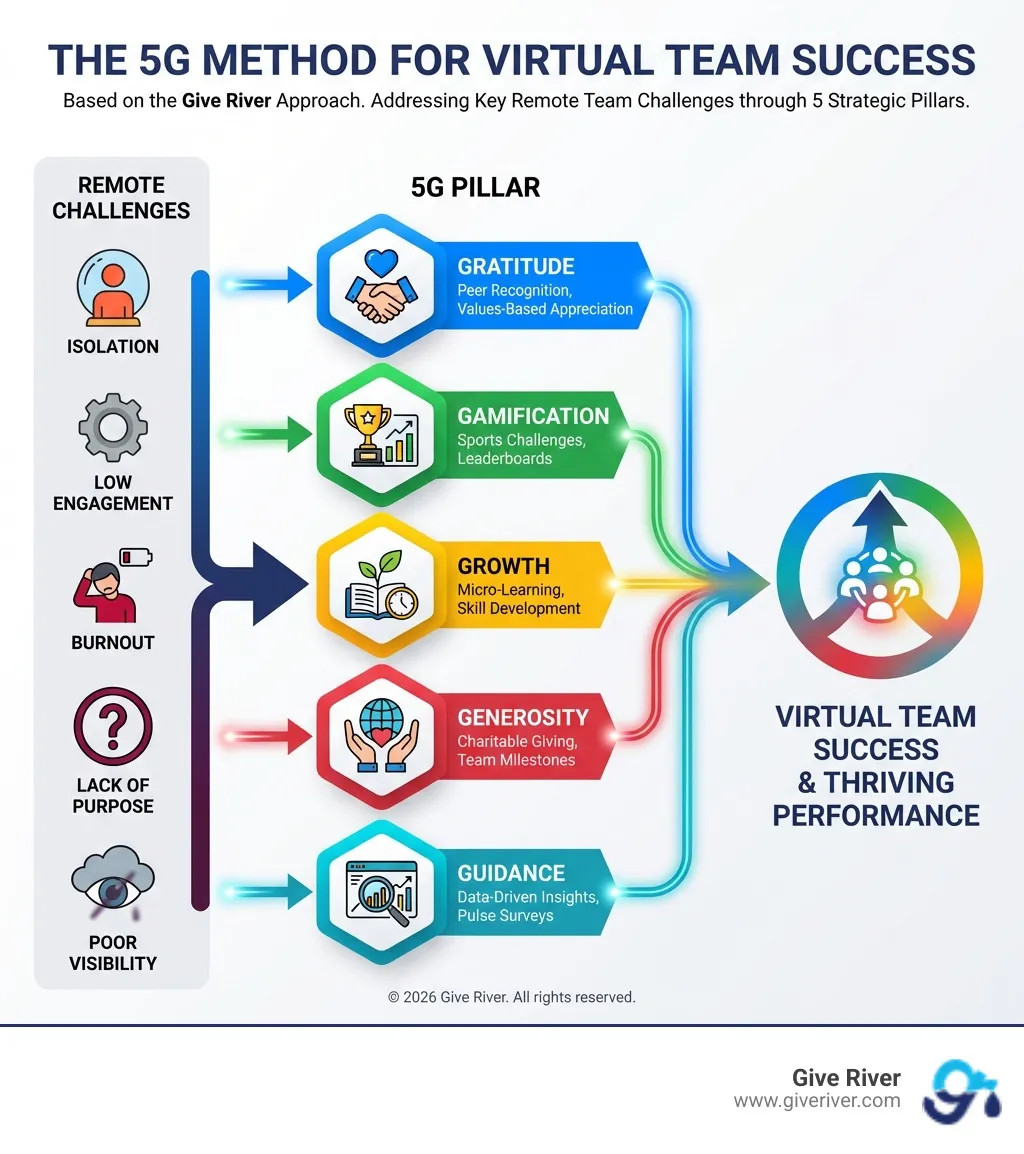
I'm Meghan Calhoun, Co-Founder of Give River and a workplace wellness advocate with over two decades of experience leading high-performing teams across some of the most demanding environments imaginable - from Fortune 100 sales floors to roles requiring deep daily empathy. My experience with burnout and my research into what truly drives sustainable team performance directly shaped how Give River approaches virtual team development programs through our science-backed 5G Method. In the sections below, we'll walk through the most effective activities, strategies, and frameworks you can start using today to build a remote team that doesn't just function - but genuinely thrives.
Virtual team development programs terms to know:
- gratitude team building activity virtual
- virtual ice breakers
- halloween virtual team building activities
The Strategic Value of Virtual Team Development Programs

We can no longer leave team chemistry to chance. When we talk about virtual team development programs, we aren't just talking about playing games. We are talking about the strategic architecture of human-to-human connection. In a traditional office, you might spend eight hours a day in the same physical space as your colleagues. In a remote setting, those eight hours are replaced by pings, emails, and the occasional video call.
This shift requires a new "Digital HQ" mindset. According to GitLab's Remote Work Report, the lack of organic social bonds is a primary driver of disengagement. By implementing structured programs, we replace "accidental" culture with "intentional" culture. This intentionality is what drives remote productivity. When team members feel seen and respected, they aren't just more pleasant to work with—they are more effective. Our Remote Team Experiences show that when the "invisible work" of relationship-building is formalized, teams collaborate 20% more effectively.
Why Virtual Team Development Programs are Essential for Remote Success
Loneliness isn't just a personal feeling; it’s a business risk. Statistics show that 19% of workers say mutual respect and connection is the most important factor in their sense of well-being at work. Without virtual team development programs, remote employees are half as likely to feel a strong sense of belonging, which is a leading indicator of burnout and turnover.
However, the upside is massive. Research suggests that remote workers can be 20% more productive than their in-office counterparts when they feel supported by inspiring leadership and clear communication frameworks. These programs act as a safety net, providing the psychological safety necessary for team members to take risks and innovate. By investing in Digital Team Building Activities, we move from a culture of "checking in" to a culture of "connecting with."
Choosing the Right Activities for Your Culture
Not every activity fits every team. To build a truly inclusive culture, we must account for different personality types and work styles.
- Include the Introverts: Avoid high-pressure "spotlight" activities. Use breakout rooms or chat-based games where people can contribute via text or emojis.
- The 2.5x Rule: This is a golden rule in virtual leadership—to achieve the same level of bond as an in-person team, you need to facilitate 2.5 times more virtual touchpoints.
- Tool Integration: Leverage the tools you already use. Whether it's Slack for banter, Zoom for face-to-face, or Trello for collaborative fun, the best activities feel like a natural extension of the workday.
For a deeper dive into selecting the right fit, check out our Virtual Group Activities Team Building Guide.
Creative Activities to Spark Connection and Creativity
Creativity thrives when the brain feels safe and playful. Gamification is one of the most powerful levers in our 5G Method because it triggers the release of dopamine and fosters healthy competition. By stepping away from spreadsheets and into a shared challenge, teams practice problem-solving in a low-stakes environment.
| Activity Type | Best For... | Effort Level |
|---|---|---|
| Real-Time | High energy, immediate bonding, live problem-solving | High (requires scheduling) |
| Asynchronous | Flexibility across time zones, low pressure, consistent touchpoints | Low (can be done anytime) |
| n |
High-Impact Games for Virtual Team Development Programs
If you want to see your team's communication skills in action, put them in a high-stakes (but fun) situation.
- Virtual Escape Rooms: These are the gold standard for collaborative thinking. Teams must decode puzzles and share information quickly to "escape." Explore our Escape Room Virtual Team Building options to see how this works.
- Trivia & Quizzes: Use tools like Polly or Slack integrations to run weekly themed trivia. It's a great way to spark friendly rivalry and climb the leaderboard.
- Digital Scavenger Hunts: Challenge your team to find the "most unusual item" in their home office within three minutes. It’s a hilarious way to get a peek into each other's worlds.
For more ideas, our Virtual Team Games Ultimate Guide covers everything from Pictionary to "Guess the Desk."
Asynchronous Rituals to Sustain Engagement
Engagement shouldn't be a one-off event. To sustain a winning culture, we need rituals that live in the gaps between meetings.
- Pet Photos & "Good News" Channels: A dedicated Slack channel for #pets or #wins creates a "virtual break room" feel.
- Personal "User Manuals": Have team members create a short document explaining their work style, "pet peeves," and how they like to receive feedback. It's an essential tool for Games for Colleagues Working from Home.
- Monday JAMM: "Just Another Manageable Monday." Start the week by sharing one positive thing from the weekend. This builds empathy and reminds everyone that there is a human behind the avatar.
- Recognition Feeds: Use Peer to Peer Recognition Activities to make "invisible work" visible.
Leadership Strategies for Facilitating Virtual Sessions
Leading a virtual session is different from standing at the front of a conference room. It requires "Attentive and Mindful" leadership. Managers should focus on:
- Active Listening: In a video call, this means looking at the camera, not the screen, and summarizing what others say to ensure alignment.
- Empathetic Leadership: Acknowledge the challenges of remote life—burnout, isolation, and "Zoom fatigue" are real.
- Using the Right Platforms: While platforms like Bonusly or Kudos offer basic recognition and transactional rewards, Give River’s 5G Method provides a more holistic approach. Unlike these point-based systems, Give River integrates recognition with mental wellness, charitable giving, and professional growth to address the root causes of remote disengagement rather than just the symptoms.
Check out our Leadership Zoom Activities for practical tips on facilitating these sessions, especially How to Lead Your Team Through Crisis.
Measuring ROI and Long-Term Success
How do you know if your virtual team development programs are working? You look at the data. Scientific research on remote productivity from Stanford shows that remote workers who feel connected have higher retention rates and better performance outcomes.
At Give River, we measure success through:
- Retention Metrics: Are people staying longer?
- Pulse Surveys: How do employees rate their sense of belonging?
- Participation Rates: Are people actually showing up to the "optional" fun stuff?
When you use a comprehensive system like our 5G Method, you aren't just guessing—you're building a data-driven culture of fulfillment.
Ready to transform your remote team's culture? Explore our Team Building Solutions and let's start building a high-performing team that feels connected, no matter the distance.
More from this category.
Why Most Work Meetings Start on the Wrong Foot (And How to Fix It)
The best 2 truths and a lie ideas for work can transform an awkward, silent meeting opener into a moment your team actually looks forward to. Whether you're onboarding new hires, kicking off a remote all-hands, or just trying to shake off…

The Trust Deficit in Remote Work
Building trust in a virtual team is a critical challenge for modern organizations. While remote work offers flexibility, it can erode team cohesion if not managed intentionally.

Why Connection Building Activities Are the Secret to High-Performing Teams
Connection building activities are structured exercises that help teams develop trust, improve communication, and foster genuine relationships at work — and they're one of the most overlooked drivers of team performance.
See the platform in action.
Free for up to 25 members, or try Core or Growth free for 30 days. A card is required; Free is never charged, and a trial bills when it ends unless you cancel.