Why Connection Building Activities Are the Secret to High-Performing Teams
Connection building activities are structured exercises that help teams develop trust, improve communication, and foster genuine relationships at work — and they're one of the most overlooked drivers of team performance.
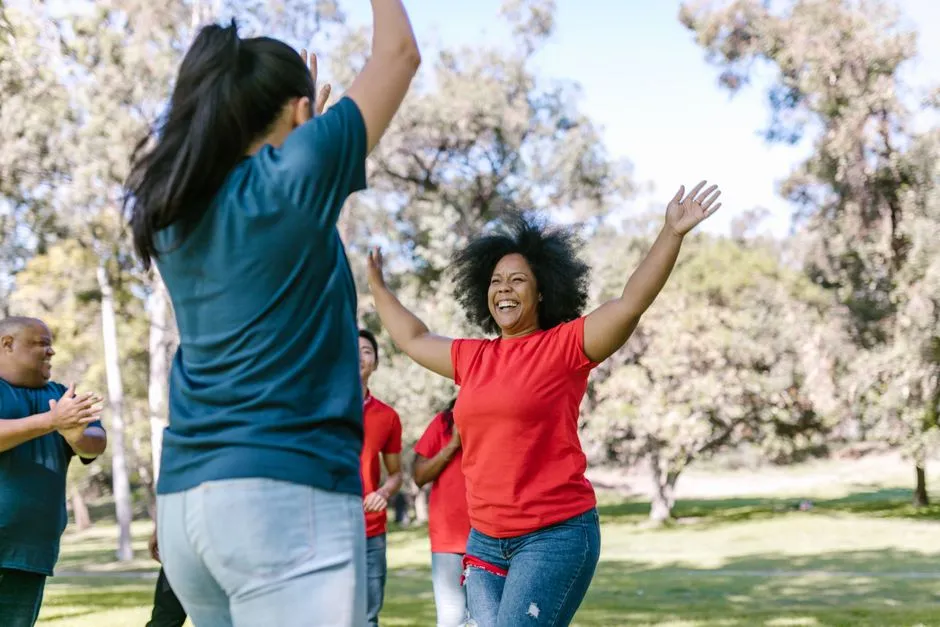
Connection building activities are structured exercises that help teams develop trust, improve communication, and foster genuine relationships at work — and they're one of the most overlooked drivers of team performance.
Here's a quick overview of the most effective types, so you can find the right fit for your team right away:
| Activity Type | Best For | Time Required |
|---|---|---|
| Icebreakers (e.g., Two Truths & a Lie, 3 Question Mingle) | New teams, onboarding | 5-15 minutes |
| Trust-building exercises (e.g., Blind Drawing, Open Fist) | Teams with friction or silos | 15-30 minutes |
| Problem-solving challenges (e.g., Marshmallow Challenge, Escape Room) | Improving collaboration and communication | 30-60 minutes |
| Storytelling activities (e.g., Connecting Stories, Life Map) | Deepening empathy and shared understanding | 15-45 minutes |
| Virtual activities (e.g., Impromptu Networking, Online Trivia) | Remote and hybrid teams | 15-30 minutes |
| Daily micro-activities (e.g., gratitude sharing, quick check-ins) | Sustaining connection over time | 2-5 minutes |
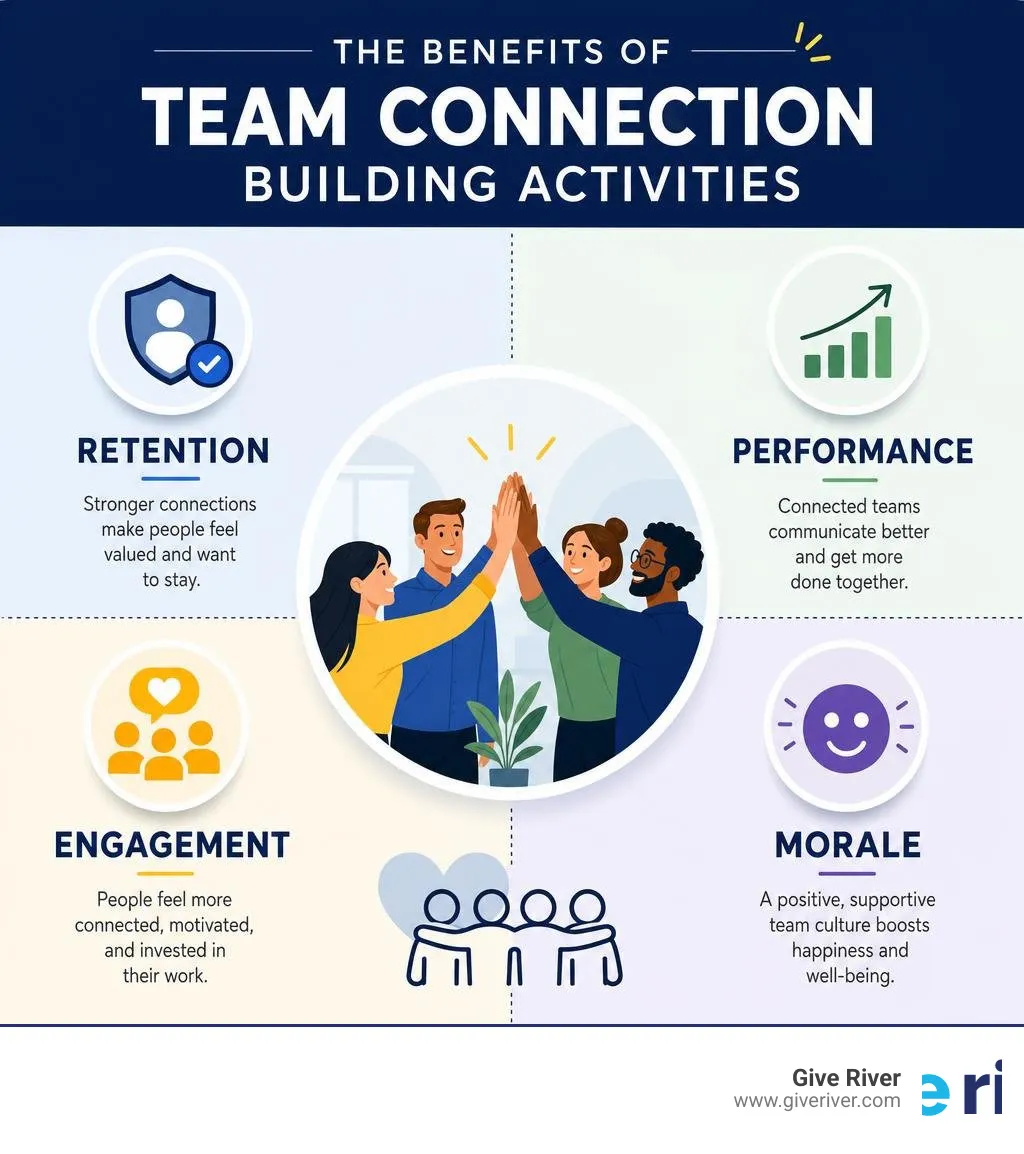
If your team is struggling with low engagement, high turnover, or a culture that feels disconnected — you're not alone. Research shows that organizations with strong team-building programs report 50% higher employee retention rates, and teams that engage in regular connection-focused activities show 21% greater profitability. Yet most workplaces still treat team connection as an afterthought — a quarterly pizza party or an awkward icebreaker bolted onto an all-hands meeting.
The gap isn't a lack of effort. It's a lack of intention.
Real connection doesn't happen by accident. It happens when leaders create deliberate, repeatable opportunities for people to show up as humans — not just as job titles. And the good news? It doesn't require a big budget or a half-day off-site. Some of the most powerful connection-building moments happen in five minutes or less.
I'm Meghan Calhoun, Co-Founder of Give River and a workplace wellness advocate with over two decades of experience leading high-pressure teams — from Fortune 100 sales floors to emotionally demanding environments where genuine human connection wasn't a "nice to have," it was the only thing keeping teams intact. Designing and facilitating connection building activities has been central to everything I've built, and the insights I've gathered inform every feature of the Give River platform. Below, I've compiled the activities, frameworks, and best practices that actually move the needle — so your team can stop going through the motions and start building something real.
Discover more about connection building activities:
- blindfold activity on communication
- caterpillar game team building
- fun team bonding activities for work
To understand why these activities are so transformative, we have to look at the underlying psychology. In our 2026 work environment, workplace isolation is a silent productivity killer. According to the Gallup research on employee engagement, employees who have a "best friend at work" are significantly more engaged, productive, and less likely to leave their jobs.
When we invest in structured team building activities, we are not just planning "fun" distractions. We are intentionally constructing a foundation of psychological safety. Teams that build strong personal bonds experience a 37% reduction in absenteeism. By moving away from superficial icebreakers and focusing on strategic connection, we build trust that translates directly into operational excellence.
Quick and Effective Connection Building Activities for Daily Meetings
You do not need a full-day seminar to bring your team closer together. In fact, integrating quick, 5-to-15-minute exercises into your daily or weekly stand-ups is one of the most effective ways to build consistent rapport. These micro-connections keep energy high and help break down social barriers before jumping into heavy work discussions.
Here are a few quick favorites you can implement this week:
- The 3 Question Mingle: Give everyone three index cards, each with a unique, low-stakes question (e.g., "What is a passion of yours besides work and family?" or "What is your favorite comfort food?"). Have participants mingle, swap cards, and answer the questions in rapid-fire, 1-minute rounds. It is an excellent way to discover shared interests quickly.
- Impromptu Networking: Borrowed from the Liberating Structures framework, this exercise takes just 15 minutes. Pair up team members and ask them a focus question, such as: "What is the biggest challenge you are facing in your work right now, and what do you hope to get from this team?" Each person gets 2 minutes to speak while their partner actively listens without interrupting. Rotate partners three times. This rapid exchange builds immediate empathy and highlights shared challenges.
- Mood Pictures: At the start of a meeting, share a screen with nine diverse images (e.g., a calm lake, a stormy sky, a hyperactive puppy, a cozy coffee cup). Ask everyone to drop their name in the chat or call out which image represents their current energy level. It provides a visual, low-pressure way for team members to share their emotional state.
By utilizing these team building exercises workplace dynamics shift from purely transactional to genuinely collaborative. For a deeper list of quick ideas, check out our good team bonding exercises guide.
Problem-Solving and Trust-Building Exercises for Small Groups
For deeper alignment, small groups (typically 5 to 8 people) benefit from challenges that pressure-test their communication. When teams solve low-stakes problems together, they reveal their natural working styles, leadership dynamics, and communication bottlenecks.
One classic example is the Marshmallow Challenge. Teams are given 20 sticks of spaghetti, one yard of tape, one yard of string, and one marshmallow. The goal is to build the tallest freestanding structure that supports the marshmallow on top within 18 minutes. This exercise highlights the difference between over-planning and rapid prototyping. Teams that test and iterate quickly consistently outperform those that spend the entire time debating a single "perfect" plan.
To turn these games into lasting habits, the debrief is essential. We recommend using a structured, military-derived framework like ORCA (Objective, Result, Cause, Action):
- Objective: What was our goal?
- Result: What actually happened?
- Cause: Why did we get this result? (Keep this nameless and rankless to protect psychological safety).
- Action: What concrete behavior will we carry over into our daily work?
This reflective practice is heavily backed by science. In Google's Project Aristotle study on psychological safety, researchers found that the highest-performing teams were not those with the smartest individuals, but those where team members felt safe to take risks and speak honestly without fear of embarrassment.
Using structured exercises from our team building games complete guide allows you to practice these dynamics safely. Combining these with active team bonding exercises ensures your team learns how to navigate real-world business constraints collaboratively.
Virtual Connection Building Activities for Remote and Hybrid Teams
Remote and hybrid teams face unique connection challenges. Without spontaneous hallway chats or shared lunches, relationships can quickly become siloed. Furthermore, "Zoom fatigue" is real, meaning virtual activities must be highly engaging and structured to prevent participants from tuning out.

To build authentic bonds across time zones, try these digital-first strategies:
- Virtual Show and Tell: Give team members 1 minute to grab an object within arm's reach that has a story behind it. It could be a favorite mug, a quirky souvenir, or even a pet. This simple exercise humanizes remote workers and provides natural conversation starters.
- Digital Watercoolers & Trivia: Set up dedicated, casual video calls with no work agenda. Hosting a themed trivia game or a quick photo caption contest during work hours ensures high participation without encroaching on personal time.
- The 9 Dimensions Activity: This is a powerful diagnostic and connection tool for remote teams experiencing friction. Participants rate their comfort levels across nine distinct workplace dimensions (like clarity of roles, trust, and work-life balance) using an interactive whiteboard. It visualizes alignment gaps in real-time, allowing the team to discuss solutions constructively.
By utilizing dedicated team building activities for the remote workplace, you can cultivate a vibrant digital culture. For more interactive ideas, explore our curated list of team bonding games to play over zoom and discover how to deploy effective team builders for remote workers.
The Role of Play and Fun in Strengthening Team Bonds
Never underestimate the power of shared laughter. When we play, our brains release endorphins and dopamine, reducing stress and opening us up to creative risk-taking. Playfulness temporarily dismantles corporate hierarchies, allowing team members to connect on a human level.
Consider incorporating these low-cost, highly playful activities into your routine:
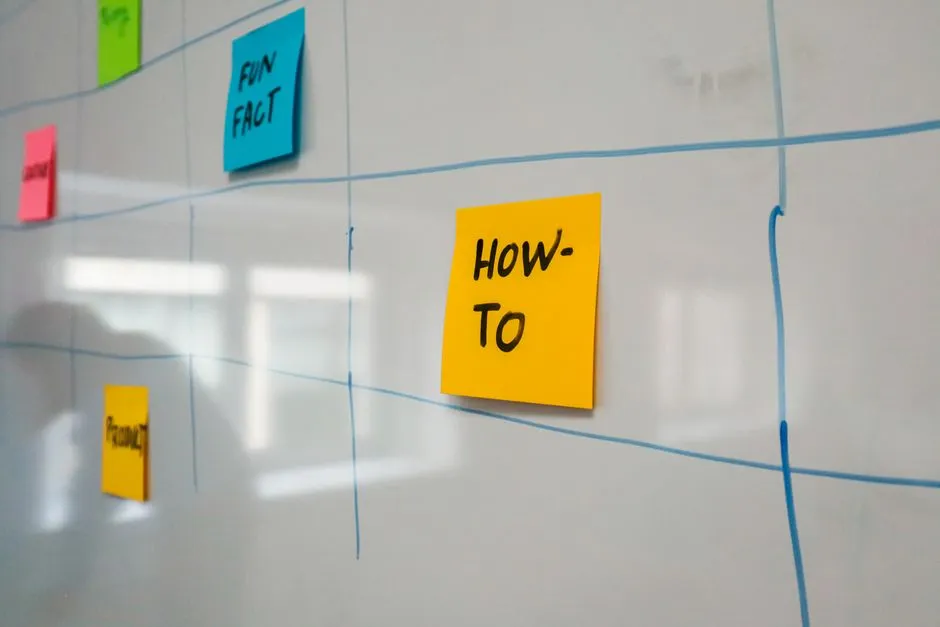
- Connecting Stories: One person starts by sharing a brief, funny, or interesting personal story (e.g., "I once got locked out of my apartment and had to climb through the kitchen window"). The next person must connect a story of their own to a detail in the previous story (e.g., "That reminds me of the time I spent a whole day in a coffee shop because..."). Use sticky notes to track the "story chain"—the group with the longest connected chain wins!
- The Secret Handshake: Pair up team members and give them 3 minutes to design and practice a unique, playful secret handshake. This silly, physical synchronization instantly breaks the ice and builds collaborative comfort.
- The Game of Possibilities: Give an individual an everyday object (like a paperclip or a napkin). Without speaking, they must act out a completely original use for that object while the rest of the team guesses. It is a fantastic, 5-minute block-breaker for creative sessions.
Integrating play through our fun team bonding activities for work catalog or our indoor team bonding exercises guide helps build a resilient culture where employees feel safe to innovate and fail forward together.
Best Practices for Facilitating and Measuring Team Connection
Facilitating connection building activities successfully requires careful planning. If an activity feels forced, exclusive, or irrelevant, it can backfire and increase cynicism.
Keep these facilitation best practices in mind:
- Prioritize Inclusivity: Ensure activities are accessible to all physical abilities and comfortable for both introverts and extroverts. Avoid high-pressure personal disclosure right away; let trust build gradually.
- Protect Work Hours: Schedule these activities during normal working hours. Forcing employees to participate in "mandatory fun" during their personal time breeds resentment.
- Focus on the "Why": Always explain the purpose of the activity. Connect it back to team communication, problem-solving, or stress relief so the team understands its value.
To ensure your efforts are working, you must measure their impact. Use brief, anonymous post-activity surveys to track metrics like psychological safety, collaboration satisfaction, and communication clarity over time.
Additionally, consider how you reinforce these connections daily. Traditional peer-recognition platforms like Bonusly or Kudos focus heavily on transactional, point-based reward loops where employees trade points for gift cards. While useful for basic appreciation, these platforms often miss the deeper emotional layers of workplace culture and fail to build lasting human connections.
At Give River, we take a fundamentally different approach. Unlike Bonusly or Kudos, which operate primarily as transactional reward systems, Give River is a comprehensive culture platform that integrates peer recognition with holistic wellness tracking, professional growth content, and gamified community impact. Instead of just sending a digital high-five, Give River helps teams build genuine empathy and shared purpose. By embedding connection into the daily flow of work, we turn occasional activities into a continuous, supportive workplace rhythm. Utilizing the right team collaboration tools alongside a structured team activity for team building ensures your cultural investments deliver measurable, long-term ROI.
Conclusion: Elevating Workplace Culture Through Meaningful Connections
Building a connected, high-performing team is not a one-time event; it is an ongoing practice. By shifting from superficial icebreakers to intentional connection building activities, you create an environment where trust flourishes, communication flows, and employees feel genuinely fulfilled.
At Give River, we believe that workplace culture is your ultimate competitive advantage. Through our unique 5G Method — combining Guided growth, Gamification, Gratitude, personal wellness, and Generosity — we help organizations build happier, healthier, and higher-performing teams.
Ready to transform your workplace culture and build lasting bonds? Explore our tailored solutions for team-building and start designing experiences your team will actually look forward to.
More from this category.
Why Most Work Meetings Start on the Wrong Foot (And How to Fix It)
The best 2 truths and a lie ideas for work can transform an awkward, silent meeting opener into a moment your team actually looks forward to. Whether you're onboarding new hires, kicking off a remote all-hands, or just trying to shake off…

The Trust Deficit in Remote Work
Building trust in a virtual team is a critical challenge for modern organizations. While remote work offers flexibility, it can erode team cohesion if not managed intentionally.
Why Corporate Citizenship Examples Matter More Than Ever in 2026
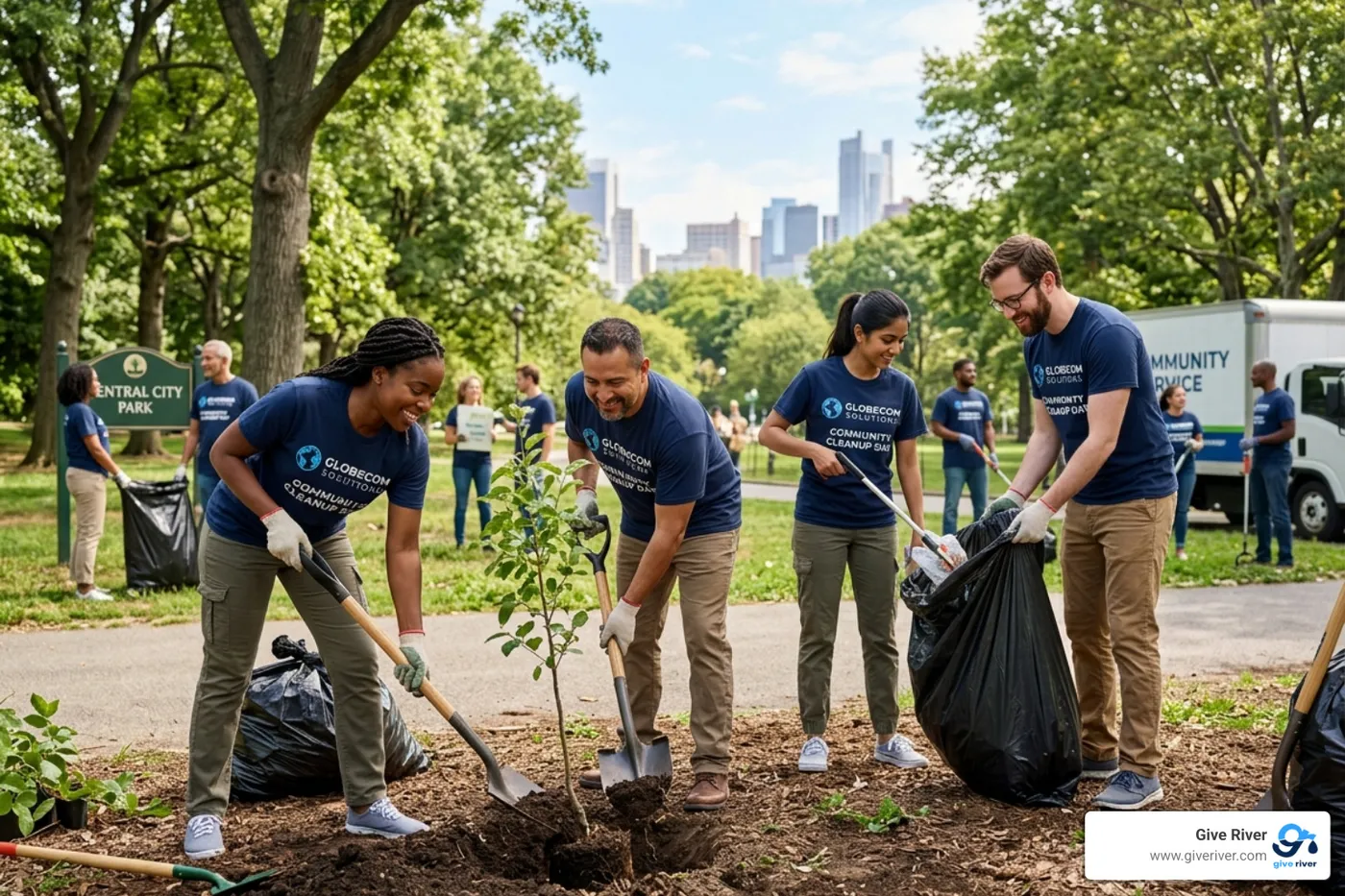
Corporate citizenship examples are everywhere once you know what to look for — from outdoor apparel brands donating a percentage of sales to environmental causes, to tech giants committing to carbon neutrality, to consumer goods companies…
See the platform in action.
Free for up to 25 members, or try Core or Growth free for 30 days. A card is required; Free is never charged, and a trial bills when it ends unless you cancel.