The Trust Deficit in Remote Work
Building trust in a virtual team is a critical challenge for modern organizations. While remote work offers flexibility, it can erode team cohesion if not managed intentionally.

Building trust in a virtual team is a critical challenge for modern organizations. While remote work offers flexibility, it can erode team cohesion if not managed intentionally.
Key Strategies for Building Virtual Team Trust:
- Foster psychological safety through open communication and embracing mistakes
- Demonstrate reliability by following through on commitments consistently
- Create transparency in decision-making and share information openly
- Encourage vulnerability by leaders sharing challenges and uncertainties
- Establish regular check-ins to maintain connection and alignment
- Recognize achievements publicly to reinforce positive behaviors
- Provide autonomy while maintaining clear accountability measures
Statistics paint a concerning picture: 71% of remote workers feel distant from colleagues, and 62.5% of virtual team members feel isolated. This erosion of trust has real consequences. Low-trust teams see increased conflict—with 80% of remote team members having experienced it—along with poor communication and lower productivity, leading to higher turnover.
In contrast, organizations that master virtual trust see remarkable results. Teams with high trust levels are 106% more energetic, 76% more engaged, and 50% more productive.
Traditional trust-building methods, like casual hallway conversations, don't translate to digital environments. My two decades of experience have shown that while these methods don't work remotely, distance doesn't have to mean disconnection. It just requires more intentional strategies, like those we use at Give River.
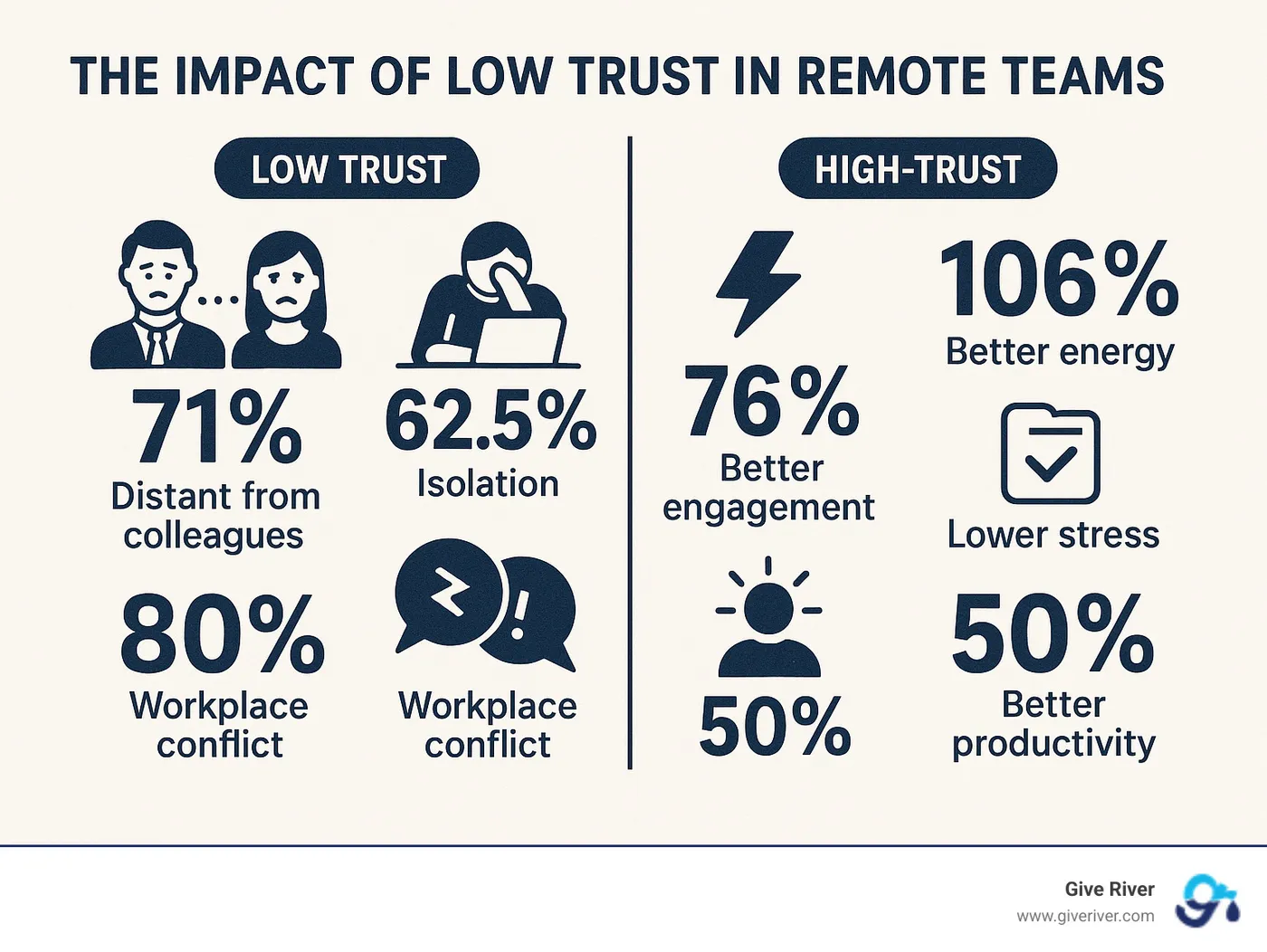
Simple building trust in a virtual team word guide:
Why Trust Is the Bedrock of Virtual Team Success
Trust is the glue that binds any team, enabling collaboration and psychological safety. It's especially critical for virtual teams who lack the organic, in-person interactions that build rapport naturally. The benefits are clear: workers in high-trust companies are 74% less stressed, 50% more productive, 76% more engaged, and take 13% fewer sick days. They also report 40% less burnout.
Trust also fosters psychological safety, which is vital for innovation. When team members feel safe to speak up, ask questions, and admit mistakes, they take the interpersonal risks necessary for high performance. For a deeper dive, explore the scientific research on the neuroscience of trust. This foundation is key to improving Employee Engagement and Motivation.
The Unique Challenges of Building Trust from a Distance
Building trust remotely is harder due to several inherent challenges:
- Lack of non-verbal cues: Text-based communication can easily lead to misinterpretation and friction without the context of body language or tone of voice.
- Time zone differences: Communication delays across time zones can create a sense of distance and lead to frustration.
- Cultural diversity: While a huge asset, different cultural norms in communication can lead to misunderstandings if not steerd carefully.
- Reduced spontaneous interaction: The absence of casual "water cooler" moments makes it harder to build genuine personal connections, contributing to the isolation felt by 71% of remote workers.
Navigating these challenges requires adapting your Organizational Culture in Virtual Teams to foster connection despite the distance.
The Blueprint for Building Trust in a Virtual Team
So, how do we build trust despite these obstacles? It requires a deliberate shift toward structured practices that foster key behaviors: ability, benevolence, integrity, and transparency. Leaders must intentionally create an environment that supports clear communication, deep connection, and vulnerability. This blueprint for trust integrates leadership actions, organizational support, and team member commitment.
Actionable Strategies for Building Trust in a Virtual Team

Building trust is a continuous process of demonstrating reliability, transparency, and care. Here are core strategies to implement:
- Intentional communication: Prioritize clear, direct, and frequent communication.
- Transparency: Be open about decisions, intentions, and challenges.
- Vulnerability: Leaders and team members share challenges and seek help, fostering deeper connections.
- Reliability: Consistently follow through on commitments and meet deadlines.
- Accountability: Hold ourselves and others responsible for actions and outcomes.
1. Foster Psychological Safety and Consistent Communication
Psychological safety—the belief that it's safe to take interpersonal risks—is paramount in virtual teams. It allows for vulnerability, knowledge sharing, and constructive conflict. Leaders must model this behavior by embracing mistakes as learning opportunities and actively soliciting feedback. Leader vulnerability creates a safe space for others to do the same.
Consistent communication is the backbone of trust. In a virtual setting, it's better to over-communicate. Establish a clear framework:
- Define channels: Clarify when to use email, Slack, or video.
- Set response time expectations, especially across time zones.
- Schedule regular check-ins for work and informal connection.
- Use video to foster a sense of presence.
Encourage open dialogue and regular feedback to clarify expectations and address misunderstandings promptly. This helps in Building a Supportive Environment.
2. Empower Through Autonomy and Recognition
Actions build trust more than words. Empowering your team with autonomy and recognition are two of the most powerful strategies. Focus on outcome-focused goals instead of micromanaging tasks. This shows you trust your team's ability and judgment, empowering them to take ownership.
Set clear expectations and hold everyone accountable. This builds predictability and reliability, allowing team members to depend on each other.
In a virtual setting where good work can go unseen, intentional recognition is vital. Publicly acknowledging efforts boosts morale and reinforces positive behaviors. Platforms like Give River make recognition seamless. Unlike tools like Bonusly or Kudos that focus mainly on rewards, we integrate recognition with wellness and growth, creating a holistic approach to employee fulfillment. This supports both peer-to-peer and top-down acknowledgment, ensuring every contribution is valued. For more on this, see The Power of Gratitude in the Workplace: Recognition Matters More Than You Think.
3. Intentionally Create Personal and Team Bonds
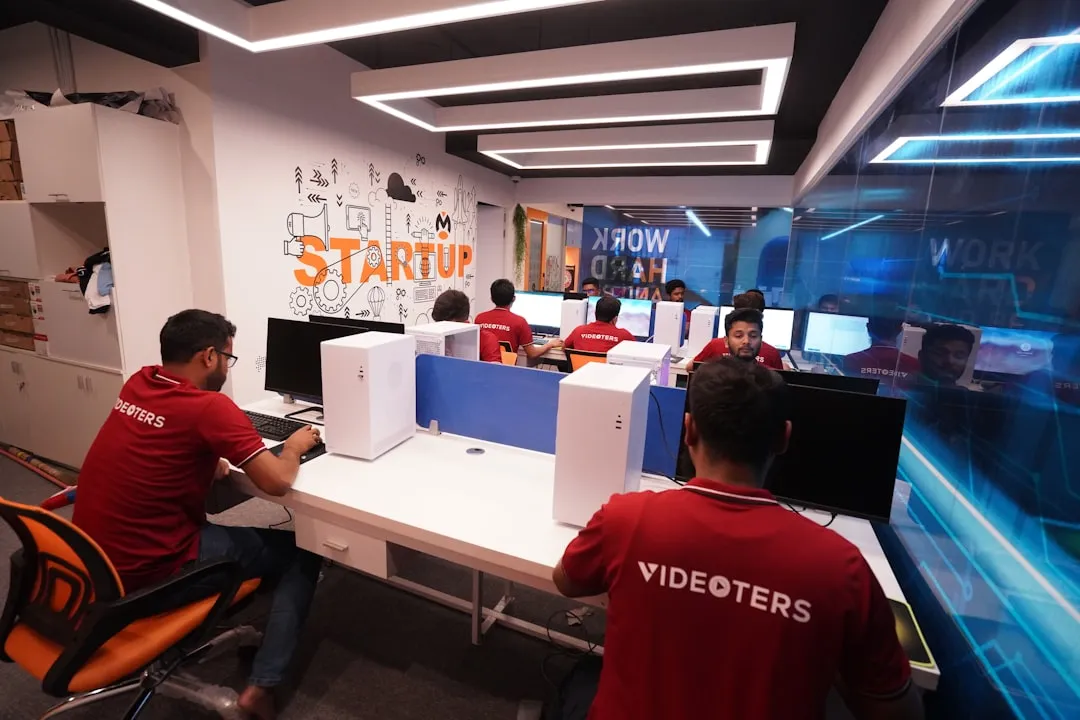
Virtual teams often struggle with isolation; 67% of younger workers find it hard to maintain colleague relationships. To combat this, intentionally create opportunities for personal bonding:
- Create virtual 'water coolers': Use a dedicated Slack channel for non-work chat.
- Prioritize one-on-ones: Dedicate time in these meetings for personal check-ins to show you care about them as people.
- Organize virtual team-building: Use activities like online trivia or virtual escape rooms to create shared experiences. Our guide on Team Bonding Exercises on Zoom has ideas.
- Celebrate milestones: Acknowledge birthdays and work anniversaries to make team members feel valued.
- Use icebreakers: Start meetings with a fun question to build rapport. Check out our Fun Ice Breaker Questions for Virtual Meetings for inspiration.
Sustaining Trust for Long-Term High Performance
Trust isn't a one-time achievement; it's a journey that requires constant nurturing. Successful virtual teams understand that building trust in a virtual team evolves, and they adapt their strategies accordingly.
From 'Swift Trust' to Lasting Bonds

Newly formed virtual teams often operate on 'swift trust'—a rapid willingness to collaborate based on professional roles and shared goals. This is common in the 66% of multinational organizations using ad-hoc virtual teams.
However, this initial trust is fragile because it's based on rational assessments, not emotional connection. A single missed deadline or misunderstood email can easily shake it. The goal is to transition to deeper, emotional trust built on genuine care and shared experiences. This requires intentional relationship-building.
Through virtual coffee breaks, mutual support, and shared celebrations, professional courtesy evolves into genuine connection, creating resilient, long-term relationships. This is fundamental to a Purpose-Driven Workplace.
Overcoming Common Trust-Busters
Even strong teams face challenges. The key is to recognize and proactively address these common trust-busters:
- Conflict Management: With 80% of remote workers experiencing workplace conflict, avoidance isn't an option. Address tension directly and compassionately, using video for sensitive discussions and focusing on mutual understanding.
- Poor Performance: Unaddressed poor performance erodes team reliability. Provide clear, timely feedback and support, while maintaining accountability to protect team morale and standards.
- Rebuilding Broken Trust: Rebuilding trust after a breach requires honest acknowledgment of the mistake, followed by consistent, visible actions to demonstrate change and reliability over time.
- Unmet Expectations: Prevent confusion and frustration by establishing clear communication protocols, documenting decisions, and checking in regularly to ensure everyone remains aligned. This proactive approach supports Employee Engagement and Retention.
The ROI of Trust: Driving Engagement and a Winning Culture

The return on investment in trust is a measurable business advantage. High-trust companies see remarkable results: teams have 106% more energy, 76% better engagement, 50% higher productivity, and 74% less stress. Their employees also take 13% fewer sick days and experience 40% less burnout.
At Give River, we understand that trust is the foundation of success. Our unique 5G Method builds trust by integrating gratitude, gamification, generosity, guidance, and growth into the daily work experience. Unlike platforms like Bonusly or Kudos that focus mainly on rewards, our holistic approach nurtures the deep connections that sustain high-performing teams.
This approach creates a positive cycle where trust fuels innovation and adaptability, building a Winning Workplace Culture that attracts and retains top talent. Our Team Building Solutions are designed to help you cultivate this essential foundation.
Conclusion
Building trust in a virtual team is complex, but the rewards are transformative. Trust is the thread that weaves together successful remote teams, creating psychological safety, boosting productivity, and reducing burnout.
The challenges of distance are real, but they can be overcome. The key takeaway is that distance doesn't have to diminish trust; it just demands more intention.
The strategies in this guide are practical tools. By fostering psychological safety, empowering teams with autonomy, and intentionally creating personal bonds, you build the foundation for a genuinely connected team. This intentional effort helps teams move from fragile 'swift trust' to lasting emotional bonds, which is what separates high-performing virtual teams from the rest. The results are clear: 106% better energy, 76% better engagement, and 50% better productivity.
At Give River, our 5G Method is built on this principle. We know trust grows from consistent moments of recognition, growth, and care. Unlike platforms such as Bonusly or Kudos, our holistic approach nurtures the whole person, not just the employee, fostering deep and resilient trust.
The ROI of trust goes beyond metrics. It's about creating a resilient, purposeful, and meaningful culture that can be even stronger than what a traditional office provides.
Your virtual team has the potential to be a powerhouse of collaboration. The blueprint is here. The only question is whether you're ready to commit to the intentional practices that make it happen.
More from this category.
Why Most Work Meetings Start on the Wrong Foot (And How to Fix It)
The best 2 truths and a lie ideas for work can transform an awkward, silent meeting opener into a moment your team actually looks forward to. Whether you're onboarding new hires, kicking off a remote all-hands, or just trying to shake off…

Why Connection Building Activities Are the Secret to High-Performing Teams
Connection building activities are structured exercises that help teams develop trust, improve communication, and foster genuine relationships at work — and they're one of the most overlooked drivers of team performance.
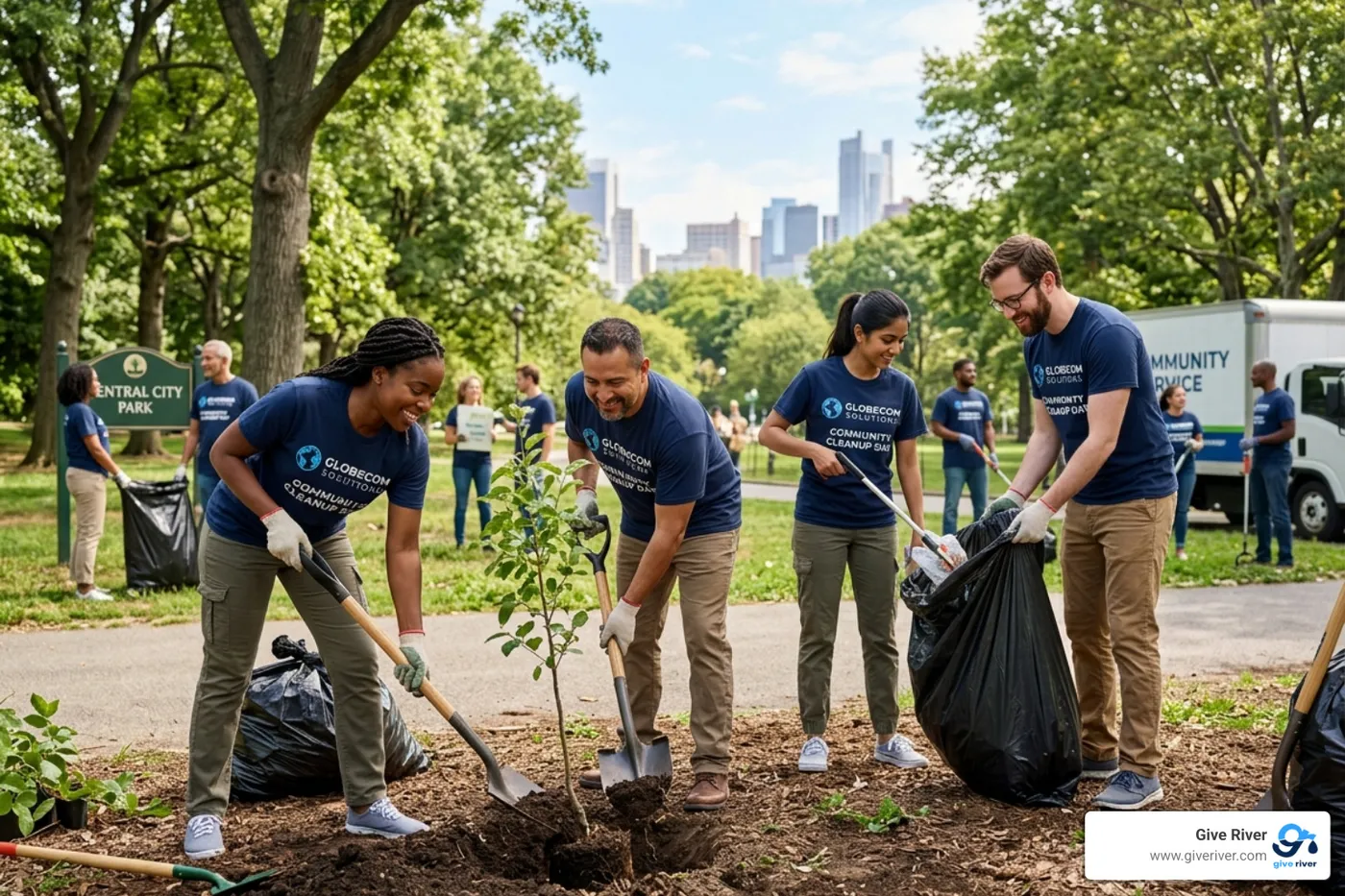
Why Corporate Citizenship Examples Matter More Than Ever in 2026
Corporate citizenship examples are everywhere once you know what to look for — from outdoor apparel brands donating a percentage of sales to environmental causes, to tech giants committing to carbon neutrality, to consumer goods companies…
See the platform in action.
Free for up to 25 members, or try Core or Growth free for 30 days. A card is required; Free is never charged, and a trial bills when it ends unless you cancel.