Why Workplace Health Promotion Is Your Secret Weapon for Team Success
Workplace health promotion is more than a feel-good initiative—it's a strategic business imperative. It involves coordinated activities, policies, and environmental supports designed to improve employee health, safety, and well-being…

Workplace health promotion is more than a feel-good initiative—it's a strategic business imperative. It involves coordinated activities, policies, and environmental supports designed to improve employee health, safety, and well-being across physical, mental, and social dimensions.
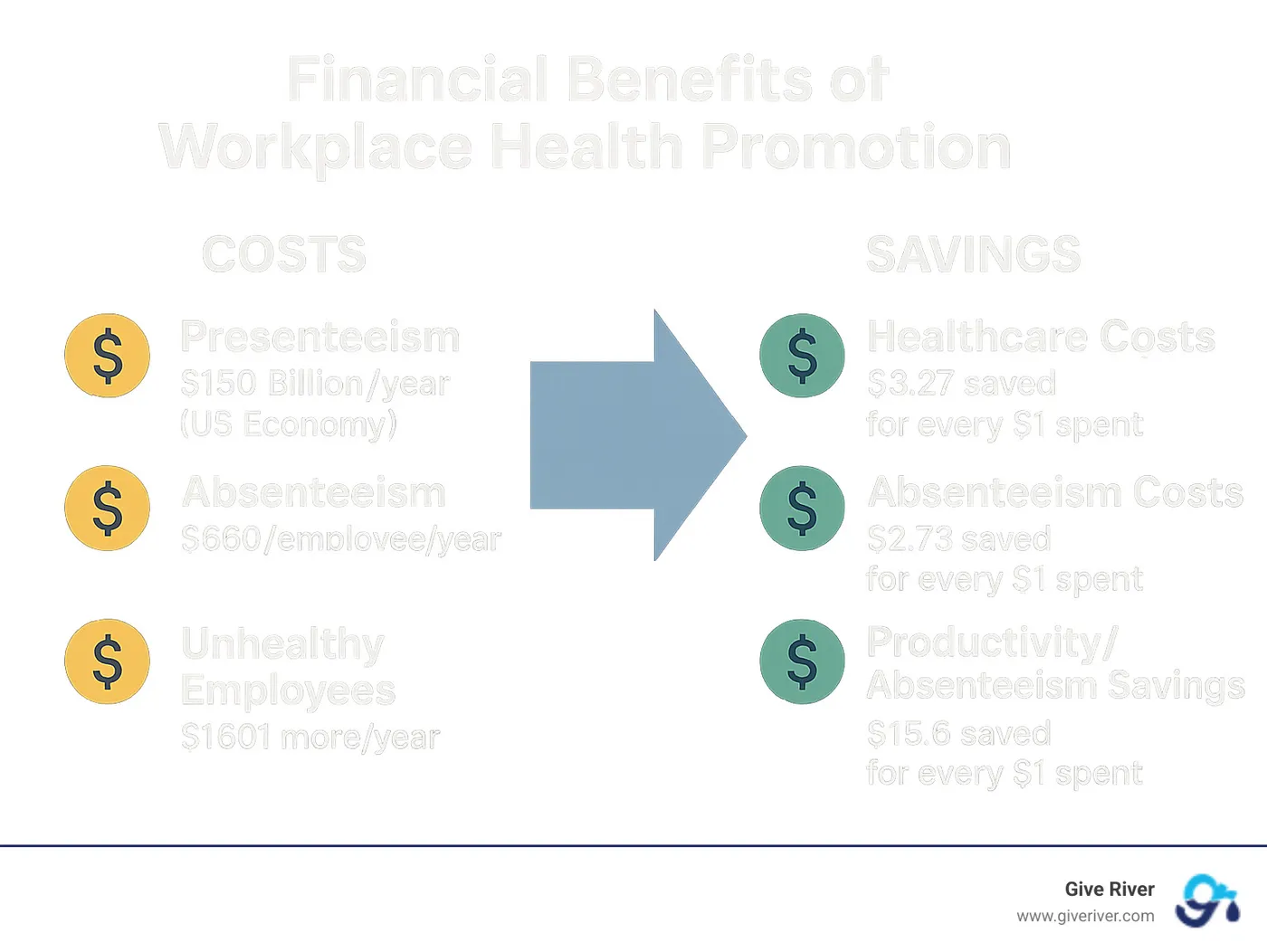
The business case is compelling. Research shows that well-designed programs can deliver a $3.27 return in healthcare cost savings and $2.73 in reduced absenteeism for every dollar invested, with some companies reporting a 6-to-1 ROI and lower turnover.
However, a significant participation gap exists. Despite over 90% of large U.S. workplaces offering health promotion programs, only 33% of employees actually participate. This gap, combined with rising healthcare costs and the $150 billion annual impact of presenteeism, highlights a critical opportunity for a more strategic approach.
At Give River, we've seen how comprehensive workplace health promotion strategies can transform both employee well-being and organizational performance. It's not just about programs; it's about fostering genuine fulfillment and balance to build a thriving team.
The "Why" and "What": Understanding the Power of Workplace Health Promotion
What exactly is workplace health promotion (WHP), and why is it such a powerful tool? Let's explore its core principles and the incredible returns it offers.
Defining Workplace Health Promotion: More Than Just Free Fruit
At its heart, workplace health promotion is a holistic, proactive approach to improving employee well-being. Global organizations like the WHO and CDC define it as the combined efforts of employers and employees to improve health by enhancing the work environment, promoting active participation, and encouraging personal development. It's about creating a culture where healthy choices are easy and well-being is integrated into the organization's fabric.
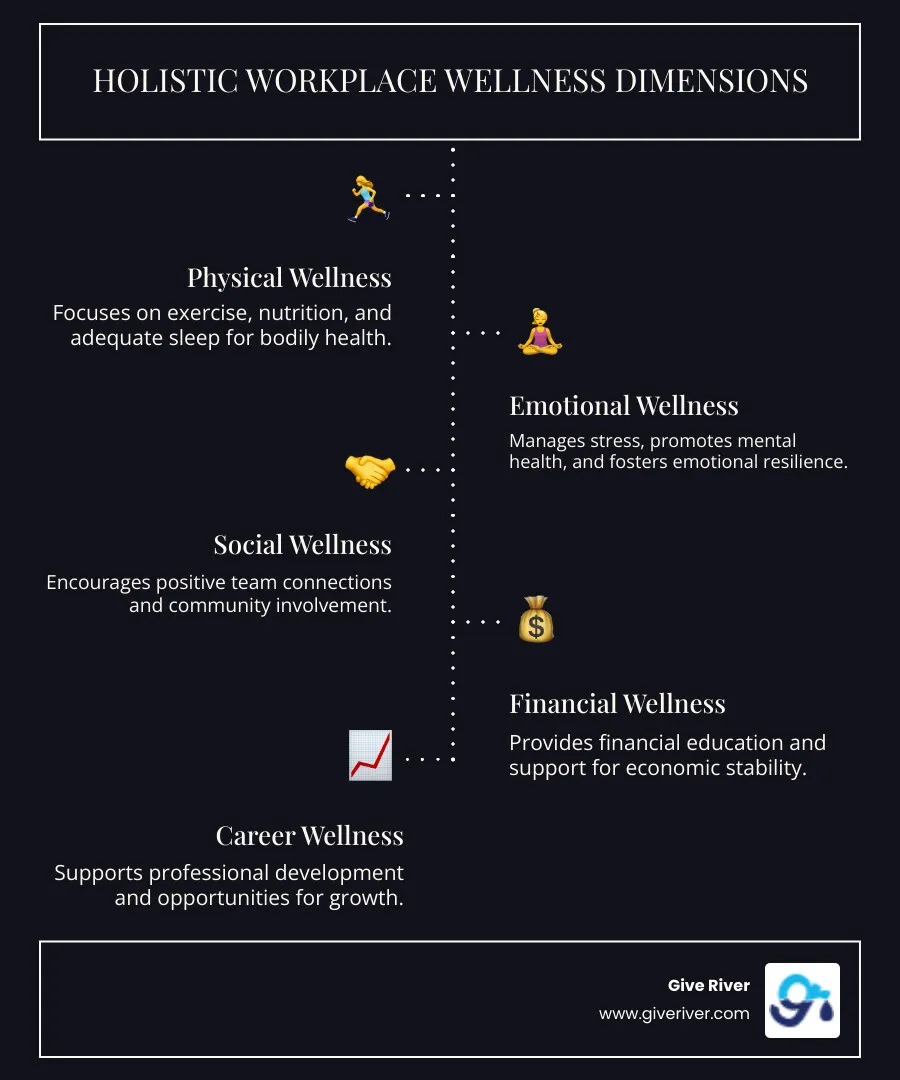
A comprehensive approach to WHP addresses seven crucial dimensions of wellness:
- Physical: Encouraging exercise, healthy eating, and sleep.
- Emotional: Supporting stress management and resilience.
- Social: Fostering strong team connections and belonging.
- Financial: Providing resources for financial planning.
- Career: Offering opportunities for growth and meaningful work.
- Intellectual: Stimulating learning and creativity.
- Environmental: Ensuring a safe and supportive physical workspace.
This model moves beyond a reactive stance (fixing problems) to a proactive one (preventing them). You can learn more about integrating these dimensions in our guide to Employee Health and Wellbeing Initiatives.
The Undeniable ROI: Benefits for Employees and Employers
Investing in WHP is a smart business decision with a significant return on investment (ROI). The benefits impact both the bottom line and the human experience.
Financially, the returns are clear. For every dollar spent, employers can see a decrease of $3.27 in health care costs and $2.73 in absentee day costs. Beyond direct savings, tackling presenteeism—which costs the U.S. economy over $150 billion annually—can yield even greater returns. Some studies show that productivity and absenteeism improvements can save employers $15.60 for every dollar spent on health initiatives. Our article on Employee Wellness and Productivity digs deeper into this connection.
The benefits extend to crucial human capital outcomes:
- Improved Morale and Engagement: Prioritizing well-being fosters a positive culture, improving loyalty and engagement.
- Lower Turnover Rates: Healthy, engaged employees are more likely to stay. Companies with effective programs report significantly lower voluntary turnover (e.g., 9% vs. 15% for less effective programs).
- Talent Attraction: In a competitive market, wellness offerings are a key differentiator, with 87% of employees considering them when choosing an employer.
Companies like H-E-B have demonstrated a 6-to-1 ROI by shifting employees to lower health-risk categories. This wealth of evidence, including scientific research on the link between wellness and productivity, proves that WHP is a fundamental driver of organizational success.
From Plan to Impact: Building and Measuring a Winning Program
Understanding the "why" behind workplace health promotion is the first step. Now, let's explore the "how." An effective WHP program requires a strategic approach that integrates well-being and actively involves employees.

A Step-by-Step Guide to Effective Workplace Health Promotion
Building a comprehensive WHP program is manageable with a systematic process. The CDC Workplace Health Model provides a robust four-step framework: Assessment, Planning, Implementation, and Evaluation.
- Assessment: Gather data to understand your team's health status, needs, and interests. Use confidential Health Risk Assessments (HRAs), evaluate existing policies, and, most importantly, get employee input through surveys or focus groups.
- Planning: Develop a strategic roadmap with clear goals. Secure leadership buy-in, form a wellness committee, and select interventions that align with your assessment findings. Our guide on Corporate Wellness Goals can help you set measurable objectives.
- Implementation: Bring your plan to life with a coordinated set of strategies. Combine individual behavior change initiatives (like fitness challenges) with organizational changes (like ergonomic workstations). A clear communication plan is essential.
- Evaluation: Continuously measure impact to ensure your program is effective and sustainable. Track key metrics, gather employee feedback, and use the findings to refine your program over time.
For inspiration, explore these Wellness Initiatives for the Workplace, which can include everything from mindfulness workshops to financial literacy programs.
Overcoming Common Problems: Boosting Participation and Inclusivity
Even the best programs can fail if they don't address low participation—on average, only 33% of employees use available WHP programs. To boost engagement and inclusivity:
- Secure Leadership Buy-In: When leaders actively participate, it normalizes healthy behaviors and encourages others to join.
- Use Incentives and Gamification: Thoughtful incentives (financial or non-financial) and gamification can be powerful motivators. While platforms like Bonusly and Kudos offer peer-to-peer recognition, Give River’s 5G Method takes a more holistic approach by integrating wellness into a system that rewards overall positive behavior and community impact.
- Communicate Effectively: Use multiple channels to constantly remind and encourage participation.
- Tailor Programs to Diverse Needs: A one-size-fits-all approach rarely works. Consider the unique challenges of shift workers, remote employees, and those in low-wage industries. For small businesses or those with tight budgets, focus on low-cost initiatives like walking challenges or leveraging community partnerships, as detailed in our resources for Nonprofit Wellness.
By addressing these challenges, you can foster a culture where every employee feels empowered to participate. For more strategies, explore our Employee Wellness Best Practices.
Measuring What Matters: Tracking Success and ROI
The ultimate test of a WHP program is its impact. Effective measurement is crucial for demonstrating value and driving continuous improvement.
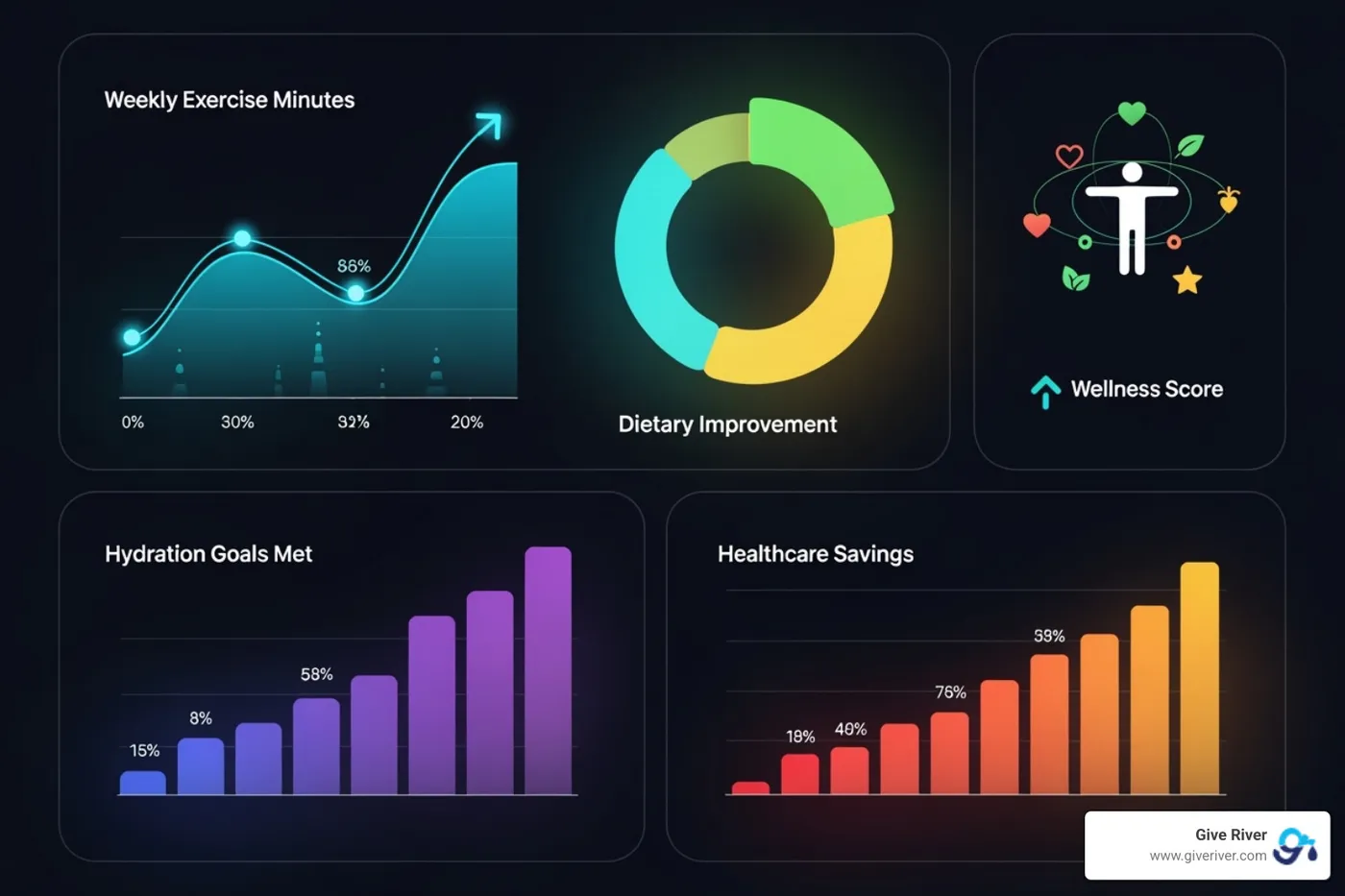
Key metrics to track include:
- Healthcare Claim Analysis: Track changes in medical costs for participants vs. non-participants. This is a direct measure of financial impact, with some companies seeing a 6-to-1 ROI.
- Absenteeism and Presenteeism: Monitor sick days and use surveys to assess the costly issue of employees working while sick.
- Productivity Metrics: Look for correlations between program participation and business-relevant productivity indicators.
- Employee Satisfaction and Engagement: Use surveys to gauge perceptions of well-being and program satisfaction.
- Turnover Data: Track voluntary turnover rates, as effective WHP programs are linked to higher retention.
- Health Risk Assessment (HRA) Changes: Monitor changes in key health indicators (e.g., blood pressure, physical activity) over time.
- Participation Rates: A simple but vital metric. Aim to exceed the 33% average through effective strategies.
Calculating ROI by comparing program costs to financial benefits allows you to refine your strategies and maximize value. For helpful tools, see our guide to the Best Employee Wellness Software.
Conclusion: Cultivating a Lasting Culture of Well-being

Workplace health promotion is a strategic imperative, not a fleeting trend. A well-designed program delivers a powerful ROI by reducing healthcare costs, lowering absenteeism, boosting productivity, and improving talent retention. While challenges like low participation exist, they can be overcome with strategic planning, leadership support, and inclusive initiatives.
At Give River, we believe true fulfillment stems from a holistic approach. While platforms like Bonusly and Kudos excel at peer-to-peer recognition, our unique 5G Method integrates recognition with wellness, growth, gamification, and community impact into a single platform. We go beyond traditional wellness programs to create an environment where employees feel valued, supported, and inspired.
Investing in workplace health promotion is an investment in your people. By making well-being a core part of your strategy, you build a resilient, engaged, and high-performing team. Let's work together to cultivate a lasting culture of well-being and charitable impact that drives your organization forward.
More from this category.

Importance of Workplace Health and Wellness Programs
Workplace health and wellness programs are an essential element in fostering a supportive and productive workplace culture. These programs can significantly improve employee wellness, improve job satisfaction, and reduce turnover. A…

The Connection Between Employee Wellness and Productivity
When it comes to enhancing both employee wellness and productivity, the link between well-being and efficient work environments is undeniable. At the heart of this relationship are three core benefits:

Core Elements of Modern employee wellbeing strategies
To build a truly resilient organization in April 2026, we must look beyond the surface level of "perks." Modern employee wellbeing strategies are rooted in the understanding that health is holistic. It isn't just about the absence of…
See the platform in action.
Free for up to 25 members, or try Core or Growth free for 30 days. A card is required; Free is never charged, and a trial bills when it ends unless you cancel.