Why Corporate Citizenship Examples Matter More Than Ever in 2026
Corporate citizenship examples are everywhere once you know what to look for — from outdoor apparel brands donating a percentage of sales to environmental causes, to tech giants committing to carbon neutrality, to consumer goods companies…
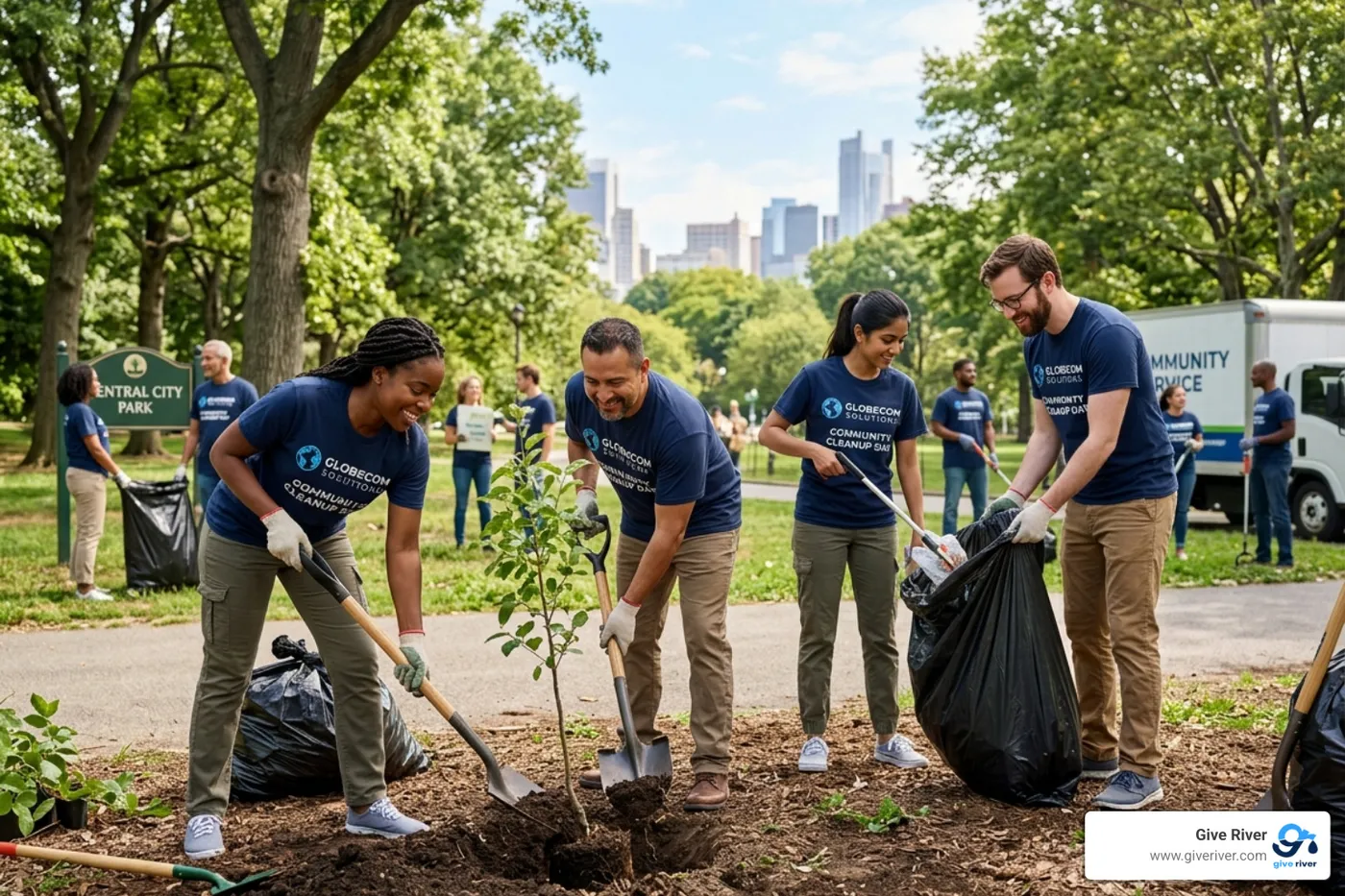
Corporate citizenship examples are everywhere once you know what to look for — from outdoor apparel brands donating a percentage of sales to environmental causes, to tech giants committing to carbon neutrality, to consumer goods companies delivering billions of liters of clean drinking water to underserved communities.
Here are some of the most recognized corporate citizenship examples shaping business in 2026:
| Company | Key Initiative | Impact |
|---|---|---|
| Patagonia | 1% for the Planet donations | $100M+ donated to environmental groups |
| Microsoft | Carbon neutrality & digital skills | Carbon neutral since 2012; aims carbon negative by 2030 |
| TOMS Shoes | One-for-one donation model | 100M+ pairs of shoes donated |
| P&G | Children's Safe Drinking Water Program | 23B liters of clean water in 100+ countries |
| Unilever | 100% sustainable sourcing commitment | Fairtrade-certified key ingredients |
| Starbucks | Ethical sourcing & refugee hiring | 99% ethically sourced coffee |
| Ben & Jerry's | Fairtrade + social advocacy | Climate and racial justice campaigns |
| IKEA | Circular economy model | Repair, reuse, and renewable energy programs |
| Mercedes-Benz | Regional community investment | €24M committed to Stuttgart region through 2028 |
These aren't just feel-good stories. Nearly 80% of employees expect their employer to be a force for good in society, and over half are willing to quit if their company's values don't align with their own. For CEOs and HR leaders already navigating high turnover and low engagement, that's not a statistic to scroll past.
Corporate citizenship has moved from "nice to have" to a genuine competitive differentiator — one that shapes brand reputation, attracts top talent, and, increasingly, influences investor decisions. Over half of investors planned to make a sustainable investment in 2024, and that momentum has only grown.
But here's where many organizations get stuck: they understand why corporate citizenship matters, but not how to actually build it — especially without a roadmap or a massive budget.
That's exactly what this guide is designed to solve. I'm Meghan Calhoun, co-founder of Give River and a workplace culture strategist with two decades of experience helping teams connect their work to meaningful impact — including designing programs that bring corporate citizenship examples to life inside real organizations. In the sections ahead, we'll break down the five stages of corporate citizenship development, explore what leading companies are doing right, and give you a practical framework you can start using today.
Corporate citizenship examples word guide:
Defining the Framework: Corporate Citizenship Examples and Stages
When we talk about corporate citizenship, we aren't just talking about writing a check to a local charity once a year. It is an ethical strategy that views a company as a "good neighbor" within its community. This means balancing shareholder needs with the needs of employees, the environment, and society at large.
The goal is long-term sustainability. By engaging stakeholders—everyone from your front-line staff to your local government—you build a resilient business that can weather market shifts because it has deep roots in the community.
Corporate Citizenship vs. CSR: What’s the Difference?
It’s common to use these terms interchangeably, but there is a subtle, powerful difference. Social Responsibility Meaning and Definition often focuses on a company’s obligation to act for the benefit of society at large.
Corporate Social Responsibility (CSR) often starts as a way to meet legal obligations or manage a brand's reputation. It’s frequently a department or a specific set of initiatives. Corporate citizenship, however, goes deeper. It embeds these ethics into the core mission of the company. While CSR might ask, "How can we give back?", corporate citizenship asks, "How can our very existence as a business drive economic development and social cohesion?"
For a deeper dive into the foundations, check out our guide on What is Corporate Social Responsibility?.
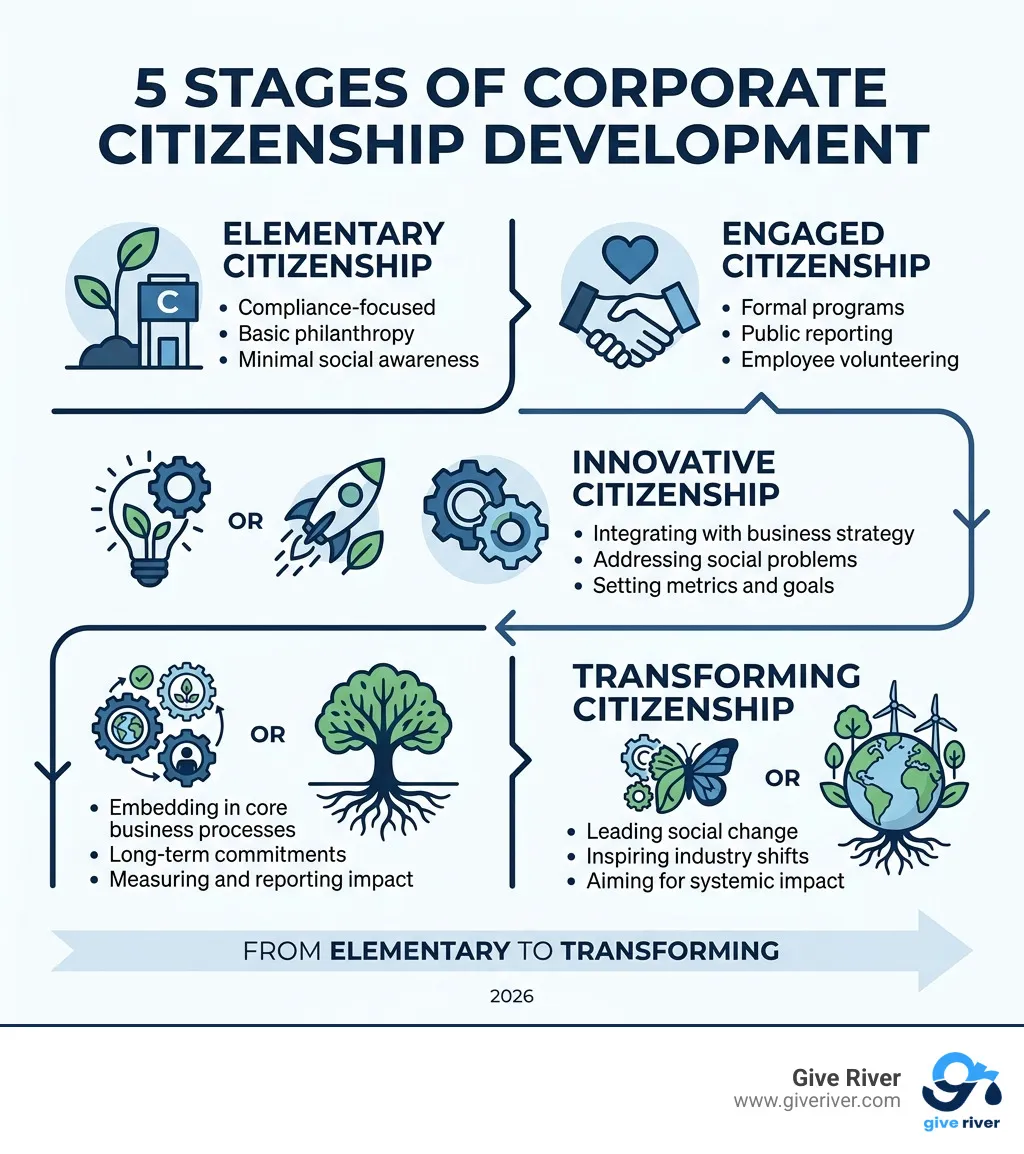
The 5 Stages of Corporate Citizenship Development
Corporate citizenship isn't an "all-or-nothing" game. It’s a developmental journey. Understanding where you are helps you map out where you want to go. Many companies look to Scientific research on ISO 26000 social responsibility standards to provide a voluntary framework for this growth.
| Stage | Characteristics | Focus |
|---|---|---|
| 1. Elementary | Basic compliance; low awareness. | Legal requirements only. |
| 2. Engaged | Policies in place; top management involved. | Stakeholder consultation. |
| 3. Innovative | Creative programs; public reporting. | Social and environmental innovation. |
| 4. Integrated | Strategic alignment; citizenship is "business as usual." | Value chain sustainability. |
| 5. Transforming | Citizenship drives new markets; industry leadership. | Creating a better world. |
Moving from the elementary stage to a Transforming stage requires a shift in mindset—from seeing citizenship as a cost to seeing it as a driver of innovation.
Leading Corporate Citizenship Examples in 2026
The heavy hitters are proving that high-impact citizenship drives high-value growth.
- Patagonia: They’ve donated over $100 million to grassroots environmental groups. By encouraging customers to repair and reuse gear rather than buy new, they’ve built a brand loyalty that is virtually unmatched.
- Microsoft: Carbon neutral since 2012, they are now pushing toward being carbon negative by 2030. They’ve also trained over 25 million people in digital skills, ensuring the future workforce isn't left behind.
- TOMS Shoes: Their famous one-for-one model has evolved. They’ve now donated over 100 million pairs of shoes and expanded into providing eyewear and clean water.
- Starbucks: Achieving a milestone of 99% ethically sourced coffee, they also focus on social cohesion by committing to hire 10,000 refugees globally.
For more inspiration, look at these Strategic CSR Examples and CSR Initiatives Examples.
Implementing Impactful Initiatives for Your Business

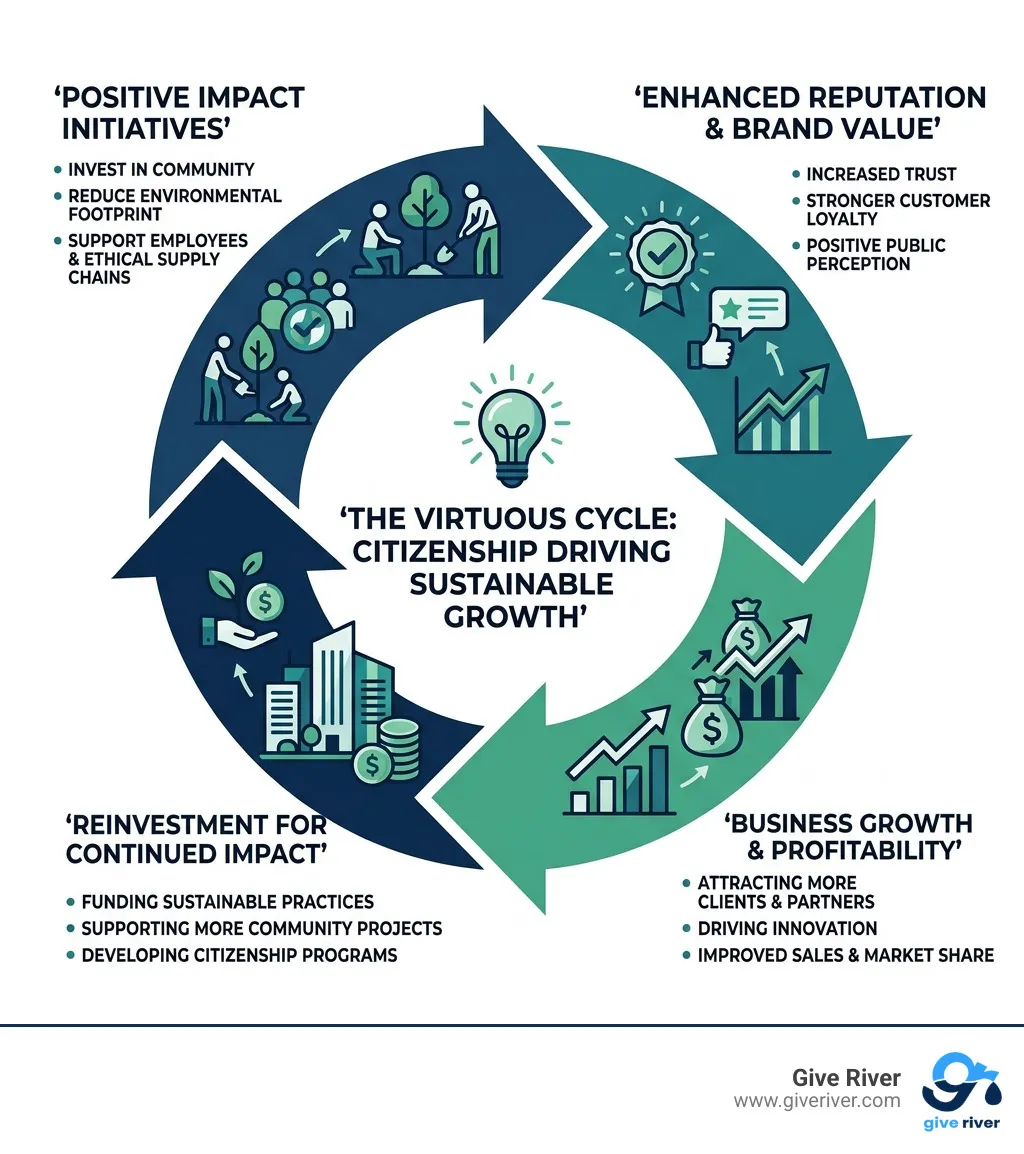
You don't need a Microsoft-sized budget to be a great corporate citizen. The secret is to align your initiatives with your company's unique skills and your employees' passions. This creates a "Virtuous Cycle" where your social impact fuels your business growth, which in turn gives you more resources to do good.
Practical Corporate Citizenship Examples for Small Businesses
Small businesses often have the biggest advantage: they are closer to their communities. Here are some actionable Sustainable Business Practices and Community Impact Initiatives for SMEs:
- Staff Volunteering: Offer "Volunteer Time Off" (VTO). Even 8 hours a year can make a massive difference to local charities and significantly boost employee morale.
- Hyper-Local Philanthropy: Support the causes that matter to your neighbors. Whether it's sponsoring a youth sports team or donating products to a local food pantry, focus on your "beyond the plant gates" impact.
- Ethical Sourcing: Start small. Can you switch to a local coffee supplier? Is your packaging recyclable? These small shifts add up.
- Inclusive Workforce: Build a culture where everyone feels they can be themselves. P&G found that 90% of their employees reported being able to be themselves at work, which directly correlated to their 90% retention rate.
Measuring Success and Engaging Employees
If you can't measure it, you can't improve it. Beyond the warm-and-fuzzy feelings, corporate citizenship delivers hard business results. When you Measure CSR Impact, look at:
- Retention Rates: Employees who find purpose in their work stay longer.
- Innovation: Sustainable constraints (like reducing waste by 40%) often lead to more efficient manufacturing processes.
- Risk Management: Transparency and ethical sourcing prevent the scandals that can sink a brand overnight.
While platforms like Bonusly or Kudos are effective for peer-to-peer recognition, they often lack a direct link to external social impact. Give River differentiates itself by connecting these moments of gratitude to tangible community outcomes. Unlike traditional recognition tools that focus on internal perks, Give River allows employees to channel their recognition into charitable actions, ensuring that the Benefits of Employee Volunteering and giving are woven into the daily workflow.
Conclusion: Building a Culture of Generosity
At Give River, we believe that corporate citizenship shouldn't be a burden—it should be the heartbeat of your organization. Our 5G Method (Guided, Gamified, Gratitude, Growth, and Generosity) is designed to make this transition seamless.
By integrating recognition and wellness with community impact, we help you move from the "elementary" stage to a "transforming" culture. When your team sees that their daily efforts contribute to something larger than a profit margin, fulfillment skyrockets, and productivity follows.
Ready to transform your workplace culture? Explore how we can help you scale your Charitable Impact and become the model corporate citizen your employees (and your community) deserve.
More from this category.
Why Most Work Meetings Start on the Wrong Foot (And How to Fix It)
The best 2 truths and a lie ideas for work can transform an awkward, silent meeting opener into a moment your team actually looks forward to. Whether you're onboarding new hires, kicking off a remote all-hands, or just trying to shake off…

The Trust Deficit in Remote Work
Building trust in a virtual team is a critical challenge for modern organizations. While remote work offers flexibility, it can erode team cohesion if not managed intentionally.
Why Connection Building Activities Are the Secret to High-Performing Teams
Connection building activities are structured exercises that help teams develop trust, improve communication, and foster genuine relationships at work — and they're one of the most overlooked drivers of team performance.
See the platform in action.
Free for up to 25 members, or try Core or Growth free for 30 days. A card is required; Free is never charged, and a trial bills when it ends unless you cancel.