Understanding the Purpose of Your Staff Event
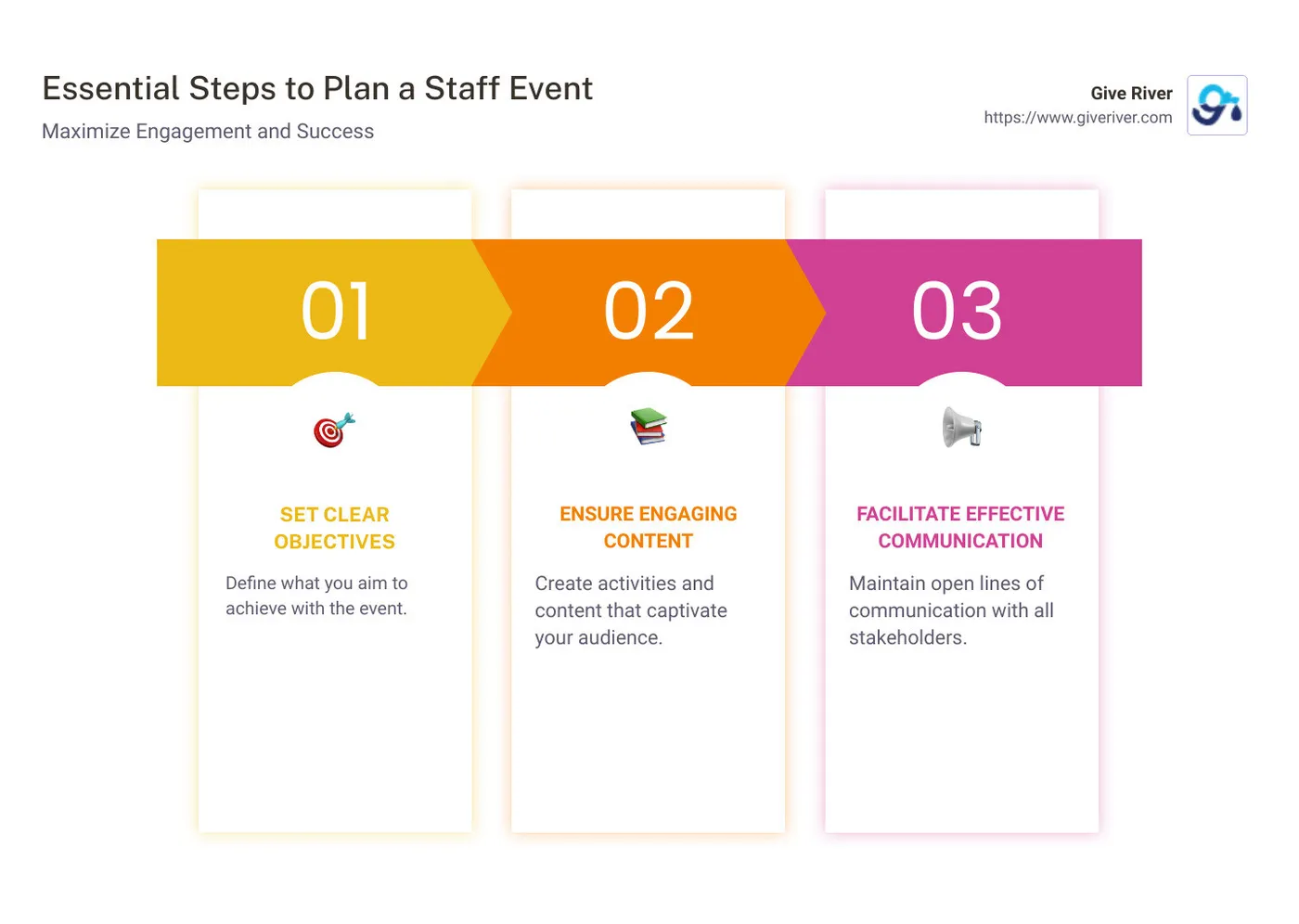
Plan a staff event successfully by focusing on three key elements: setting clear objectives, ensuring engaging content, and facilitating effective communication. These fundamental steps will guide you in creating an event that not only…

Plan a staff event successfully by focusing on three key elements: setting clear objectives, ensuring engaging content, and facilitating effective communication. These fundamental steps will guide you in creating an event that not only meets your organizational goals but also boosts employee morale and fosters a positive corporate culture.
Event planning is more than just logistics; it’s about creating experiences that engage and inspire your team. By understanding the motivations behind corporate events, whether it's team building, training, or celebrating successes, you can craft events that resonate with your audience. Engaging with content, networking opportunities, and meaningful interactions are vital in maximizing the value of any staff gathering.
To introduce myself, I am Meghan Calhoun, co-founder of the employee experience platform, Give River. Over two decades in various high-pressure environments have honed my expertise in event planning and creating meaningful work experiences. I’m here to guide you in your journey to Plan a staff event that not only meets objectives but also enriches your team’s work life.
Relevant articles related to Plan a staff event:
Understanding the Purpose of Your Staff Event
When planning a staff event, the first step is understanding its purpose. Knowing why you're hosting the event will guide every decision you make. Is your aim to boost team morale, improve skills, or celebrate a milestone? Each goal requires a different approach and will shape the event's design.
Event Objectives
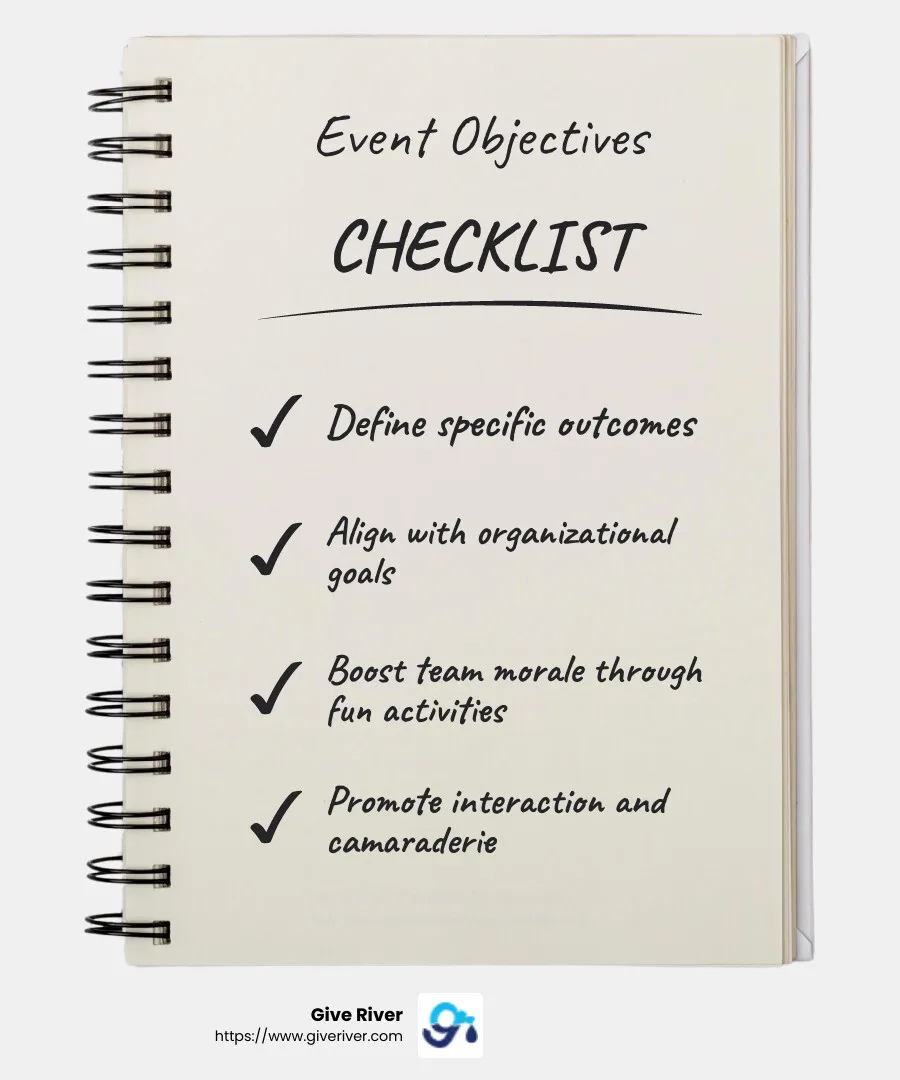
Event objectives are the specific outcomes you want to achieve. They provide a roadmap for planning and ensure every element of the event aligns with your broader organizational goals. For instance, if your goal is to boost team morale, activities should be fun and engaging, promoting interaction and camaraderie among employees.
Consider this: A company aiming to improve employee engagement might host a retreat focused on team-building exercises. This approach is supported by research from Gallup, which suggests that organizations with high employee engagement see 21% higher productivity and 22% higher profitability.
Desired Outcomes
Once you've set your objectives, think about the desired outcomes. What do you want attendees to take away from the event? It could be new skills, stronger relationships, or simply the feeling of being valued. Clear outcomes help you measure the event's success and make adjustments for future events.
For example, if an outcome is increased collaboration, you might include workshops that require teamwork. Events are an investment, and ensuring they deliver tangible benefits is crucial.
Target Audience
Understanding your target audience is key to crafting an event that resonates. Is the event for all employees, a specific department, or external stakeholders? Knowing your audience helps tailor the content, format, and tone to match their interests and expectations.
Different audiences have different needs. Employees might appreciate a casual, interactive environment, while stakeholders may expect a more formal setting. Tailoring your event to your audience ensures it is engaging and relevant.
In summary, defining the purpose of your staff event by setting clear objectives, identifying desired outcomes, and understanding your target audience is the foundation for successful event planning. These elements guide every decision, from choosing the venue to designing the agenda, ensuring your event is both meaningful and impactful.
The 5 C's of Event Planning
Planning a successful staff event involves more than just picking a date and location. It requires a strategic approach, often encapsulated in the 5 C's of Event Planning: Concept, Context, Content, Coordination, and Communication. These elements ensure that every aspect of your event aligns with your goals and delivers a memorable experience for all attendees.
Concept
The concept is the foundation of your event. It's the big idea that ties everything together. Think of it as the event's identity—it should reflect your objectives and resonate with your target audience. For example, if your aim is to foster teamwork, consider a concept that emphasizes collaboration, like a "Team Olympics" or a "Collaborative Challenge Day."
Context
Context involves understanding the environment and circumstances surrounding your event. This includes the current state of your organization, industry trends, and any external factors that could impact your event. Being aware of these elements helps you tailor your event to be timely and relevant. For instance, hosting a wellness retreat might be particularly impactful in a high-stress period, offering employees a much-needed break and a chance to recharge.
Content
The content of your event is what fills the agenda—speeches, workshops, activities, and entertainment. It's crucial to align your content with the event's concept and objectives. If your goal is skill development, include sessions that provide hands-on learning opportunities. Content should be engaging and valuable to your audience. As noted in research by Gallup, high employee engagement can lead to significant productivity and profitability gains, so content that boosts engagement is a wise investment.
Coordination
Coordination is all about logistics. It involves organizing every detail, from booking the venue to managing the guest list. Effective coordination ensures that the event runs smoothly and efficiently. This is where technology can be a game-changer. Using event management software can help track tasks, deadlines, and communications, ensuring nothing falls through the cracks.
Communication
Finally, communication is key to keeping everyone informed and engaged before, during, and after the event. This includes promoting the event, providing updates, and gathering feedback post-event. Clear and consistent communication ensures that attendees know what to expect and feel excited about participating. It's also crucial for addressing any issues that may arise, ensuring a seamless experience for all.
By focusing on the 5 C's of Event Planning, you can create a well-structured and impactful staff event that meets your objectives and leaves a lasting impression on your attendees.
Steps to Plan a Staff Event
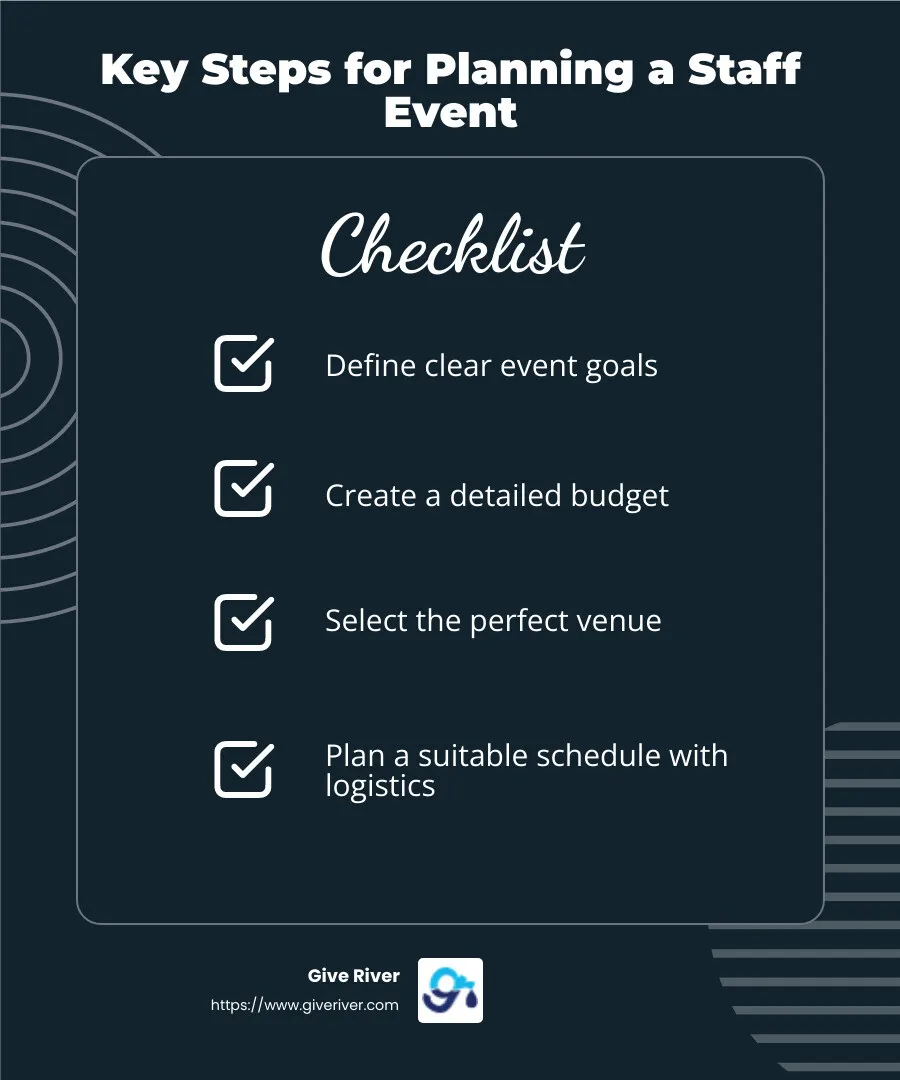
Planning a staff event is an exciting opportunity to bring your team together and foster a positive workplace culture. By following a few key steps, you can ensure your event is both successful and memorable. Let's explore these steps: event goals, budgeting, venue selection, scheduling, and logistics.
Event Goals
Start by defining your event goals. What do you hope to achieve? Whether it's enhancing team morale, celebrating milestones, or aligning on company strategies, your goals will guide every decision. Clear objectives not only shape the event's theme but also help in measuring its success. By focusing on these goals, you can create an event that resonates with your team and supports your organization's mission.
Budgeting
With your goals in mind, move on to budgeting. Outline all potential expenses, including venue costs, catering, equipment rental, and staffing. A well-planned budget acts as a roadmap, allowing you to allocate resources effectively and avoid overspending. According to industry insights, a detailed budget can help prevent unexpected costs from derailing your event plans. This careful planning ensures that your event is both impactful and financially responsible.
Venue Selection
Choosing the right venue is crucial. Consider factors like location, capacity, accessibility, and amenities. Your venue should align with your event goals and accommodate your guest list comfortably. Booking early is advisable, especially for popular locations that fill up quickly. Ask yourself, does the venue support the activities and experiences you envision? This ensures your event's atmosphere matches your objectives and enhances the overall experience for attendees.
Scheduling
Scheduling is all about timing. Decide on a date and time that suits both your organization and attendees. Consider any overlapping events or holidays that might affect participation. A well-timed event maximizes attendance and engagement. Additionally, ensure your schedule includes ample breaks and time for networking to keep energy levels high and interactions fruitful. Thoughtful scheduling can make a significant difference in the success of your event.
Logistics
Finally, tackle the logistics. This includes arranging transportation, securing audiovisual equipment, and coordinating with vendors. Effective logistics management ensures everything from setup to teardown runs smoothly. Leveraging event management software can be a game-changer here, helping keep track of tasks and communications in one place. As research suggests, technology streamlines coordination and minimizes last-minute hiccups, allowing you to focus on creating a memorable experience for your team.
In summary, by focusing on these steps—event goals, budgeting, venue selection, scheduling, and logistics—you can orchestrate a successful staff event that not only meets your objectives but also creates a memorable experience for all attendees. This approach aligns with Give River's mission to transform workplace culture through gratitude, gamification, and generosity, ultimately building happier, healthier, high-performing teams.
The Role of Technology in Event Planning
Technology plays a pivotal role in modern event planning, changing how we organize and execute staff events. By leveraging event management tools, you can streamline the process from start to finish, ensuring a seamless experience for both organizers and attendees.
Event Management Tools
Event management tools are essential for keeping track of all moving parts. They help you manage registrations, send invitations, and coordinate schedules effortlessly. Platforms like Give River's offer features that improve communication and engagement, ensuring everyone is on the same page.
These platforms often come with built-in analytics, allowing you to measure success and gather feedback. This data-driven approach helps in refining future events, ensuring they align with your goals and deliver maximum impact.
Virtual Events
Virtual events have become increasingly popular, providing flexibility and accessibility. They allow you to reach a broader audience without the constraints of physical location. With virtual platforms, you can host webinars, workshops, and networking sessions that engage participants from anywhere in the world.
To ensure a successful virtual event, test your digital platform in advance. Make sure all audio, video, and presentation elements work smoothly. This preparation minimizes technical issues, creating a professional and engaging experience for attendees.
Hybrid Events
Hybrid events combine the best of both worlds, offering in-person and virtual experiences. This format caters to diverse audience preferences, maximizing participation and reach. By integrating technology, you can offer live streaming for remote attendees while maintaining an interactive atmosphere for those on-site.
Hybrid events require careful planning to balance both components. Use technology to facilitate interaction between virtual and in-person attendees, ensuring everyone feels included. This approach not only improves engagement but also broadens your event's impact.
Incorporating technology into your event planning process can significantly improve efficiency and engagement. Whether you're organizing a virtual, in-person, or hybrid event, leveraging the right tools ensures a successful and memorable experience for all participants.
Frequently Asked Questions about Planning a Staff Event
Planning a staff event can seem like a daunting task, but understanding the basics can make it much easier. Here, we'll answer some common questions to help you get started.
What are the 5 P's of event planning?
When you plan a staff event, consider the 5 P's:
- Product: What is the event about? Define the purpose and main attractions.
- Price: Set a budget. Decide how much you're willing to spend on each aspect, from venue to catering.
- Place: Choose a location that's convenient for attendees. Consider accessibility and facilities.
- Promotion: How will you get the word out? Use emails, social media, or internal platforms to promote the event.
- People: Identify your audience. Tailor the event to meet their interests and needs.
How do you plan a team event?
To plan a successful team event, follow these steps:
Objectives: Clearly define what you want to achieve. Whether it's team building or knowledge sharing, having clear goals will guide your planning.
Activities: Choose activities that align with your objectives. For team building, consider interactive games or workshops.
Venue: Select a venue that suits your event type. Ensure it has the necessary amenities and can accommodate your group size.
Logistics: Plan the details like transportation, food, and equipment. Ensure everything is organized to avoid last-minute hiccups.
Communication: Keep everyone informed. Send regular updates and reminders to ensure all participants are on the same page.
What are the benefits of a well-planned staff event?
A well-planned staff event offers numerous benefits:
Team Building: Events foster collaboration and strengthen relationships among team members. This leads to improved teamwork and morale.
Employee Engagement: Engaging events make employees feel valued and connected to the company. This boosts satisfaction and retention.
Corporate Culture: Events reflect and reinforce your organization's values. They can help cultivate a positive and inclusive workplace culture.
By focusing on these elements, you can create an event that not only meets your goals but also improves your team's overall experience.
Conclusion
In the end, the success of your staff event isn't just about the logistics or the venue. It's about creating a lasting impact on your team and fostering a workplace culture that thrives on engagement and connection. At Give River, we understand that employee engagement is more than just a buzzword—it's a cornerstone of a positive and productive workplace.
By integrating our unique 5G Method, which includes recognition, guidance, wellness, growth, and gamification, we help companies transform their events into experiences that truly resonate with their employees. A well-executed staff event can lead to higher morale, stronger team bonds, and a renewed sense of purpose.
A successful event is one that aligns with your company's values and objectives, and one that leaves your team feeling appreciated and inspired. Whether you're planning an in-person gathering or a virtual meeting, consider how you can leverage tools and strategies to make your event memorable.
For more insights on how to improve your workplace culture through innovative event planning and employee engagement tools, explore our gamified features at Give River. Let's work together to build happier, healthier, and high-performing teams.
More from this category.
Why Most Work Meetings Start on the Wrong Foot (And How to Fix It)
The best 2 truths and a lie ideas for work can transform an awkward, silent meeting opener into a moment your team actually looks forward to. Whether you're onboarding new hires, kicking off a remote all-hands, or just trying to shake off…

The Trust Deficit in Remote Work
Building trust in a virtual team is a critical challenge for modern organizations. While remote work offers flexibility, it can erode team cohesion if not managed intentionally.

Why Connection Building Activities Are the Secret to High-Performing Teams
Connection building activities are structured exercises that help teams develop trust, improve communication, and foster genuine relationships at work — and they're one of the most overlooked drivers of team performance.
See the platform in action.
Free for up to 25 members, or try Core or Growth free for 30 days. A card is required; Free is never charged, and a trial bills when it ends unless you cancel.