Why Strategic CSR is a Competitive Advantage, Not Just a Cost
Strategic csr examples showcase how companies integrate social and environmental responsibility into their core business operations to create both societal impact and competitive advantage. Here are the top strategic CSR examples from…

Strategic csr examples showcase how companies integrate social and environmental responsibility into their core business operations to create both societal impact and competitive advantage. Here are the top strategic CSR examples from leading brands:
| Company | Strategic CSR Focus | Key Achievement |
|---|---|---|
| Patagonia | Environmental stewardship & circular economy | 1% for the Planet, Worn Wear repair program |
| Salesforce | Philanthropic innovation | 1-1-1 Model: 5M+ volunteer hours, $406M+ in grants |
| LEGO | Sustainable materials | $164M invested in sustainable materials center |
| Starbucks | Ethical sourcing | 99% of coffee ethically sourced via C.A.F.E. Practices |
| Ben & Jerry's | Social justice advocacy | Three-part mission: Product, Economic, Social |
| Levi's | Worker well-being | 80%+ of products from Worker Well-being factories by 2025 |
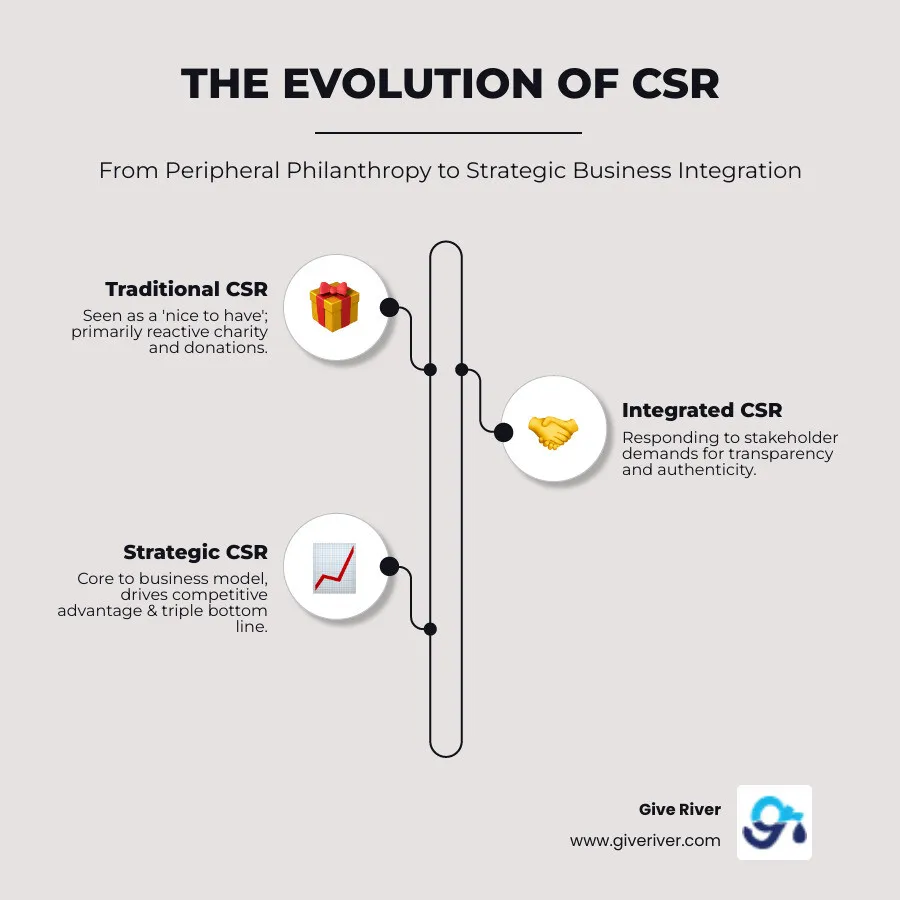
Corporate Social Responsibility has evolved from a "nice to have" into a strategic imperative. Today, 93 percent of business leaders believe companies are stewards of society, and 95 percent plan to take a stronger stance on large-scale issues. Stakeholders—from customers to employees—now expect transparency and tangible action on issues like climate change and social justice.
Successful companies integrate this responsibility into their core model to achieve the triple bottom line: positive outcomes for people, planet, and profit. Strategic CSR strengthens brand reputation, attracts top talent, and builds customer loyalty. For example, Patagonia grew its revenue to $1.5 billion by centering its strategy on sustainability, while Salesforce's culture of purpose, fueled by over 5 million employee volunteer hours, drives engagement and retention.
The key difference is integration. Strategic CSR initiatives align with business goals and are woven into operations, not bolted on as an afterthought. While platforms like Bonusly and Kudos offer robust employee recognition tools, Give River uniquely integrates that recognition with tangible community impact. This allows companies to build CSR programs that employees actively drive, connecting daily engagement to a greater purpose.
In this guide, we'll explore how leading brands turn responsibility into a competitive advantage. I'm Meghan Calhoun, Co-Founder of Give River. With over two decades of experience building purposeful workplace cultures, I've seen how strategic CSR unites teams and drives business results. Let's explore the companies getting it right.
A Deep Dive into the Best Strategic CSR Examples
The best way to understand strategic CSR is to see it in action. The companies below didn't just add a "giving back" program; they reimagined their operations to create value for society alongside profit. What unites these strategic csr examples is intentionality—they identified where their business intersects with social or environmental needs and built programs that leverage their unique strengths.
1. Environmental Stewardship in Action: Patagonia & LEGO
When a company's products depend on a healthy planet, environmental stewardship is smart business. Patagonia and LEGO have built their competitive advantage around this truth.
Patagonia's mission is to "save our home planet." Their Worn Wear program encourages customers to repair and recycle products, strengthening loyalty. The company also donates 1% of sales to environmental causes via the 1% for the Planet initiative. In a radical move, founder Yvon Chouinard transferred company ownership to a non-profit, ensuring all profits fund environmental protection, a commitment that has fueled growth to $1.5 billion in revenue.
LEGO invested $164 million in a Sustainable Materials Center to find alternatives to traditional plastics, aiming for all core products to be sustainable by 2030. They have already introduced botanical pieces made from sugarcane-based plastic and reduced packaging sizes, saving thousands of tons of cardboard. This commitment reassures parents that play doesn't have to cost the planet.

2. Philanthropic & Community-Focused Strategic CSR Examples
Strategic philanthropy creates sustainable value for communities and companies. Salesforce pioneered this with its 1-1-1 Model, pledging 1% of product, equity, and employee time. The result: over 5 million volunteer hours and $406 million in grants to 40,000+ nonprofits. This model is embedded in their culture, attracting purpose-driven talent.
TOMS evolved its famous "one for one" model based on community feedback. The company now donates one-third of profits to grassroots organizations focused on mental health, opportunity, and ending gun violence, creating more responsive and sustainable impact.
Agricultural cooperative Land O' Lakes combats food insecurity by donating its products. After donating 3.6 million pounds of food in 2023, they set a new goal of 15 million pounds by 2030, a natural extension of their core business.
3. Ethical Operations & Supply Chains: Starbucks & Levi's
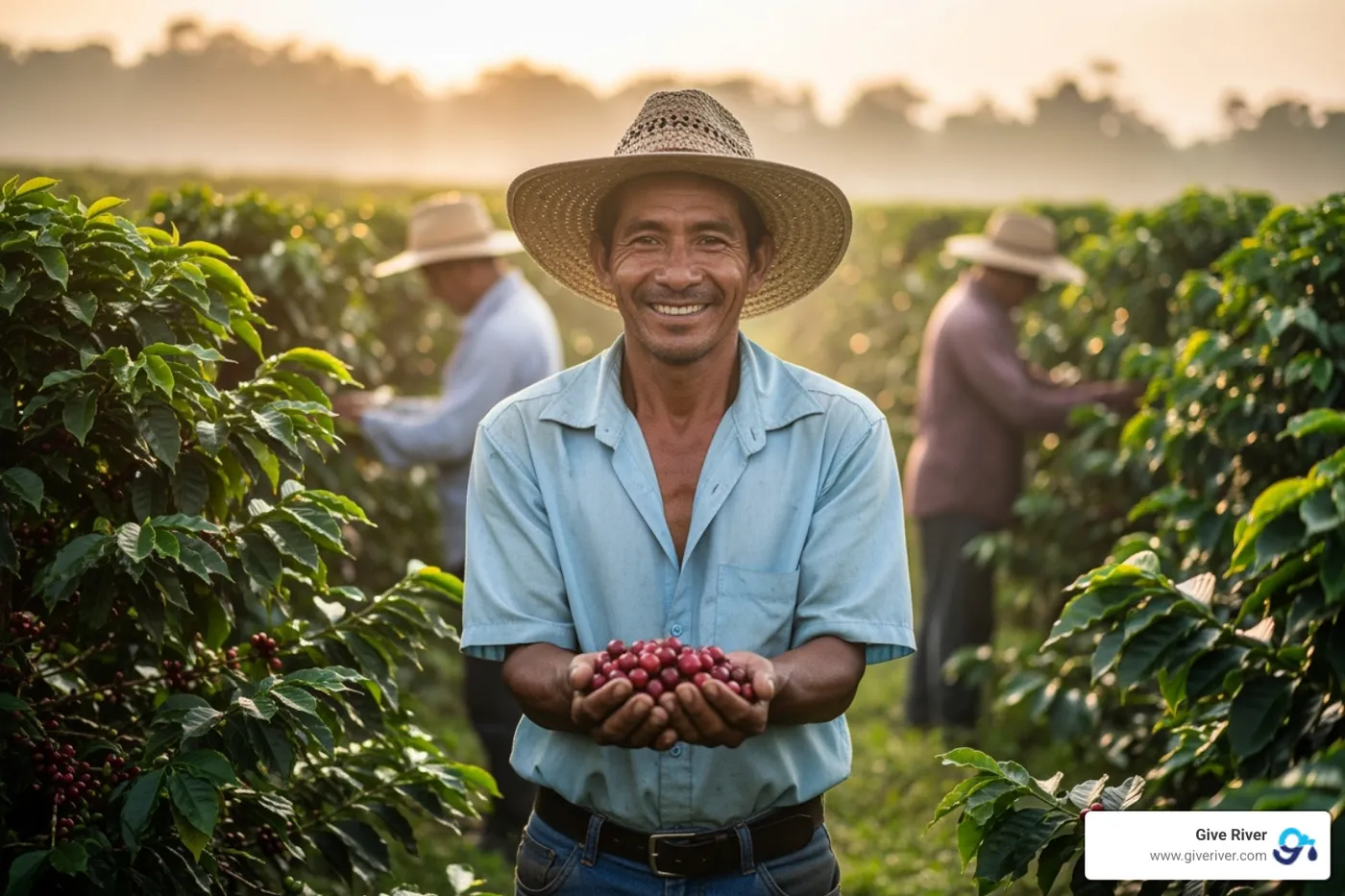
An ethical supply chain requires ongoing investment in people. Starbucks made ethical sourcing a cornerstone with its C.A.F.E. (Coffee and Farmer Equity) Practices, setting standards for quality, transparency, and social and environmental responsibility. By 2015, 99 percent of its coffee was ethically sourced, ensuring fair wages for farmers and a stable supply of high-quality beans.
Levi's Worker Well-being initiative improves the lives of garment workers through health, financial, and gender equality programs. The initiative has reached over 100,000 workers, with a goal to produce over 80 percent of products in these factories by 2025. Their commitment to supply chain transparency sets an industry standard, strengthening brand reputation and resilience.
4. Social Advocacy & Brand Activism: Ben & Jerry's & Airbnb
Some companies use their platform to advocate for systemic social change. Ben & Jerry's explicitly balances product, economic, and social goals in its three-part mission. They use Fairtrade ingredients and actively campaign for racial justice, LGBTQ+ rights, and climate action. This authentic activism has created a fiercely loyal customer base.
Airbnb demonstrated values-driven action with its #weaccept campaign during a global refugee crisis. The campaign offered housing to those in need and sent a powerful message of acceptance and inclusion. By leveraging its platform to address a humanitarian issue, Airbnb reinforced its brand values of community and belonging on a global scale.
How to Build Your Own Strategic CSR Program and Measure Its Impact
Inspired by these leading strategic csr examples, you can develop your own impactful program. You don't need to be a Fortune 500 company; the journey begins with intentionality and a clear vision for change.
A Practical Guide to Implementing Your CSR Strategy
Building an effective CSR program requires a strategic approach woven into your business operations.
- Define your purpose. What social or environmental issues resonate with your company's values and mission? Your efforts should feel authentic, like Patagonia's focus on environmentalism.
- Align CSR with business goals. Identify how your initiatives can improve brand reputation, attract talent, or reduce costs. LEGO's sustainable packaging, for example, appealed to eco-conscious parents while saving materials.
- Engage your stakeholders. Involve employees, customers, and communities in shaping your strategy. Employee engagement is especially crucial; when employees feel connected to a cause, their loyalty and productivity soar.
- Leverage the right tools. While platforms like Bonusly and Kudos focus primarily on peer-to-peer recognition, Give River uniquely integrates recognition with community impact. Our platform transforms achievements and 'thank yous' into direct contributions to your CSR initiatives, empowering employees to drive social good as part of their daily work.
- Start small. A multi-million dollar budget isn't necessary. Begin with simple initiatives like a paperless office, recycling programs, or matching employee donations. Authenticity and consistency are key.
- Be transparent. Consumers can spot "greenwashing." Be honest about your progress, challenges, and goals. Starbucks didn't achieve 99% ethical sourcing overnight; they built toward it transparently.
- Measure impact, not just activity. Focus on measurable outcomes. Did your program reduce food insecurity or lower your carbon footprint? Setting and tracking clear goals is essential for demonstrating value.
| CSR Type | Key Metrics for Measurement |
|---|---|
| Environmental | % reduction in carbon emissions, waste diverted from landfill, renewable energy usage, water consumption reduction |
| Philanthropic | Volunteer hours logged, funds donated, grant impact reports, community engagement rates |
| Ethical | % of ethically sourced materials, supply chain audit scores, worker well-being program participation, fair labor compliance |
| Social Advocacy | Campaign reach, stakeholder engagement, policy influence, diversity and inclusion metrics |
The Future of CSR: From Responsibility to Regeneration
The CSR landscape is evolving toward "Creating Shared Value" (CSV), a concept from Harvard's Michael Porter. As detailed in The Link Between Competitive Advantage and CSR, CSV generates economic value by producing societal value. Business success and social progress become intertwined.
The future will also see a rise in employee-led initiatives, powered by technology. Today's workforce seeks purpose, and platforms that enable them to contribute are vital for engagement. Our 5G Method at Give River—focusing on recognition, guidance, wellness, growth, gamification, and community impact—is designed for this future. We empower employees to drive meaningful change, fostering a culture of collective impact.
The ultimate goal is to shift from responsibility to corporate regeneration—actively restoring and improving social and environmental systems. Leading companies are already proving that businesses can be powerful forces for good, driving global change and ensuring a sustainable future.
To learn more about how our platform can integrate charitable impact directly into your employee engagement strategy, visit our solutions for charitable impact.
More from this category.

The Importance of Community Involvement
Community involvement programs are the heartbeat of social wellbeing, changing neighborhoods into collaborative and vibrant spaces. At their core, these programs enable both individuals and businesses to meaningfully participate in…

Recognition Software With Charitable Giving (2026): 6 Platforms Compared
Most recognition platforms let employees donate their rewards. Six compared on donations, company match, causes, and volunteering, from each vendor's own site.
Why Community Involvement Grants Matter for Your Organization's Impact
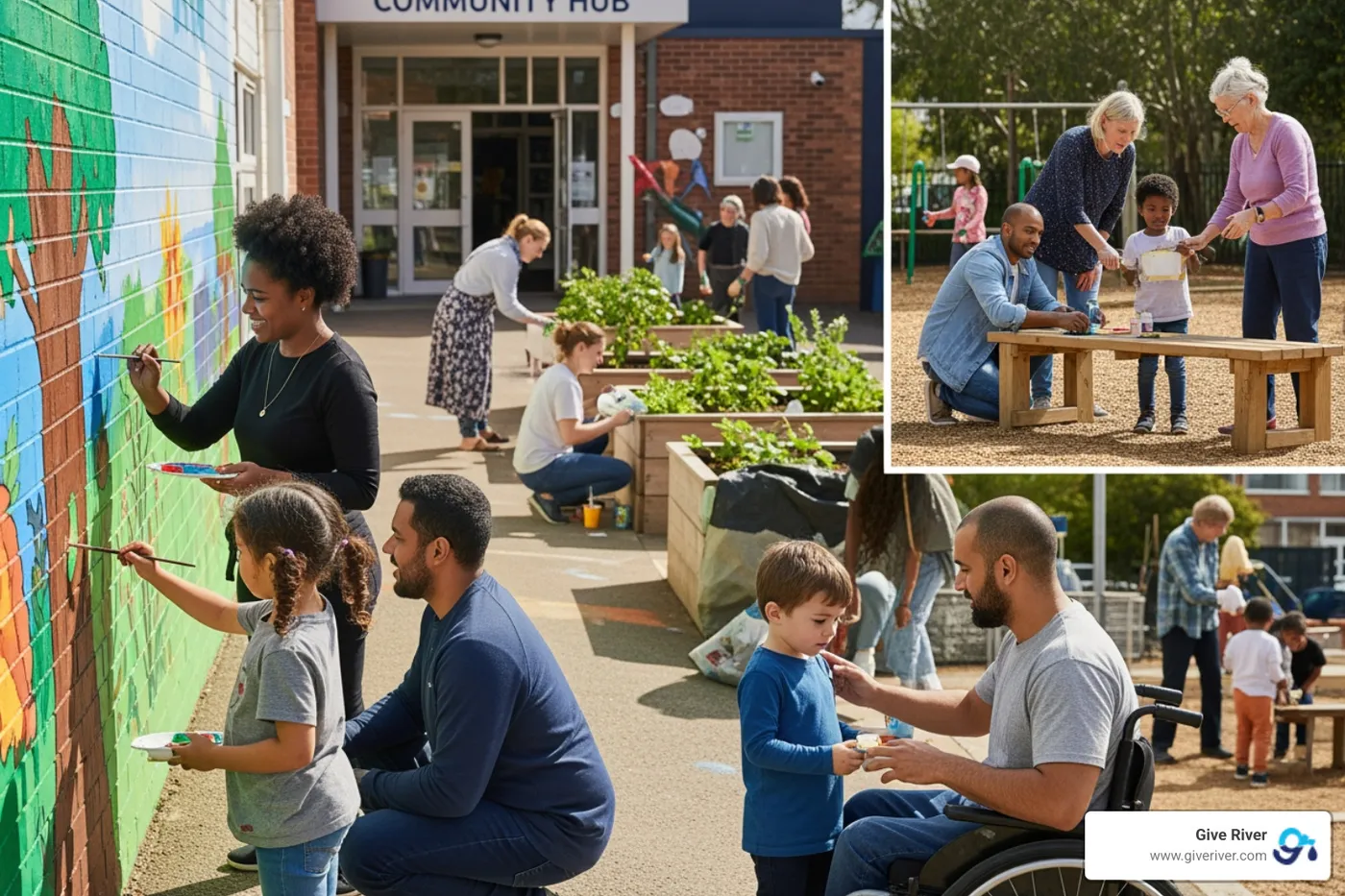
Community involvement grants provide essential funding to help organizations—from nonprofits and schools to businesses—create meaningful change. These grants can feel overwhelming to steer, but they offer a powerful way to address critical…
See the platform in action.
Free for up to 25 members, or try Core or Growth free for 30 days. A card is required; Free is never charged, and a trial bills when it ends unless you cancel.