Why Most Managers Are Flying Blind on Team Engagement
The best employee engagement tools for managers in 2025 include:

The best employee engagement tools for managers in 2025 include:
| Tool | Best For |
|---|---|
| Culture Amp | Science-backed surveys and AI-powered insights |
| Gallup Q12 | Research-driven engagement measurement |
| Bonusly | Peer-to-peer recognition and rewards |
| 15Five | All-in-one performance and manager enablement |
| PeopleGoal | Customizable workflows and goal tracking |
| Give River | Gamified fulfillment combining recognition, growth, and charitable impact |
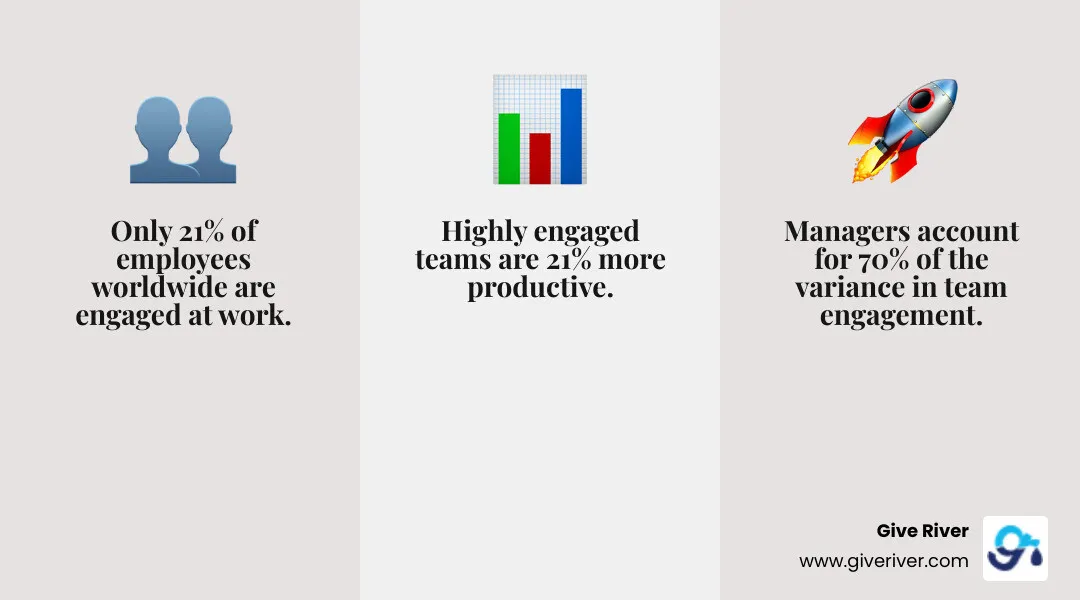
Here's a number that should stop any manager in their tracks: only 21% of employees worldwide are engaged at work. That means roughly four out of five people on your team may be showing up physically but checking out mentally.
What makes this especially relevant for managers is where the problem originates. According to Gallup research, managers account for 70% of the variance in team engagement. Not compensation. Not office perks. Not company-wide initiatives. Managers.
That's both a sobering responsibility and a genuine opportunity. Because if managers drive that much of the engagement equation, then giving them the right tools isn't a nice-to-have — it's the strategy.
The good news? A growing ecosystem of purpose-built platforms is making it easier than ever for managers to listen, recognize, develop, and retain their teams in ways that actually move the needle. Highly engaged teams aren't just happier — they're 21% more productive and generate 23% higher profitability than their disengaged counterparts.
I'm Meghan Calhoun, Co-Founder of Give River and a workplace wellness advocate with more than two decades of experience leading high-pressure teams — experience that taught me why the right employee engagement tools for managers are the difference between a team that survives and one that truly thrives. In this guide, I'll walk you through the top-rated tools, what to look for, and how to build a team culture where people genuinely want to show up.
Handy employee engagement tools for managers terms:
- employee communication and engagement platform
- platform for employees to share ideas
- employee pulse survey platform
Why Employee Engagement Tools for Managers are Non-Negotiable
If you’ve ever felt like you’re guessing about how your team is actually doing, you aren’t alone. Many managers rely on "gut feel," but in a world of remote work and rapid organizational change, intuition isn't enough. This is where employee engagement tools for managers become your secret weapon.
Research consistently shows that managers drive 70% of the variance in team engagement. This means that your leadership style, communication, and ability to recognize effort are the primary factors in whether an employee stays or leaves. When we use data-driven tools, we move from reactive "firefighting" to proactive culture-building.
The stakes are high. Engaged teams show 78% less absenteeism and significantly lower turnover—up to 51% less in traditionally low-turnover organizations. By investing in the right employee-engagement-and-retention strategies, we aren't just making people "happy"; we are protecting the company's bottom line and ensuring our best talent doesn't walk out the door.
Key Features to Look for in Employee Engagement Tools for Managers
Not all tools are created equal. When we evaluate software, we look for features that actually make a manager's life easier rather than adding more "admin work" to the pile. Here are the must-haves:
- Pulse Surveys: Long, annual surveys are dead. You need short, frequent "pulses" to catch burnout or frustration before it boils over.
- Anonymity: For feedback to be honest, it must be safe. Look for tools that aggregate data to protect individual identities.
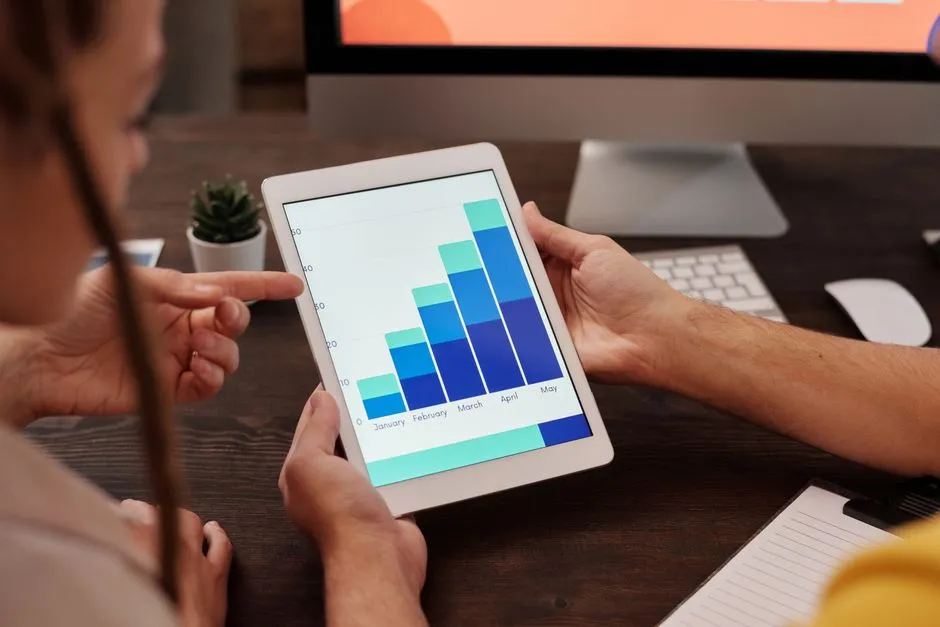
- Real-Time Analytics: You shouldn't have to wait three months for a report. You need to see team sentiment trends as they happen.
- Integrations: If the tool doesn't live where you work (like Slack or Microsoft Teams), people won't use it.
- AI-Driven Insights: Modern tools now use AI to summarize thousands of comments into actionable themes, saving you hours of manual reading.
Understanding these employee-engagement-platform-features helps ensure you choose a solution that scales with your team's needs.
Measuring Success with Employee Engagement Tools for Managers
How do we know if these tools are actually working? We look at the data. Most platforms provide an Employee Net Promoter Score (eNPS), which measures how likely your team is to recommend your workplace to others.
But success goes deeper than one score. We look for high participation rates—if 90% of your team is responding to surveys, it shows they believe their voice matters. We also use employee-engagement-tracker tools to see if the "action plans" we created actually led to a sentiment boost in the next quarter. The goal is a measurable reduction in regrettable turnover and a visible increase in team energy.
Top-Rated Solutions to Transform Your Team Culture
Choosing the right tool depends on your team size, budget, and specific pain points. Whether you need a deep scientific dive into psychology or a fun way to say "thanks," there is a solution out there. Implementing these talent-engagement-software-best-practices ensures that the software becomes a part of your culture, not just another unused tab in your browser.
Feedback and Survey Platforms: Culture Amp and Gallup Q12
If you want to understand the "why" behind employee behavior, these are the heavy hitters.
Culture Amp is widely regarded as a category leader for its science-backed approach. They offer over 40 ready-to-use survey templates designed by data scientists. One of their coolest features is the "AI Coach," which helps managers translate survey results into prioritized action plans. For example, if your team scores low on "Professional Development," the AI suggests specific coaching moments to bridge that gap.
Gallup Q12 is based on decades of research into the 12 elements that best predict high performance. It focuses on four levels of employee needs: Basic Needs, Individual Contribution, Teamwork, and Growth. It’s less about "software" and more about a framework for meaningful conversations. It challenges managers to ask: "Does my team know what is expected of them?" and "Do they have the materials to do their work right?"
Using these employee-satisfaction-survey-tools allows you to benchmark your team against global standards.
Recognition and Rewards: Bonusly and Kudos
Sometimes, engagement is as simple as feeling seen.
Bonusly turns recognition into a social habit. Every employee gets a monthly allowance of points to give to their peers. These points can be redeemed for real-world rewards like gift cards or even charitable donations. It creates a "social feed" of gratitude that makes invisible work visible.
Kudos operates on a similar peer-to-peer model but emphasizes aligning recognition with company values. You don't just get points; you get a "badge" for being "Collaborative" or "Innovative." This reinforces the behaviors you want to see more of in your culture. For managers, these employee-engagement-and-recognition-solution platforms provide a "paper trail" of excellence that makes performance reviews much easier.
All-in-One Performance Management: 15Five and PeopleGoal
If you want to manage goals, feedback, and 1-on-1s in one place, these platforms are built for you.
15Five is designed specifically to enable managers. It includes features like "Check-ins" where employees spend 15 minutes writing a report and managers spend 5 minutes reviewing it. Their "Kona AI" assistant can even analyze meeting notes to flag burnout risks. It's a comprehensive talent-engagement-software-ultimate-guide in practice, helping managers move from "supervisors" to "coaches."
PeopleGoal stands out for its extreme customization. You can build your own workflows for everything from OKR tracking to exit interviews. It’s a great fit for managers who have a very specific way they want to run their team and need a tool that bends to their will, not the other way around.
Building a Culture of Fulfillment with Give River
While platforms like Bonusly and Kudos are fantastic for social recognition and point-based rewards, we believe the future of engagement lies in fulfillment. Unlike these traditional recognition tools that focus primarily on peer-to-peer "shout-outs," Give River integrates personal wellness and community impact into the reward cycle. This is why we created our platform.
We don't just want employees to be "engaged"; we want them to feel a deep sense of purpose. Our 5G Method—Guided, Gamified, Gratitude, Growth, and Generosity—goes beyond traditional software. We integrate personal wellness with professional growth, allowing employees to earn rewards not just for hitting targets, but for taking care of their physical health and contributing to community impact.
Imagine a tool where your morning walk doesn't just improve your health—it also generates a donation to a charity of your choice and earns you a "Gratitude" shout-out from your manager. That is how you boost-employee-engagement while building a workplace where people truly thrive.
When you transform your team with Give River’s team building solutions, you aren't just buying a platform; you're investing in a culture of generosity that attracts and keeps top talent.
Best Practices for Implementing Engagement Tools
Even the best employee engagement tools for managers will fail if they are rolled out poorly. To avoid the "just another HR tool" syndrome, follow these steps:
- Lead with Vulnerability: As a manager, be the first to share your own goals or give recognition. If you don't use the tool, your team won't either.
- Close the Feedback Loop: There is nothing more disengaging than asking for feedback and doing nothing with it. If a survey shows the team is stressed, acknowledge it and share your plan to fix it.
- Focus on Strengths: Use these tools to identify what people are good at. Gallup research shows that focusing on strengths is far more effective for engagement than obsessing over weaknesses.
- Keep it Human: Tools should support conversations, not replace them. A digital "High Five" is great, but it should be followed by a genuine "thank you" in your next 1-on-1.
Conclusion
The era of the "pizza party" as a retention strategy is over. Today's workforce demands growth, recognition, and a sense of purpose. As a manager, you are the most influential person in an employee's professional life. By equipping yourself with the right employee engagement tools for managers, you take the guesswork out of leadership.
Whether you choose the deep analytics of Culture Amp, the social recognition of Bonusly, or the holistic fulfillment of Give River, the goal remains the same: building a team where every individual feels seen, heard, and valued.
Ready to stop flying blind and start building a high-performing culture? Let’s move beyond engagement and start focusing on fulfillment. Your team—and your bottom line—will thank you.
More from this category.

The 5 Best Employee Engagement Platforms in 2026, Compared
Give River, Culture Amp, WorkTango, Engagedly, and Kudos compared from each vendor's own site: pricing, gamification, learning, surveys, and who each one fits.

Employee Engagement Software for Companies With 50–200 Employees (2026)
What a 50–200 person company needs from engagement software, what six platforms cost at that size, who each fits, and how fast you can launch.
What Is a Digital Engagement Platform? (And Why It Matters Right Now)
Understanding the digital engagement platform definition starts with a simple idea: it's a technology framework that centralizes how an organization communicates with, supports, and motivates its people — employees or customers — across…
See the platform in action.
Free for up to 25 members, or try Core or Growth free for 30 days. A card is required; Free is never charged, and a trial bills when it ends unless you cancel.