Why Scalable HR Solutions Are Critical for High-Growth Companies
Scalable HR solutions are systems, processes, and strategies designed to grow alongside your organization — maintaining efficiency, compliance, and employee experience without requiring a complete overhaul every time your headcount doubles.

Scalable HR solutions are systems, processes, and strategies designed to grow alongside your organization — maintaining efficiency, compliance, and employee experience without requiring a complete overhaul every time your headcount doubles.
Here's a quick breakdown of what they involve and why they matter:
| Component | What It Means |
|---|---|
| Flexible systems | HR technology that adapts to more employees, locations, and complexity |
| Standardized processes | Documented workflows that stay consistent as teams grow |
| Proactive compliance | Built-in tools that keep up with evolving employment law |
| Employee experience | Onboarding, recognition, and development that scale without losing the human touch |
| Data-driven decisions | Real-time insights that guide workforce planning and strategy |
Growth is exciting. New markets, growing revenue, an expanding team — these are the milestones every business leader works toward. But growth also puts pressure on the systems holding everything together, and HR is often the first to buckle.
The numbers make this hard to ignore. 55% of HR leaders say their current systems aren't adaptable enough to meet evolving business needs. Meanwhile, 96% report anxiety around HR technology because of disjointed, siloed platforms that create more friction than they solve. For mid-sized companies scaling quickly, this isn't just an operational headache — it's a direct threat to retention, culture, and growth.
When HR can't keep up, the ripple effects are felt everywhere: slower hiring, inconsistent onboarding, compliance gaps, and employees who feel like numbers rather than people. The good news? These are solvable problems — but only if your HR infrastructure is built to scale from the start.
I'm Meghan Calhoun, co-founder of Give River, and after two decades leading high-performing teams across high-pressure industries, I've seen how the absence of scalable HR solutions quietly erodes culture and performance before leaders even notice the warning signs. This guide brings together that experience alongside the latest research to help you build an HR foundation that grows with your business — not against it.
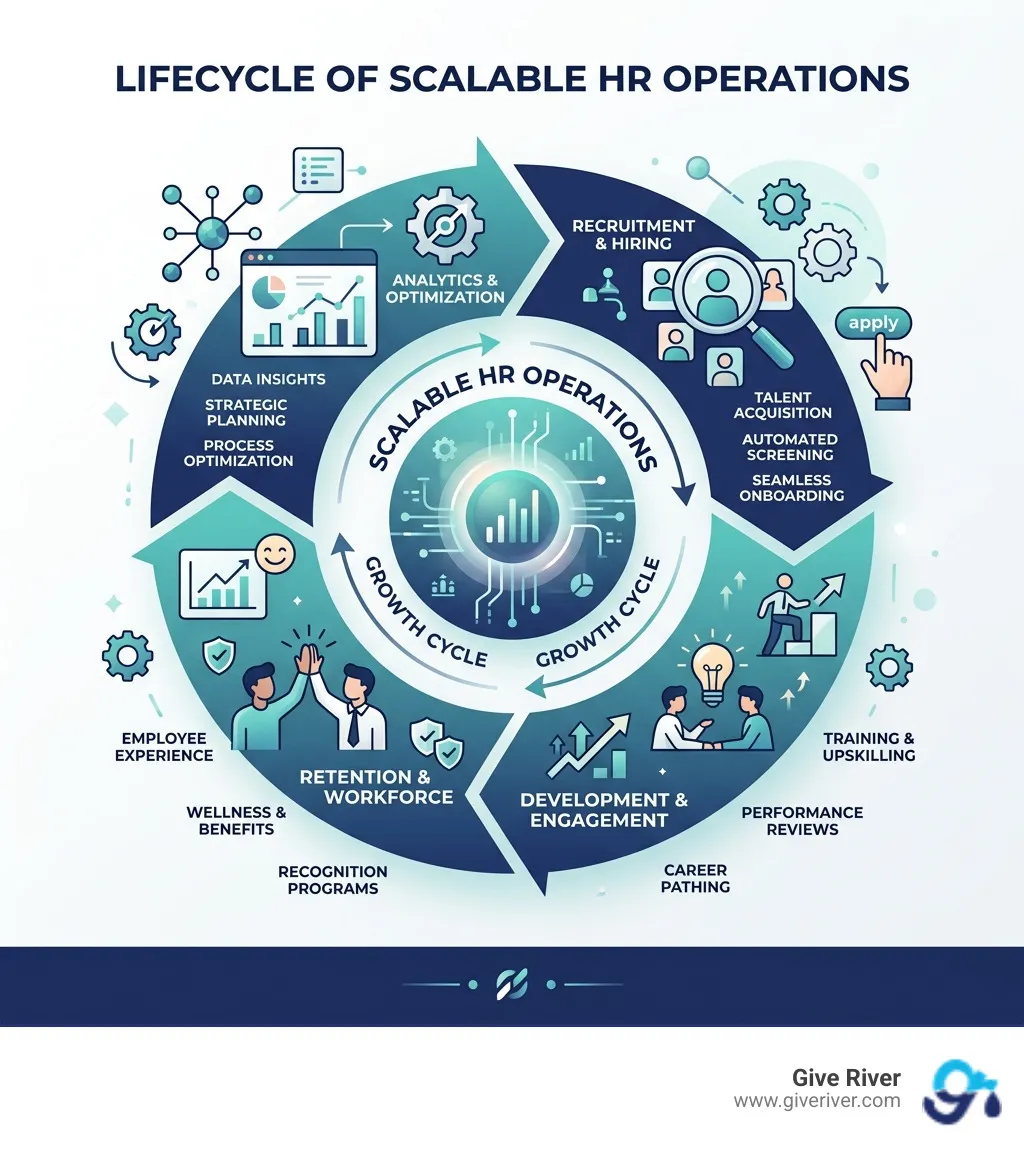
Common scalable HR solutions vocab:
The Foundation of Scalable HR Solutions for Sustainable Growth
Building a business that lasts requires more than just a great product; it requires a people-strategy that doesn't break under pressure. When we talk about scalable HR solutions, we are looking at the infrastructure that allows a company to move from 50 employees to 500 without the HR department collapsing into a pile of spreadsheets and "urgent" emails.
Sustainability in growth is directly tied to how well your HR systems adapt. According to scientific research on HR system adaptability, only 30% of HR leaders believe their strategic planning is truly effective. This gap exists because many teams are reactive—fixing problems only when they become "fires"—rather than building modular systems that accommodate expansion.
Scalability also acts as a primary shield for risk management. As you grow, you aren't just managing more people; you're managing more jurisdictions, more labor laws, and more complex tax requirements. A scalable framework ensures that compliance is "baked in" to the workflow rather than being a manual checklist that someone might forget to update.
Identifying Warning Signs of Unscalable HR
How do you know if your current setup is a ticking time bomb? Usually, the signs start small. You might notice that it takes three weeks longer to hire a software engineer than it did last year. Or perhaps your HR manager is spending 60% of their day answering the same five questions about benefits.
These are symptoms of operational overload and "digital friction." Digital friction occurs when the tools meant to help us actually get in the way. Research shows that 47% of employees experience high digital friction, often due to toggling between disconnected apps or fighting with rigid legacy software.
| Feature | Manual/Unscalable HR | Scalable HR Solutions |
|---|---|---|
| Data Entry | Spreadsheets and paper files | Centralized, cloud-based HRIS |
| Recruitment | Sorting emails and manual job posts | AI-powered ATS and social sourcing |
| Onboarding | Ad-hoc, person-dependent | Automated workflows and portals |
| Compliance | Reactive (fixing errors later) | Proactive (built-in audit trails) |
| Reporting | Days of manual data crunching | Real-time dashboards and insights |
If your team is trapped in the "Manual" column, your growth will eventually hit a ceiling. You cannot scale a business on the back of institutional knowledge held by a single person. If your HR lead leaves and takes the "how-we-do-things" manual with them in their head, your organization is at high risk.
Leveraging Technology to Build Scalable HR Solutions
Technology is the great equalizer for growing companies. By implementing a robust Human Resources Information System (HRIS) and an Applicant Tracking System (ATS), you move from "doing" HR to "managing" HR.
Modern scalable HR solutions are increasingly moving toward "Agentic AI"—AI tools that don't just answer questions but actually execute administrative work end-to-end. Imagine an AI that can handle 75% of administrative tasks, reducing onboarding time by over 50%. This isn't science fiction; it's the current standard for high-growth tech firms.
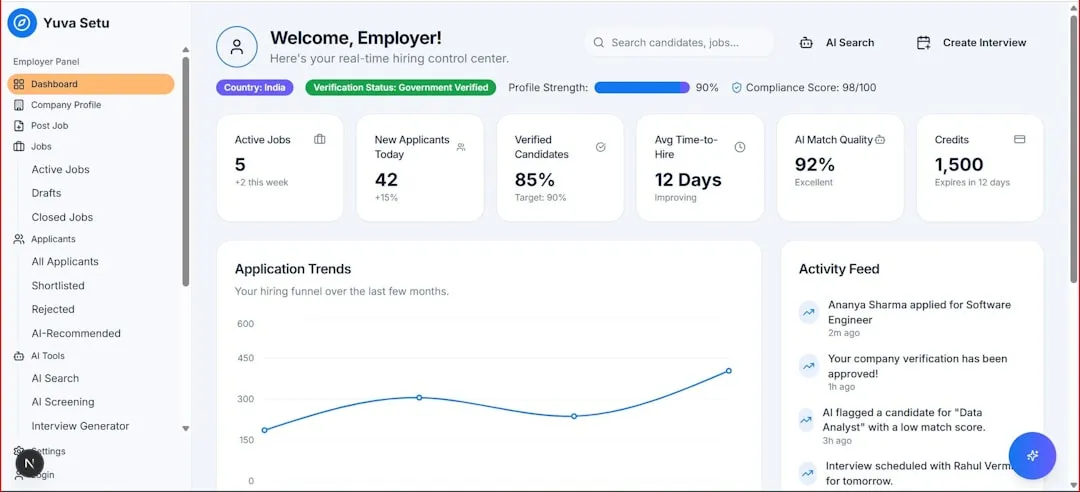
When choosing your tech stack, look for digital HR solutions that offer "consumer-grade" user experiences. If the software is hard to use, your employees won't use it, and you'll end up right back where you started: with manual workarounds. Stay updated on HR technology trends to ensure your stack remains modular and ready for the next phase of growth.
Standardizing Processes and Operating Models
To scale, you need a "recipe" for every HR function. These are your Standard Operating Procedures (SOPs). Whether it’s how you handle a promotion or how you conduct a disciplinary meeting, having a documented, repeatable process ensures consistency. Consistency is the bedrock of a fair workplace culture.
Many large organizations use Shared Service Centers (SSCs) to handle routine tasks like payroll and benefits. Research indicates that shared services can lower operational costs by up to 30%. For smaller companies, this might mean outsourcing non-core functions to a partner who specializes in HR Compliance as a Service.
Your operating model matters too. A centralized model offers a "single source of truth" for data, which is vital for compliance. However, as you expand globally, a hybrid model often works best—centralizing global governance while allowing local teams the flexibility to adapt to regional labor laws.
Strategies for Long-Term Workforce Success
Scaling isn't just about systems; it's about people. If you scale your headcount but lose your culture, you haven't really grown—you've just gotten bigger and more fragile. Long-term success requires a shift from reactive personnel management to proactive workforce planning.
This means looking 6 to 12 months ahead. If your revenue goals require 20 new sales reps by Q3, but your HR team can only source five per month, your growth will stall. Scalable HR ensures that the "manpower" is ready when the business needs it.
Enhancing Digital Employee Experience (DEX) at Scale
In a remote or hybrid world, the "office" is the digital tools we use. This is the Digital Employee Experience (DEX). If your DEX is poor, your productivity will plummet. In fact, 50% of workers say poor digital experiences make them less productive, and 29% have considered leaving a job specifically because of bad workplace tech.
To build scalable HR solutions that support DEX, focus on eliminating "friction points." This might mean:
- Implementing digital engagement platforms that allow for seamless communication.
- Using employee engagement technology to check the "pulse" of the team regularly.
- Ensuring that remote workers have the same access to support and resources as those in the office.
When employees feel that their tools empower them rather than hinder them, engagement naturally rises.
Driving Performance with Scalable HR Solutions
At Give River, we believe that the most scalable way to drive performance is through a culture of gratitude and growth. This is where our 5G Method—Guided, Gamified, Gratitude, Growth, and Generosity—comes into play. Traditional performance reviews often feel like a "bottleneck" because they are manual and infrequent.
Scalable recognition, however, happens in real-time. By using scalable employee recognition software, you empower peers to recognize each other’s wins instantly. This democratizes the culture and takes the pressure off managers to be the sole source of praise.
How Give River Differs from Competitors When evaluating scalable HR solutions, it's important to distinguish between simple recognition and holistic engagement. While platforms like Bonusly or Kudos offer great peer-to-peer recognition features, Give River differentiates itself by integrating personal wellness and professional growth directly into the gamified experience. Unlike these standard tools that often focus on transactional rewards, Give River uses the 5G Method to ensure recognition leads to genuine fulfillment. We don't just want employees to get "points"; we want them to find purpose. Using a comprehensive employee recognition solution ensures that as your team grows, the "human touch" of saying "thank you" is amplified, not lost.
Using Data Analytics to Adapt Strategy
You cannot manage what you do not measure. In the past, HR data was buried in filing cabinets. Today, scalable HR solutions provide real-time insights into turnover trends, headcount, and even salary spending.
For example, real-time access to labor data enabled one major company to reduce labor spend by 4%, saving them roughly $1.2 million annually. That is the power of HR data reporting. When you have data-driven insights, you can spot "quiet quitting" or burnout before it leads to a mass exodus.
At Give River, we use these analytics to help leaders understand which parts of the 5G Method are resonating most with their teams. Are people craving more professional growth content? Are they engaging more with the community impact challenges? This data allows you to continuously adapt your HR strategy to meet the evolving needs of your workforce.
Actionable Steps to Scale Your HR Today
If you're feeling overwhelmed by the prospect of overhauling your HR department, take a deep breath. Scalability is a journey, not a destination. Here is a quick framework to get you started:
- Audit Your Time: If your HR team is spending more than 40% of their week on manual administrative tasks (data entry, answering basic emails, manual payroll), you need to automate.
- Centralize Your Data: Move away from fragmented spreadsheets. Invest in a unified HRIS that serves as your "single source of truth."
- Document Everything: Create SOPs for your most frequent tasks. If a process isn't written down, it isn't scalable.
- Focus on DEX: Survey your employees about their digital tools. Identify the friction points and solve them.
- Implement Real-Time Recognition: Don't wait for the annual review. Use a company recognition platform to build a culture of gratitude today.
Conclusion: Building for the Future
Scaling a business is one of the most difficult challenges a leader can face. It requires a delicate balance of aggressive growth and operational stability. By investing in scalable HR solutions, you aren't just making life easier for your HR team; you are building a resilient organization that can weather the storms of rapid expansion.
Technology and processes are the "bones" of your organization, but culture is the "heart." As you implement new online recognition platforms and workplace collaboration software, never lose sight of the human beings behind the data points.
A balanced strategy—one that combines the efficiency of AI and automation with the warmth of genuine human connection—will always outperform a cold, purely mechanical approach. At Give River, we're here to help you bridge that gap, ensuring your team stays happy, healthy, and high-performing, no matter how fast you grow.
Ready to see how the 5G Method can transform your growing team? Explore our data-driven insights and start building a culture that scales.
More from this category.
The 5 Best Employee Engagement Platforms in 2026, Compared
Give River, Culture Amp, WorkTango, Engagedly, and Kudos compared from each vendor's own site: pricing, gamification, learning, surveys, and who each one fits.

Employee Engagement Software for Companies With 50–200 Employees (2026)
What a 50–200 person company needs from engagement software, what six platforms cost at that size, who each fits, and how fast you can launch.
What Is a Digital Engagement Platform? (And Why It Matters Right Now)
Understanding the digital engagement platform definition starts with a simple idea: it's a technology framework that centralizes how an organization communicates with, supports, and motivates its people — employees or customers — across…
See the platform in action.
Free for up to 25 members, or try Core or Growth free for 30 days. A card is required; Free is never charged, and a trial bills when it ends unless you cancel.