What is Company Culture and Why Does It Matter?
Company culture is the shared values, attitudes, and practices that shape every interaction and decision in your workplace. It's the invisible force that determines whether your team feels energized and valued or exhausted and overlooked.…
Company culture is the shared values, attitudes, and practices that shape every interaction and decision in your workplace. It's the invisible force that determines whether your team feels energized and valued or exhausted and overlooked. A strong culture isn't just a buzzword—it's the foundation of business success. Research shows that companies that actively cultivate a positive culture see 33% higher revenue.
The stakes are high. Nearly half of employees (46%) have left a job because they felt unappreciated, while 40% cite burnout as their top reason for leaving. Since 70% of a worker's experience is based on their manager's behavior, culture improvement is a critical leadership responsibility.
The good news is that culture can be changed. With the right workplace culture improvement ideas and consistent effort, you can create an environment where people are excited to contribute their best work.
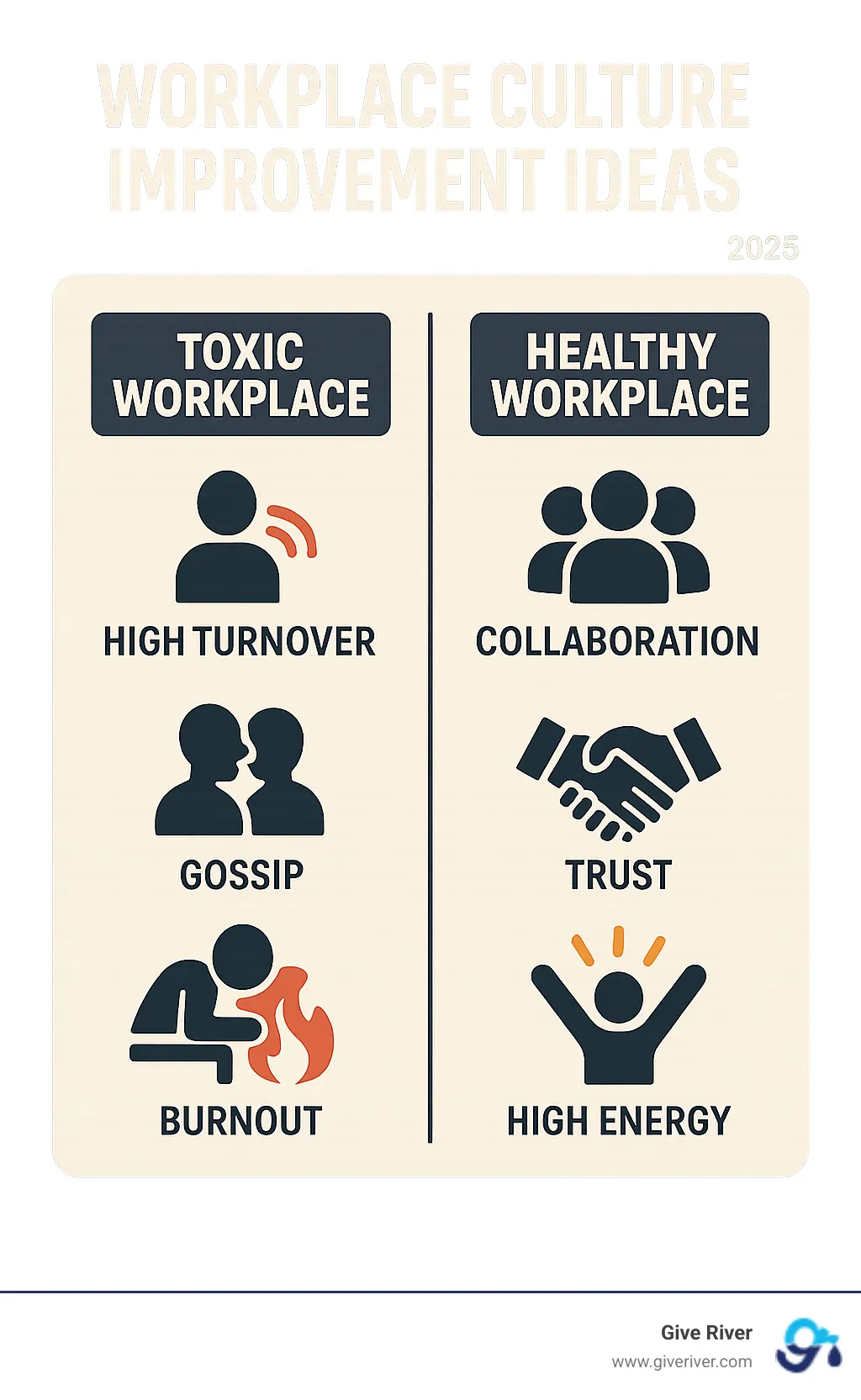
Workplace culture improvement ideas basics:
The Alarming Signs of a Toxic Culture
A toxic culture drives disengagement, hurts productivity, and harms retention. Here are common signs that your culture needs attention:
- High Turnover: Consistently losing good people is a major red flag. Toxic culture was a primary driver of the Great Resignation.
- Low Morale: A pervasive sense of unhappiness, apathy, or cynicism among employees.
- Lack of Communication: Information is hoarded, decisions are made in silos, and employees feel out of the loop.
- Constant Burnout: Employees are consistently overworked and exhausted. 40% of employees cite burnout as a top reason for leaving.
- Gossip and Cliques: An environment of backbiting and exclusion erodes trust and psychological safety.
- Fear of Failure: Employees are afraid to take risks or admit mistakes, which stifles innovation.
- Unfair Treatment: Favoritism or inconsistent rules breed resentment. 46% of employees have left a job because they felt unappreciated.
- Loneliness: Especially in remote settings, isolation is a sign of a struggling culture, with 25% of remote workers reporting loneliness.
- Detachment from Purpose: Employees feel disconnected from the company's mission, indicating a culture that fails to inspire.
If these signs resonate, it’s time to implement workplace culture improvement ideas to build a Winning Workplace Culture.
The Four Main Types of Organizational Culture
Understanding cultural archetypes, developed by Robert E. Quinn and Kim S. Cameron, helps you apply effective workplace culture improvement ideas. Most organizations are a blend, but identifying your dominant type clarifies your starting point.
| Culture Type | Core Focus | Leadership Style | What Drives Success |
|---|---|---|---|
| Clan | Collaboration | Mentors, facilitators | Teamwork, employee empowerment, human development, loyalty, and tradition. Feels like a family. |
| Adhocracy | Innovation | Entrepreneurs, visionaries | Creativity, risk-taking, rapid adaptation, and a focus on cutting-edge solutions. Agile and dynamic. |
| Market | Competition | Hard-drivers, competitors | Achieving goals, market share, strong external positioning, and winning. Results-oriented and aggressive. |
| Hierarchy | Structure | Coordinators, monitors | Efficiency, stability, consistency, and clear processes. Formalized and standardized. |
Intentionally shaping your culture to align with strategic objectives is key, especially when managing an Organizational Culture in Virtual Teams.
Actionable Workplace Culture Improvement Ideas That Actually Work
Now, let's dive into the strategies that can truly transform your workplace. These workplace culture improvement ideas are proven to drive real results in engagement, retention, and performance by focusing on genuine human connection over superficial perks.

Small, intentional changes compound over time, creating an environment where people want to contribute their best. These principles can be adapted to fit any organization aiming to Improve Workplace Culture in meaningful ways.
Foundational Workplace Culture Improvement Ideas: Communication and Trust
Trust is cultivated through consistent, transparent communication. Shift from asking, "Is it necessary to share this?" to "Is it necessary to conceal this?" Share company health, challenges, and wins. When people understand the bigger picture, they feel more invested.
Move beyond annual reviews to regular feedback conversations. Weekly or bi-weekly one-on-ones build rapport and show you're invested in each person's success. This fosters psychological safety, where people feel safe to speak up, ask questions, and admit mistakes without fear.
If trust is broken, acknowledge past mistakes, accept accountability, and demonstrate change through action. Trust is rebuilt one reliable and transparent interaction at a time. Use an Employee Communication and Engagement Platform or Employee Pulse Survey Platform to facilitate these conversations and build a Platform for Employees to Share Ideas. This is key to Building a Supportive Environment.
Empower Through Recognition and Appreciation
65% of employees would work harder if they felt their contributions were noticed. Recognition is one of the most powerful and underused workplace culture improvement ideas.

Peer-to-peer recognition is especially powerful. Companies with strong peer recognition cultures see 31% lower turnover. Be timely and specific. Instead of a generic "good job," explain what they did well and why it mattered. Celebrating professional and personal milestones also shows you care about employees as whole people.
Connect recognition to company values to amplify its impact. When you highlight how an action embodies your values, you reinforce them for everyone. This goes hand-in-hand with empowerment—give people autonomy to make decisions and own their work. Micromanagement signals distrust and kills motivation.
Learn about The Power of Gratitude in the Workplace and explore Best Employee Recognition Programs. For practical ideas, see Employee Recognition Examples and Peer to Peer Recognition Activities.
Invest in Employee Growth and Development
When employees see a path for growth, they become more engaged and loyal. This is a strategic imperative.
- Career Pathing: Hold regular discussions about goals and skill development to show you're invested in their long-term success.
- Mentorship Programs: Connect experienced and developing employees to facilitate knowledge transfer and build relationships.
- Learning Opportunities: Offer diverse and accessible training, from online courses to job shadowing, matched to individual goals.
- Promoting from Within: Send a powerful message that growth opportunities exist and that you value current talent.
Focus on fulfillment. When people believe their work matters, they're four times more likely to be engaged. Explore why Employee Fulfillment is More Important Than Engagement and find support through a Learning & Development Solution, Career Development Mentoring Programs, and Professional Development for Employees.
Prioritize Wellness and Work-Life Balance
With 40% of employees citing burnout as their top reason for leaving, wellness and work-life balance are business necessities.

Flexible work arrangements, like remote or hybrid models, are now essential benefits. They give employees control, leading to higher job satisfaction. Prevent burnout by ensuring workloads are manageable, promoting breaks, and having leaders model healthy work habits.
Provide mental health support and help employees establish clear boundaries between work and personal time, such as discouraging after-hours emails. Holistic wellness initiatives addressing physical, emotional, and mental health are also key.
Explore Workplace Wellbeing Solutions and leading Corporate Wellness Platforms. Find insights on Employee Health and Wellbeing Initiatives and Hybrid Workplace Solutions.
Advanced Workplace Culture Improvement Ideas: Purpose and Connection
Once you have a strong foundation, focus on deeper elements like purpose and connection.
- Foster Friendships: Employees with close friends at work are more engaged and more likely to stay. Encourage this through team-building and social gatherings.
- Break Down Silos: Promote cross-functional projects and knowledge-sharing to create a more unified, collaborative environment.
- Connect Work to Purpose: Help each person see how their role contributes to the company's mission. When work feels meaningful, engagement skyrockets.
- Promote Community Impact: Unite teams around shared values through corporate social responsibility, like volunteer days or supporting local charities.
Build a Purpose-Driven Workplace with Team Building Activities for the Remote Workplace. Learn about Corporate Social Responsibility and Why it's Important and find inspiration for Community Impact Initiatives.
The Leader's Role: How Management Shapes Culture
When it comes to workplace culture improvement ideas, leadership shapes everything. Research confirms that 70 percent of a worker's experience is based on manager behavior. Culture is a direct reflection of leadership effectiveness.
Real culture change begins with leadership accountability. Leaders must own their role in the current culture and demonstrate a genuine commitment to change through consistent action. If leaders don't walk the talk, no initiative will succeed.
Effective leaders embody the company's values daily, demonstrating accountability and respect. This positive behavior creates a ripple effect. They also coach people rather than just managing tasks, empowering their teams to find solutions and grow.
Avoiding micromanagement is crucial for building trust. Trusting your employees to complete work in their own way increases engagement and signals that you believe in their capabilities. When navigating organizational change, leaders must support their teams with transparency and clear communication. Explain the 'why' behind changes, listen to concerns, and keep people informed.
The journey to a better culture is continuous and relies on strong, empathetic leadership. Great leaders create an environment where people can thrive. Learn more about How to Lead Your Team Through Crisis and explore our HR Insights Blog Category for more guidance.
Measuring What Matters: How to Track Your Culture Change
How do you know if your workplace culture improvement ideas are working? Like any strategic investment, culture change must be measured, tracked, and refined. The most successful organizations actively track progress and adjust their approach based on data.
Regular employee engagement surveys are essential for diagnosing issues and tracking sentiment over time. The key is to conduct regular, anonymous surveys that gather honest feedback on communication, leadership, and overall cultural health.
Beyond surveys, establish key performance indicators (KPIs) that reflect cultural health:
- Retention Rates: A strong culture leads to lower turnover. Companies with a recognition-rich culture have a 31% lower turnover rate.
- Absenteeism: Patterns can signal low morale or burnout before they become critical.
- Productivity Metrics: These often improve as a direct result of a healthier work environment.
- Employee Net Promoter Score (eNPS): This measures how likely employees are to recommend your company as a place to work.
One-on-one feedback and stay interviews provide the human context that data alone can't capture. These conversations help you understand why employees choose to stay.
The most critical step is to analyze and act on the data. When you address concerns and communicate changes based on employee input, you build trust and create a feedback loop that strengthens your culture. The measurement process itself becomes a cultural touchstone, reinforcing the transparency you're trying to build.
Use an Employee Engagement Tracker to monitor progress. We also dig into Research on employee engagement trends and provide further insights in our Research Blog Category.
Frequently Asked Questions about Improving Workplace Culture
When leaders consider changing their culture, they often ask, "Where do we begin?" and "How do we know if it's working?" Here are practical answers to the most common questions about implementing workplace culture improvement ideas.
How do you fix a toxic work culture?
Fixing a toxic culture requires a fundamental shift in interactions and decision-making. The journey starts with leadership accountability. Leaders must openly admit there's an issue and take responsibility.
Next, open authentic feedback channels using anonymous surveys or a Platform for Employees to Share Ideas to ensure people feel safe. Revisit your core values to ensure they are actionable guidelines, not just words on a wall. Rebuilding trust requires consistent transparency and follow-through.
Finally, implement consistent recognition (since 46% of employees leave for feeling unappreciated), prioritize employee well-being to combat burnout (a reason for leaving for 40% of employees), and address manager behavior (which accounts for 70% of an employee's experience). Our Retention Solutions are designed to support this change.
What are the most impactful, low-cost culture improvement ideas?
Powerful culture changes don't have to be expensive; they require intentional effort and genuine care.
- Implement peer-to-peer recognition: This empowers everyone to contribute to a positive atmosphere at no financial cost.
- Increase transparency: Hold regular town halls or send newsletters sharing company performance and challenges to build trust.
- Start a mentorship program: Pairing experienced employees with newer ones provides immense value in development and connection.
- Offer flexible scheduling: Where feasible, flexibility shows trust and helps with work-life balance, improving retention.
- Create employee-led committees: Empower your team to organize social, wellness, or community impact initiatives. Find ideas in our Free Virtual Team Building Activities for the Workplace.
How does employee recognition actually improve company culture?
Employee recognition is a strategic driver of positive culture that addresses the fundamental need to feel valued.
- It boosts morale and motivation: 65% of employees would work harder if their contributions were noticed.
- It reinforces desired behaviors: By celebrating actions aligned with company values, you show everyone what success looks like.
- It increases engagement: Recognized employees feel seen, valued, and more connected to the organization's success.
- It fosters a culture of gratitude: Peer-to-peer recognition, in particular, builds a more supportive and appreciative environment.
- It reduces turnover: Companies with a recognition-rich culture have a 31% lower turnover rate.
Recognition transforms your workplace into a place where contributions are celebrated. Explore more in our Recognition Rewards Blog Category.
Conclusion: Build a Culture Where Everyone Thrives
The journey to a thriving workplace culture is an ongoing commitment to creating an environment where every employee feels valued, empowered, and connected. The workplace culture improvement ideas in this guide are designed to help you build that environment.
When you foster transparency, implement recognition, invest in growth, and prioritize wellness, you create a powerful ripple effect. Companies with positive cultures see 33% higher revenue and 21% increases in profitability. Beyond the numbers, you gain the satisfaction of creating a workplace where people thrive.
Culture is about daily interactions and ensuring work has meaning. It's about moving from simple engagement to deep employee fulfillment. You don't need to overhaul everything at once. Start with one or two ideas that resonate most with your team, like implementing peer-to-peer recognition or improving communication channels. Consistency and leadership commitment are key.
At Give River, we've seen how integrating recognition, wellness, growth, and community impact transforms workplaces. While platforms like Bonusly and Kudos are excellent for recognition, Give River connects these moments to a broader ecosystem of employee fulfillment, from wellness initiatives to career development. When you empower your team, they don't just work harder—they work with more heart.
Building a great culture is a continuous process, but the investment is worth it. You create a competitive advantage that can't be replicated: a team of fulfilled, engaged employees excited to contribute their best work.
Ready to transform your workplace culture? Explore how Digital Engagement Platforms like Give River can support your journey toward building a happier, healthier, and higher-performing team.
More from this category.

Understanding Workplace Culture
Improve workplace culture by focusing on key elements that lead to a more engaging and fulfilling work environment. Company culture isn't just an HR buzzword; it's the heartbeat of any thriving organization. It shapes how employees feel,…

Why Building a Strong Volunteer Culture Is Critical for Your Organization's Success
Creating a volunteer culture goes beyond filling positions; it's about cultivating an environment where volunteers feel valued, connected to your mission, and empowered to make a meaningful impact.

Why Workplace Aspiration Is the Missing Link in Employee Engagement
Knowing how to empower the aspiration in the workplace is one of the most high-leverage things a leader or HR professional can do in 2026 — and most organizations are still getting it wrong.
See the platform in action.
Free for up to 25 members, or try Core or Growth free for 30 days. A card is required; Free is never charged, and a trial bills when it ends unless you cancel.